Volume: 6 Issue: 2 June 2008
FULL TEXT
Central venous occlusions are a frequent problem in hemodialysis patients. We describe the case of a patient with end-stage vascular access in whom we successfully inserted a direct intra-atrial dialysis line during coronary artery bypass grafting. This technique could be a significant contribution to patients in whom alternative vascular access options are exhausted.
Key words : Hemodialysis, Vascular access, Dialysis catheter
Introduction
Central vein lesions occur frequently in patients who require chronic hemodialysis and can preclude upper extremity access procedures (1). The challenges of managing patients with significant central vein occlusions are considerable, particularly when lower limb access procedures are not feasible (2). We describe the case of a patient with end-stage vascular access in whom we successfully inserted a direct intra-atrial dialysis line during coronary artery bypass grafting.
Case Report
The patient was a 46-year-old West Indian man with a history of severe peripheral vascular disease who had presented initially 7 years earlier with accelerated hypertension and end-stage renal failure. At that time, he was started on temporary-line hemodialysis, followed by formation of a left brachio-cephalic fistula. The fistula failed because of a spontaneous thrombosis 4 years after its creation. Central venous mapping revealed bilateral brachiocephalic vein occlusions and no flow in the superior vena cava (Figure 1A and 1B). The central venous occlusions were considered unsuitable for endovascular recanalization, and the patient was started on peritoneal dialysis.
Over the next 3 years, the patient was admitted to the hospital with several episodes of peritoneal dialysis peritonitis. The peritoneal catheter was eventually removed, followed by insertion of a translumbar dialysis catheter. Lower limb fistulae were contraindicated owing to severe peripheral disease. At the time of insertion, we noted that the patient had developed significant aneurysmal dilatation of the proximal thoracic aorta, with an aortic root diameter of 7 cm. The patient subsequently had an acute myocardial infarction and was referred to the cardiology and cardiothoracic teams for consideration for an intervention.
A coronary angiography revealed an 80% stenosis of the left anterior descending coronary artery, and coronary artery bypass grafting (CABG) was recommended. In view of the patient’s extensive comorbidity and excessive operative risk, the cardiothoracic surgeons decided against proceeding with a combined aortic root replacement.
Immediately before surgery, we noted that the patient had poor flow rates (< 200 mL/min) through the translumbar dialysis catheter. The difficulties in achieving effective vascular access were discussed with the cardiothoracic surgeon who suggested direct intra-atrial insertion of a Tesio line at the time of CABG.
At CABG, there was a large aneurysm of the aortic root. A left internal mammary artery graft to the left anterior descending coronary artery was performed off pump. Two 4-0 Prolene purse-string sutures were inserted into the right atrial appendage before inserting each Tesio line. The purse-string sutures were secured individually, with progressive invagination of the surrounding atrial appendage tissue. The lines were tunneled following the pleural-pericardial reflection, with an exit site in the upper abdominal wall just below the costal margin (Figure 2). Correct positioning was confirmed at the time of insertion using image intensification.
The patient made an uneventful recovery after CABG and was discharged 10 days after the surgery. The intra-atrial dialysis catheter continues to function well at 3-month follow-up, achieving flow rates of 400 mL/min.
Discussion
The causes of the extensive central venous occlusions in this patient are presumed to be due to multiple previous central venous catheterizations combined with external compression of the superior vena cava by aortic root aneurysmal dilatation. Although this patient was deemed unsuitable for endovascular intervention, primary stenting was initially considered for management of the central venous lesions; this technique can be associated with high rates of technical success, although multiple additional interventions may be necessary to maintain patency (1).
Several surgical options for lower limb arterial-venous fistula have been described in the literature, including thigh loop grafts, superficial femoral vein transpositions, and grafts between the axillary artery and the iliac, femoral, and popliteal veins (2). A lower-limb fistula was contraindicated in this patient because of significant peripheral vascular disease, because of the increased technical risks associated with operating on severely diseased femoral arteries, and because of the high risks of failure and steal. The presence of a large aneurysm of the aortic root precluded the more-controversial approach of an axillary-to-right-atrial bypass graft (3).
Insertion of translumbar inferior-vena-caval catheters is a well-recognized option for end-stage vascular access in hemodialysis patients (4). In this patient, however, associated flow rates were insufficient to support effective dialysis. We could identify only a small number of reports describing direct intra-atrial insertion of central venous catheters, all of which were for feeding purposes (5, 6). Apart from inadvertent line dislodgement in 2 patients, the only significant complication reported was a pleural effusion that required chest drainage (5). We used a double purse-string invagination technique on the atrial appendage in an attempt to limit perioperative bleeding complications and improve line security.
In the current patient, direct intra-atrial access was achieved at the same time as the CABG with minimal additional risk to the patient. The associated morbidity of using an open thoracic approach for vascular access alone is likely to be considerable in hemodialysis patients. However, it would be entirely feasible to perform this procedure using minimally invasive techniques (6). The independent risks of the procedure also can be justified in selected hemodialysis patients with end-stage vascular access in whom alternative access options have been exhausted.
In conclusion, direct intra-atrial insertion of dialysis catheters should be considered as an alternative approach to vascular access in patients with central vein occlusion in whom conventional access procedures are not feasible.
References:
- Bakken AM, Protack CD, Saad WE, Lee DE, Waldman DL, Davies MG. Long-term outcomes of primary angioplasty and primary stenting of central venous stenosis in hemodialysis patients. J Vasc Surg. 2007;45(4):776-783.
- Chemla ES, Korrakuti L, Makanjuola D, Chang AR. Vascular access in hemodialysis patients with central venous obstruction or stenosis: one center's experience. Ann Vasc Surg. 2005;19(5):692-698.
- El-Sabrout RA, Duncan JM. Right atrial bypass grafting for central venous obstruction associated with dialysis access: another treatment option. J Vasc Surg. 1999;29(3):472-478.
- Markowitz DG, Rosenblum DI, Newman JS, Garby KB. Translumbar inferior vena caval Tesio catheter for hemodialysis. J Vasc Interv Radiol. 1998;9(1 Pt 1):145-147.
- Rodrigues AF, van Mourik ID, Sharif K, et al. Management of end-stage central venous access in children referred for possible small bowel transplantation. J Pediatr Gastroenterol Nutr. 2006;42(4):427-433.
- Birnbaum PL, Michas C, Cohen SE. Direct right atrial catheter insertion with video-assisted thoracic surgery. Ann Thorac Surg. 1996;62:1197.
Volume : 6
Issue : 2
Pages : 168 - 170
From the 1The West London Renal and Transplant Centre and the 2Department of Cardiothoracic Surgery, Hammersmith Hospital, Imperial College Healthcare NHS Trust, London, United Kingdom
Acknowledgements: The authors are grateful for support from the NIHR Biomedical Research Centre funding scheme.
Address reprint requests to: Lucy Wales, The West London Renal and Transplant Centre, Hammersmith Hospital, Du Cane Road, London, W12 0QT, United Kingdom
Phone: +442083835164
E-mail: l.wales@imperial.ac.uk
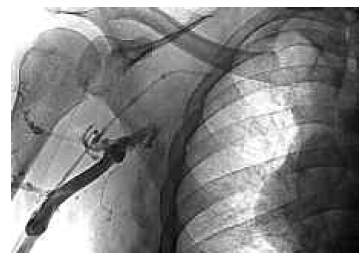
Figure 1A. Right subclavian vein occlusion, with no flow evident in the right brachiocephalic vein or the superior vena cava.
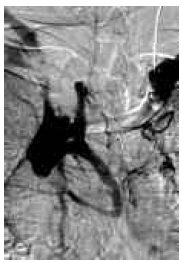
Figure 1B. Left brachiocephalic and superior vena cava occlusions.
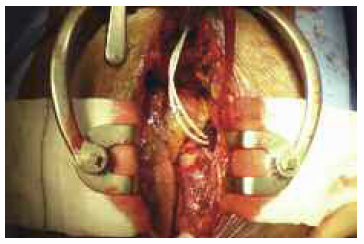
Figure 2. Intra-atrial dialysis line inserted during CABG.