Volume: 2 Issue: 2 December 2004
FULL TEXT
Objectives: Immunosuppressive drugs such as cyclosporine A, mycophenolate mofetil, tacrolimus, and the immunosuppressive agent sirolimus are used effectively to prevent immunologic rejection after solid organ transplantation. The most serious complication among patients undergoing immunosuppressive therapy is the risk developing cancer. The question is whether the drugs used have mutagenic properties and so contribute to increased cancer risk.
Materials and Methods: We evaluated the mutagenic and cytotoxic effects of the above-mentioned drugs in human lymphocyte cultures with special consideration given to clinically relevant blood-drug concentrations. Mutagenicity was tested by analyzing micronuclei using the well-established cytokinesis-block micronucleus assay with cytochalasin B. To evaluate cytotoxicity, the cytokinesis-block proliferation index was calculated. Concentrations used ranged from 0.1-2 µg/mL for cyclosporine A, 1-20 µg/mL for mycophenolate mofetil, 5-40 ng/mL for tacrolimus, and 2.5-50 ng/mL for sirolimus. We also estimated mutagenicity and cytotoxicity in the blood of kidney transplanted patients using the above-mentioned techniques.
Results: Cultures supplemented with mycophenolate mofetil or tacrolimus showed higher amounts of micronuclei when compared with solvent controls in all concentrations tested. Addition of cyclosporine A to cultures also led to a rise in the number of micronuclei at concentrations of 0.2 µg/mL and 0.4 µg/mL. In contrast with the other immunosuppressive drugs, sirolimus induced only weak mutagenic activity in the micronuclei test at its highest concentration (50 ng/mL). Cytotoxic effects were seen only in mycophenolate-mofetil–supplemented cultures at all concentrations tested (P < 0.01).
In comparison with healthy persons, those with kidney transplants under immunosuppression displayed a broad reduction in the cytokinesis-block proliferation index (P < 0.001) and a significant increase in the frequency of micronuclei (P < 0.001). Conclusions: Our results indicate that mycophenolate mofetil and tacrolimus display more mutagenic effects in vitro than do cyclosporine A or sirolimus, and that transplanted patients exhibit higher amounts of micronuclei and a noteworthy reduction in the cytokinesis-block proliferation index compared with healthy persons.
Key words : Cyclosporine A, Cytokinesis-block micronucleus assay, Mycophenolate mofetil, Sirolimus, Tacrolimus
Immunosuppressive drugs are used effectively to prevent immunologic rejection in transplantation medicine. One of the most serious complications in patients undergoing immunosuppressive therapy is a high risk of tumor recurrence and development of de novo cancer. Recent studies indicate that immunosuppressed organ graft recipients show a 3to 4-fold increased risk of developing cancer in general and a 20- to 500-fold higher incidence of certain types of cancer [1,2]. The occurrence of cancer, therefore, represents a major cause of mortality among transplant recipients [3,4], with skin and lip cancers, lymphomas, and Kaposi’s sarcoma representing the main types of cancer in these patients [3].
Although the exact mechanisms leading to the high risk of malignancies in organ transplant recipients have not been found, multiple factors are probably involved. They include chronic stimulation of the immune system, genetic susceptibility, environmental factors, activation of oncogenic viruses [3], level of immunosuppression and number of immunosuppressant drugs used [3,5], sex and age at transplantation [5], as well as the oncogenic effects of immunosuppressive agents as mutagens and possible co-oncogenic properties of these compounds [6,7].
The mutagenicity of different immunosuppressants has been evaluated by several working groups. In vitro as well as in vivo analyses in experimental animals and in humans have been performed, but the results are contradictory. For example, cyclosporine A (CyA) [8,9,10] and tacrolimus (FK506) [11] did not reveal any genotoxic potential when tested in different systems (eg, Ames test, micronuclei [MN] in mice or Chinese hamster, chromosome aberrations in Chinese hamster bone-marrow cells), whereas lymphocyte cultures from healthy individuals treated in vitro with different CyA [7] or FK 506 concentrations [11] showed an increase of sister-chromatid exchanges (SCE). In blood from kidney transplant patients, the number of chromosomal aberrations [12] and SCE frequencies were increased after CyA treatment [13].
The lack of sufficient definite data on the mutagenic and cytotoxic potential of CyA, mycophenolate mofetil (MMF), tacrolimus (FK506), and sirolimus prompted us to test these drugs in lymphocyte cultures of 5 healthy donors of different ages and sex. We analyzed the cytokinesis-block proliferation index (CBPI) and MN by the well-established cytokinesis-block method with cytochalasin B (cyt B) [14,15,16].
Materials and Methods
Immunosuppressive Drugs
The immunosuppressive drugs tested act selectively on different stages of the T-lymphocyte and B-lymphocyte activation cycles. CyA and FK506 belong to the calcineurin inhibitors, and they disrupt interleukin-2 transcription in the antigen-stimulated T cell. Unlike CyA and FK506, which block production of cytokines, sirolimus blocks cytokine signal transduction, which results in an inhibition of cell cycle progression (G1- to S-phase). In contrast, MMF blocks lymphocyte activation by inhibiting inosine monophosphate dehydrogenase activity (an essential enzyme in purine de novo synthesis) during DNA synthesis in the S-phase of the cell cycle.
Cyclosporine A (Sandoz AG, Basel, Switzerland; CAS No. 59865-13-3) and the mutagen bleomycin (BLM) (SERVA Electrophoresis GmbH, Heidelberg, Germany, CAS No. 9041-93-4) were dissolved in 0.9% NaCl solution, whereas MMF (Roche Pharmaceuticals, Basel, Switzerland; CAS No. 128794-94-5) and FK506 (Fujisawa Healthcare, Inc, Deerfield, Ill, USA; CAS No. 104987-11-3) were dissolved in 5% glucose solution. Sirolimus (Wyeth Laboratories, Madison, NJ, USA; CAS No. 53123-88-9) and the cytokinesis-inhibitor cytB were dissolved in dimethyl sulfoxide (DMSO) (Sigma, CAS No. 67-68-5).
Cell Culture and Harvesting
The experiments were approved by our institu-tion’s ethics committee and conform with the ethical guidelines of the 1975 Helsinki Declaration. Written informed consent was obtained from all study participants.
Each immunosuppressive drug was studied in an independent series, including positive and negative controls. For each agent, lymphocyte cultures from 5 healthy volunteer blood donors of similar age were analyzed (for CyA, 3 women and 2 men; aged, 25-45 years; for MMF, 3 women and 2 men; aged, 22-30 years; for FK506, 4 women and 1 man; aged, 22-41 years; and for sirolimus, 3 women and 2 men; aged, 21-36 years) by adding 0.8 mLof heparinized whole blood, 8 mL of RPMI 1640 medium supplemented with 15% fetal bovine calf serum (PAA Laboratories GmbH, Pasching, Austria), 1% penicillin-streptomycin, and 0.2 mL phytohemagglutinin (Invitrogen Corporation, Carlsbad, Calif, USA). Cultures were then incubated at 37°C, humidity 90%, and 5% CO2 for 71 hours. A final concentration of 6 µg/mL of cyt B was added 44 hours after culture initiation. This concentration of cyt B was selected because a higher percentage of binucleated cells and lower baseline MN frequency is achieved [17]. The immunosuppressive drugs were added 48 hours after culture initiation and remained until cell harvesting 23 hours later. Final test concentrations were 0.1, 0.2, 0.4, and 2 µg/mL for CyA; 1, 2, 4, 10, and 20 µg/mL for MMF; 5, 10, 20, and 40 ng/mL for FK506; and 2.5, 5, 15, and 50 ng/mL for sirolimus. These drug concentrations were selected on the basis of blood concentrations common in patients undergoing immunosuppressive therapy.
Control cultures without test compounds were set up with 5% glucose solution, 0.9% NaCl solution, 0.5% DMSO, and without any solvent. The positive control contained the well-known clastogen bleomycin (BLM) at a final concentration of 6 µg/mL. The solvents and BLM were added 48 hours after the onset of cultures and remained until harvesting 23 hours later.
Cells were collected by centrifugation, processed further by hypotonic treatment for 4 minutes in 0.075 M KCl at 37°C, and fixed 2 times in a mixture of methanol-acetic acid (3:1). Slides were Giemsa-stained for analysis of CBPI and MN.
To compare the results obtained in the in vitro conditions with kidney transplanted patients undergoing immunosuppression, we evaluated mutagenicity in this patient group using the cytokinesis-block micronucleus assay. Numbers of MN and the CBPI were estimated in the blood of 14 kidney transplanted patients (8 women and 6 men; aged, 22-49 years) who had been given an immunosuppressive regime of CyA, MMF, and prednisolone. The culture procedure was performed according to the above-described method without addition of immunosuppressive drugs for 48 hours after the onset of cultures.
Microscopic Examination
To avoid bias, only one scorer participated in the analysis. Slides were coded to minimize error owing to scorer knowledge. For MN evaluation, the criteria of Fenech [18] were used. MN frequencies were determined by screening 2000 binucleated cells in Giemsa-stained slides prepared from control and treated cultures.
For evaluation of cytotoxicity, CBPI was performed. Giemsa-stained interphase cells of each cytokinesis-blocked culture (2000) were studied for the proportion of mono-, bi-, tri-, and tetranucleated cells. The CBPI was calculated using the formula mentioned by Surrallés and coworkers [19]. It is based on the formula CBPI = (MI + 2x MII + 3x [MIII + 4x MIV]) / N, where MI to MIV represent the number of mono-, bi-, tri-, and tetranucleated cells, and where N is the total number of cells scored. This index is a useful parameter to assess toxicity in cultured cells.
CBPI evaluation as well as MN frequencies was determined under 400-fold and 1000-fold magnification respectively.
Statistical Evaluation
The unpaired Mann-Whitney-Wilcoxon test was used for statistical evaluation of MN as well as for the CBPI studies. Levels of significance were P < 0.05, P < 0.01, and P < 0.001.
CyA-containing cultures were compared with NaCl control; MMF- or FK506-treated cultures were compared with glucose controls; and sirolimus-containing cultures were compared with the DMSO control; while the DMSO control was compared with the negative control.
The obtained MN frequencies and the CBPI of the analyzed transplanted patients were compared with those of healthy blood donors.
Results
Spontaneous MN Frequencies
The spontaneous MN frequencies of our 20 healthy blood donors varied from 0.2 to 1.15 micronucleated cells per 100 binucleated cells. This is in accord with other published data (0.3%-2.3%) [19,20,21].
Effects of Cyclosporine A on CBPI and MN Analysis
At all concentrations tested, CyA induced no significant changes in the CBPI of cultured lymphocytes. Only BLM as a positive control showed a decrease (P < 0.01) in the CPBI. This finding contradicts results obtained by Yuzawa and coworkers [7,23]. They reported that the mitotic index decreased remarkably in lymphocytes treated with CyA, although comparable drug concentrations were used.
Another point of interest in our investigation concerns the study on the induction of MN by immunosuppressive drugs in cytokinesis-blocked lymphocytes. This test detects both clastogenic and aneugenic effects, and its simplicity and sensitivity have made its application in genotoxicity studies very promising [24,25].
Addition of 0.2 and 0.4 µg CyA/mL effected a slightly significant increase (P < 0.05) of the MN frequencies (Figure 1), while the BLM-positive control increased the MN frequency significantly (P < 0.01).
The results obtained indicate that CyA is able to induce small amounts of MN in vitro and consequently, probably has a genotoxic potential, especially at concentrations that are clinically relevant (blood level for CyA: 0.15 to 0.4 µg/mL [26,27]).
Positive genotoxic findings for CyA have been reported in in vivo and in vitro studies. Induction of chromosome aberrations [12,28] and increased SCE frequencies have been observed in human lymphocytes treated with different CyA concentrations [7,23] as well as in organ transplant recipients undergoing CyA drug therapy [13].
To our knowledge, this is the first time that the genotoxic potential of clinically common CyA concentrations has been studied in human lymphocytes using the cytokinesis-block MN assay.
CyA has been negatively tested in various analytic systems including the Ames test and in vivo tests including the micronucleus test using mouse and hamster bone marrow, the chromosomal aberration test in hamster bone marrow, the dominant lethal mutation test in mice, and the DNA repair test in sperm from treated mice [8,9,10,23,30]. Outcomes from all these tests showed no evidence of a mutagenic, carcinogenic, or teratogenic potential of CyA [8,9].
Although data in the literature regarding the mutagenicity of CyA are contradictory, the International Agency for Research on Cancer has classified CyA as a human carcinogen [29].
Effects of MMF on CBPI and MN Analysis
All tested MMF concentrations (range, 1-20 µg/mL) lowered the mitotic activity of the lymphocytes as indicated by a decrease in the CBPI from 30% to 47% (P < 0.05 for the lowest concentration tested and P < 0.01 for all the others) (Figure 2). The decreased CBPI in cells cultured with MMF is due to higher proportions of mononucleated, and a broad reduction of tri- and tetranucleated, cells (Figure 3), demonstrating that MMF causes cell cycle delay. This was an expected result, because MMF is known to inhibit proliferative responses of T and B lymphocytes after mitogenic as well as allospecific stimulation [31]. All MMF concentrations used in our experiments induced statistically significant increased MN frequencies (P < 0.01) (Figure 4). MMF induced a duplication of micronuclei number even in blood concentrations that are usually reached by clinical use (MMF, 2-4 µg/mL [32], and peak values from 10-20 µg/mL are reported for patients). The results indicate that MMF has a mutagenic potential, because high MN frequencies indicate increased chromosomal damage. This result is contradictory to the literature, where MMF is classified mostly as nongenotoxic.
To our knowledge, until now, only different nonhuman analytic systems have been used to evaluate the mutagenic potential of MMF. No data could be found regarding the genotoxic potential of MMF on human lymphocytes. The genotoxic potential of MMF has been determined with different assays. MMF has shown genotoxicity only in the mouse lymphoma/thymidine kinase assay and the in vivo mouse micronucleus assay [31]. It was not genotoxic in the bacterial mutation assay, the yeast mitotic gene conversion assay, or the Chinese hamster ovary cell chromosomal aberration assay [31]. Adams and coworkers [33] performed a 1-year long-term toxicology study of mycophenolic acid (the active metabolite of MMF) in rabbits, and no apparent signs of toxicity were found.
The data obtained in our study show that results about the genotoxic potential of agents in nonhuman systems are not transferable to human cells.
Effects of Tacrolimus on CBPI and MN Analysis
Cultured lymphocytes supplemented with FK506 (5-40 ng/mL) showed a mitotic activity that was similar to that of negative controls. Only the positive control supplemented with the mutagen BLM showed a significant decrease of the CBPI (P < 0.01).
However, in all concentrations, FK506 had significant influence on the MN frequency (Figure 5). At the lowest concentration of 5 ng/mL FK506, a slightly significant increased MN frequency (P <0.05) was observed. All other drug concentrations (10-40 ng/mL) also demonstrated statistically significant increases in MN frequency (P < 0.01). To our knowledge, only one working group has assessed the mutagenic potential of FK506 in vitro using human cells. They concluded that FK506 causes a concentration-dependent SCE induction [11].
Few studies refer to the mutagenic or carcinogenic potential of FK506. Most results have been obtained with experimental systems (eg, bacterial and mammalian in vitro assays), and FK506 has never been found to have mutagenic potential [11,34].
In our study, all concentrations of FK506 showed strong genotoxic effects, even in drug concentrations that are clinically relevant (blood level for FK506, 3-20 ng/mL) [26,35].
Effects of Sirolimus on CBPI and MN Analysis
None of the added sirolimus concentrations showed a statistically significant influence on the CBPI of human cultured lymphocytes. The obtained mitotic activity was relatively similar to the negative controls. Only the positive control with BLMshowed a significant decrease of the CBPI (P < 0.01).Our result that sirolimus had no effect on the CBPI is actually contrary to a report in which sirolimus,as a potent cytostatic agent, was shown to arrest cells in the G1 phase of the cell cycle [37].
The influence of different sirolimus concentrationson MN frequency is displayed in Figure 6. Sirolimus had to be dissolved in DMSO. Therefore, an additional DMSO control culture was set up. The DMSO solvent control displayed a higher amount of MN in comparison with the negative control (P < 0.01). In the range from 2.5-15 ng/mL, sirolimus had no significant influence on the MN number. Only at the highest concentration of sirolimus (50 ng/mL) was a slightly significant (P < 0.05) greater MN frequency observed. The positive control BLM showed a significantly increased MN frequency (P < 0.01).
Our results obtained with sirolimus indicate that this immunosuppressive drug may induce MN only in high concentrations that are above clinically relevant blood drug levels. The range for sirolimus is commonly reported to be between 4 and 12 ng/mL in patients receiving immunosuppressive therapy [35].
To our knowledge, mutagenicity of sirolimus in human cells has not been previously studied. Literature data were found regarding mutagenicity testing of sirolimus in the in vitro bacterial reverse mutation assay, the Chinese hamster ovary cell chromosomal aberration assay, the mouse lymphoma cell forward mutation assay, and the in vivo mouse micronucleus assay. All results found were negative [37].
CBPI and MN Analysis in Kidney Transplanted Patients
The purpose of this study was to determine if there were differences in MN numbers and cell proliferation in immunosuppressed patients in comparison with healthy persons. On the other hand, we wanted to verify if these results correlate with the finding that most of the immunosuppressive drugs routinely used in organ transplantation show in vitro mutagenic potential.
The MN frequencies in the blood of our 14 analyzed kidney transplanted patients varied from 10.5 to 25 micronucleated cells per 1000 evaluated binucleates in comparison with MN numbers between 2 and 11.5 per 1000 binucleated cells in the blood of healthy donors (P < 0.001) (Figure 7).
Regarding the CBPI in Figure 8, the results observed demonstrate that kidney transplanted patients undergoing immunosuppressive therapy display a significant reduction (P < 0.001) of the CBPI (1.6 ± 0.2; mean ± SD) in comparison with healthy persons (2.0 ± 0.1)
The results indicate that transplanted patients with immunosuppressive therapy consisting of CyA, MMF, and prednisolone show chromosomal damage that can be detected by MN enumeration. To our knowledge this is the first time that MN frequencies and the CBPI have been studied in blood of kidney transplanted patients using the cytokinesis-block MN assay.
Conclusions
Under the conditions of the current study, some of the tested immunosuppressive drugs did induce significant increases in the frequency of MN in comparison with solvent controls. This result, as well as the fact that the MN assay is a fast and reliable test system for detection of mutagenic action [16], leads us to conclude that the immunosuppressive agents tested other than sirolimus have mutagenic properties in cultured human lymphocytes in vitro, especially when added in clinically common concentrations. Only at a level uncommon in clinical use does sirolimus produce a significant increase in MN number. These findings are partly in contrast to previous publications in which CyA [8,9,10,29,30], MMF [31], and FK506 [11,34] were reported not to be mutagenic (negative results were achieved mostly in nonhuman test systems).
Considering the in vivo blood levels in clinical use, the mutagenicity of sirolimus seems to be the lowest of all drugs tested, and CyA is apparently less mutagenic than FK506 and MMF.
We therefore conclude that the immunosuppressive drugs tested in vitro have differential mutagenic properties and when used clinically, may burden transplant recipients with different mutagenic properties. Blood lymphocytes of transplanted patients display a significant increase in MN frequency and a broad reduction of the CBPI. These results lead us to conclude that the MN assay is a reliable test system for detection of mutagenic potential in vitro because the obtained results concerning the mutagenic potential of immunosuppressive drugs in cell culture conditions is comparable with results achieved in blood lymphocytes of immunosuppressed patients.
Because immunosuppression in transplant recipients is required for the long term, the tumor risk of these patients might be changed by the choice of the immunosuppressive agent. This should be taken into consideration in transplant rejection therapy.
References:
- Penn I. Occurrence of cancers in immunosuppressed organ transplant recipients. Clin Transpl 1998; 147-158
- Penn I. Post-transplant malignancy: the role of immunosuppression. Drug Saf 2000; 23: 101-113
- Vial T, Descotes J. Immunosuppressive drugs and cancer. Toxicology 2003; 185: 229-240
- Guba M, von Breitenbuch P, Steinbauer M, Koehl G, Flegel S, Hornung M, et al. Rapamycin inhibits primary and metastatic tumor growth by antiangiogenesis: involvement of vascular endothelial growth factor. Nat Med 2002; 8: 128-135
- Rubel JR, Milford EL, Abdi R. Cutaneous neoplasms in renal transplant recipients. Eur J Dermatol 2002; 12: 532-535
- Penn I. Cancers complicating organ transplantation. N Engl J Med 1990; 323: 1767-1769
- Ryffel B, Donatsch P, Madorin M, Matter BE, Ruttimann G, Schon H, et al. Toxicological evaluation of cyclosporin A. Arch Toxicol 1983; 53: 107-141
- Yuzawa K, Kondo I, Fukao K, Iwasaki Y, Hamaguchi H. Mutagenicity of cyclosporine. Induction of sister chromatid exchange in human cells. Transplantation 1986; 42: 61-63
- Matter BE, Donatsch P, Racine RR, Schmid B, Suter W. Genotoxicity evaluation of cyclosporin A, a new immunosuppressive agent. Mutat Res 1982; 105: 257-264
- Zwanenburg TSB, Suter W, Matter BE. Absence of genotoxic potential for cyclosporine in experimental systems. Transplant Proc 1988; 20(3 suppl 3): 931-933
- Yu Y, Yuzawa K, Otsuka M, Fukao K. Mutagenicity of the new immunosuppressive drugs, FK506, and spergualin. Transplant Proc 1993; 25: 2116-2118
- Fukuda M, Ohmori Y, Aikawa I, Yoshimura N, Oka NT. Mutagenicity of cyclosporine in vivo. Transplant Proc 1988; 20(3 suppl 3): 929-930
- Palanduz S, Sever MS, Öztürk S, Tascioglu C, Karan MA, Sönmez G, et al. Genotoxic potential of cyclosporin A in patients with renal transplantation. Cell Biol Toxicol 1999; 15: 13-17
- Fenech M, Morley AA. Measurement of micronuclei in lymphocytes. Mutat Res 1985; 147: 29-36
- Fenech M. The cytokinesis-block micronucleus technique: A detailed description of the method and its application to genotoxicity studies in human populations. Mutat Res 1993; 285: 35-44
- Fenech M. The in vitro micronucleus technique. Mutat Res 2000; 455: 81-95
- Surrallés J, Antoccia A, Ceus A, Degrassi F, Peris F, Tanzarella N, et al. The effects of cytochalasin-B concentration on the frequency of micronuclei induced by four standard mutagens. Results from two laboratories. Mutagenesis 1994; 9: 347-353
- Fenech M, Chang WP, Kirsch-Volders M, Holland N, Bonassi S, Zeiger E. HUman MicronNucleus project. HUMN project: detailed description of the scoring criteria for the cytokinesis-block micronucleus assay using isolated human lymphocyte cultures. Mutat Res 2003; 534: 65-75
- Surrallés J, Xamena N, Ceus A, Catalan J, Norppa H, Marcos R. Induction of micronuclei by five pyrethroid insecticides in whole blood and isolated human lymphocyte cultures. Mutat Res 1995; 341: 169-184
- Bonassi S, Fenech M, Lando C, Lin YP, Ceppi M, Chang WP, et al. Human MicroNucleus Project: International database comparison for results with the cytokinesis-block micronucleus assay in human lymphocytes: I. Effect of laboratory protocol, scoring criteria, and host factors on the frequency of micronuclei. Environ Mol Mutagen 2001; 37: 31-45
- Barale R, Marrazzini A, Bacci E, Di Sibio A, Tessa A, Cocchi L, et al. Sister chromatid exchange and micronucleus frequency in human lymphocytes of 1,650 subjects in an Italian population: I. Contribution of methodological factors. Environ Mol Mutagen 1998; 31: 218-227
- Surrallés J, Natarajan AT. Human lymphocytes micronucleus assay in Europe. An international survey. Mutat Res 1997; 392: 165-174
- Yuzawa K, Fukao K, Iwasaki Y, Hamaguchi H. Mutagenicity of cyclosporine against human cells. Transplant Proc 1987; 19: 1218-1220
- Fenech M. The advantages and disadvantages of the cytokinesis-block micronucleus method. Mutat Res 1997; 392: 11-18
- Kirsch-Volders M, Elhajouji A, Cundari E, Van Hummelen P. The in vitro micronucleus test: a multi-endpoint assay to detect simultaneously mitotic delay, apoptosis, chromosome breakage, chromosome loss and non-disjunction. Mutat Res 1997; 392: 19-30
- Armstrong VW, Oellerich M. New developments in the immunosuppressive drug monitoring of cyclosporine, tacrolimus, and azathioprine. Clin Biochem 2001; 34: 9-16
- Dantal J, Hourmant M, Cantarovich D, Giral M, Blancho G, Dreno B, et al. Effects of long-term immunosuppression in kidney-graft recipients on cancer incidence: randomised comparison of two cyclosporin regimes. Lancet 1998; 351: 623-628
- Fukuda M, Aikawa I, Ohmori Y, Yoshimura N, Nakai I, Matui I, Oka T. Chromosome aberrations in kidney transplant recipients. Transplant Proc 1987; 19: 2245-2247
- Olshan AF, Mattison DR, Zwanenberg TSB. International Commission for Protection Against Environmental Mutagens and Carcinogens. Cyclosporine A: review of genotoxicity and potential for adverse human reproductive and developmental effects. Report of a Working Group on the genotoxicity of cyclosporine A, August 18, 1993. Mutat Res 1994; 317: 163-173
- Novartis – Sandimmune®. Available at www.pharma.us.novartis. com/product/pi/pdf/sandimmunde.pdf
- Roche–CellCept®. Available at www.rocheusa.com/products/cellcept/pi.pdf
- Shaw LM, Holt DW, Oellerich M, Meiser B, van Gelder T. Current issues in therapeutic drug monitoring of mycophenolic acid: report of a roundtable discussion. Ther Drug Monit 2001; 23: 305-315
- Adams E, Todd G, Gibson W. Long-term toxicity study of mycophenolic acid in rabbits. Toxicol Appl Pharmacol 1975; 34: 509-512
- Fujisawa – Prograf®. Available at www.fujisawa.com/medinfo/pi/pi_main_pg.htm
- McAlister VC, Gao Z, Peltekian K, Domingues J, Mahalati K, MacDonald AS. Sirolimus-tacrolimus combination immunosuppressive. Lancet 2000; 355: 376-377
- Hosoi H, Dilling MB, Liu LN, Danks MK, Shikata T, Sekulic A, et al. Studies on the mechanism of resistance to rapamycin in human cancer cells. Mol Pharmacol 1998; 54: 815-824
- Wyeth – Rapamune®. Available at www.wyeth.com/content/ShowLabeling.asp?id=139
Volume : 2
Issue : 2
Pages : 273 - 282
1Department of Human Biology and Genetics, The Technical University Kaiserslautern , PO Box 3049, D-67653 Kaiserslautern, Germany
2Department of Nephrology and Transplantation Medicine, Westpfalz-Klinikum, D-67653 Kaiserslautern, Germany
Acknowledgments: Sirolimus was kindly provided by Wyeth. Cyclosporine, mycophenolate mofetil, and tacrolimus were supplied by the Westpfalz-Klinikum Kaiserslautern
Address reprint requests to: Vilma Duarte Oliveira, Department of Human Biology and Genetics, The Technical University Kaiserslautern, PO Box 3049, D-67653 Kaiserslautern, Germany
Phone: 00 49 631 2052109 Fax: 00 49 631 2052878 E-mail: oliveira@rhrk.uni-kl.de
Experimental and Clinical Transplantation (2004) 2: 273-279
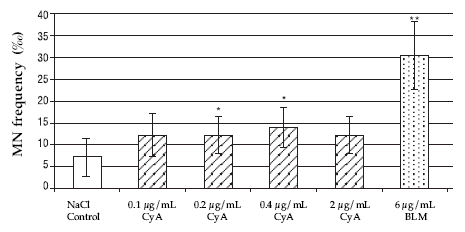
Figure 1. MN frequencies in binucleated cells after in vitro treatment with different CyA concentrations. (*) significant at the level P < 0.05; (**) significant at the level P < 0.01; CyA: cyclosporine A; BLM: bleomycin
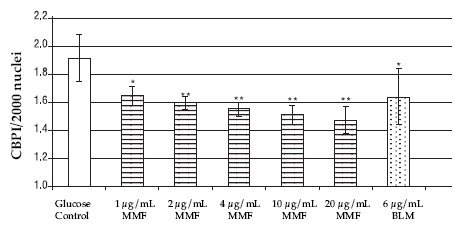
Figure 2. CBPI after in vitro treatment with different MMF concentrations. (*) significant at the level P < 0.05; (**) significant at the level P < 0.01; MMF: mycophenolate mofetil; BLM: bleomycin
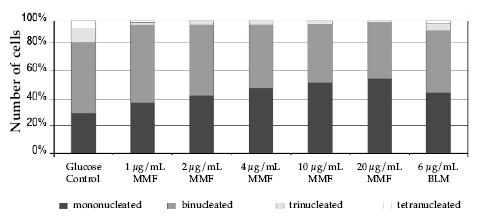
Figure 3. Distribution of mono-, bi-, tri- and tetranucleated cells in lymphocyte cultures after treatment with different MMF concentrations. MMF: mycophenolate mofetil; BLM: bleomycin
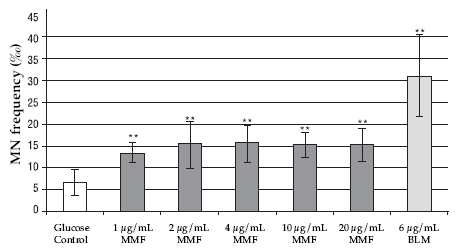
Figure 4. MN frequencies in binucleated cells after in vitro treatment with different MMF concentrations. (**) significant at the level P < 0.01; MMF: mycophenolate mofetil; BLM: bleomycin
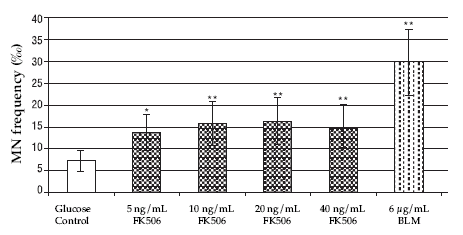
Figure 5. MN frequencies in binucleated cells after in vitro treatment with different FK506 concentrations. (*) significant at the level P < 0.05; (**) significant at the level P < 0.01; FK506: tacrolimus; BLM: bleomycin
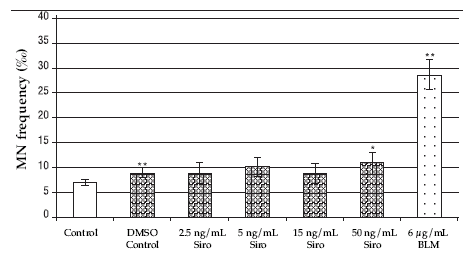
Figure 6. MN frequencies in binucleated cells after in vitro treatment with different sirolimus concentrations. (*) significant at the level P < 0.05; (**) significant at the level P < 0.01; Siro: sirolimus; BLM: bleomycin
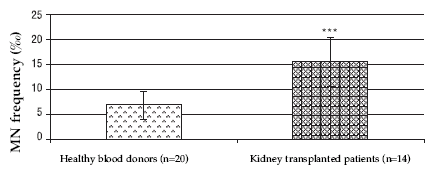
Figure 7. MN frequencies in binucleated cells in healthy blood donors and patients after kidney transplantation. (***) significant at the level P < 0.001
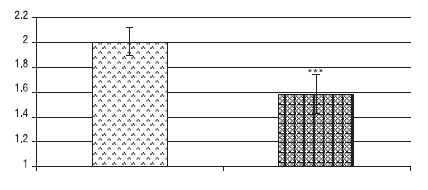
Figure 8. CBPI in healthy blood donors and kidney transplanted patients. (***) significant at the level P < 0.001