Volume: 1 Issue: 2 December 2003
FULL TEXT
Objectives: The purpose of this study is to report our single institution transplant surgery referral center’s experience with 139 consecutive biliary tract reconstructions performed in a mixed cohort of liver transplant recipients and patients with biliary tract malignancies, iatrogenic injuries, or other benign biliary pathology.
Materials and Methods: Between July 1999 and February 2003, 139 biliary tract reconstructions were performed in 119 patients, using five various types of biliary reconstructions. The records and operative notes of all patients were reviewed with particular attention to surgical technique, operative mortality, post-operative complications and postoperative liver function tests with respect to biliary function.
Results: The mean duration of follow-up was 19.4 months (range 1.0 – 44.7 months). We were pleased to find excellent results from bilio-enteric reconstruction as no patient in our series developed cholangitis, jaundice or liver failure.
Conclusion: Our goal is to inform the hepatobiliary and general surgeons of the principles of restoring biliary drainage that have arisen from our experience in a variety of reconstruction.
Key words : Biliary surgery, Liver transplantation, Surgical anastomosis, Iatrogenic lesion of biliary tree, Portoenterostomy
With limitiations in liver, laparoscopic, and biliary surgery, more biliary tract reconstructions are being performed today than ever before. In liver transplantation each of the three stages (harvesting, bench, and implantation) involves recognition of biliary duct anatomy and appropriate measurements prevent biliary complications. Due to innovative and alternative approaches in transplant surgery including living-related, split, and reduced size tranplantations, transplant surgeons are performing an increasing number of complex biliary duct reconstructions in both the adult and pediatric populations [1]. The benefits that surgery affords to the patient have resulted in an increase in elective procedures. In particular, the widespread use of laparoscopic cholecystectomy has led to an increased number of major bile duct injuries which remains a challenge even for the skilled biliary tract surgeon [2,3,4,5]. Finally, the importance of biliary tract reconstruction is apparent as hepatobiliary surgeons continue to face an increase in the number of patients with primary biliary malignancies.The purpose of this study is to report our single institution transplant surgery referral center’s experience with 139 consecutive biliary tract reconstructions performed in a mixed cohort of liver transplant recipients and patients with biliary tract malignancies, iatrogenic injuries, or other benign biliary pathologies.
Materials and Methods
Patient Population
Between July 1999 and April 2003, 139 biliary tract reconstructions were performed in 119 patients at the Istituto Mediterraneo per i Trapianti e Terapie ad Alta Specializzazione (ISMETT), a public Sicilian based tertiary care transplant center that has emerged from a partnership between the University of Pittsburgh Medical Center and the Italian Government. We reviewed the medical records of all patients undergoing biliary tract reconstructions at our facility with particular attention to surgical technique, operative mortality, post-operative complications and postoperative liver function tests (LFTs) with respect to biliary function. The series included 82 males and 37 females with a mean age of 54 years (range 15 – 76 years). The mean duration of follow-up was 19.4 months (range 1.0 – 44.7 months).
Indications for Biliary Tract Reconstructions
Multiple indications for inital biliary tract reconstruction were identified during our review of the cohort (Table 1). 61 reconstructions were performed for orthotopic liver transplantation (OLTX) from cadaveric donors, 36 reconstructions were necessary for biliary tract tumors, 13 biliary tract reconstructions were performed secondary to iatrogenic biliary tract injury, 3 reconstructions were performed for other benign primary biliary pathology (stricture of common bile duct secondary to chronic pancreatitis, stricture of common bile duct secondary to peptic ulcer disease, and choledocholithiasis), and 6 reconstructions occurred during living related liver transplantation (LRLTX).
Surgical Management
All the surgeons who performed the biliary tract reconstructions at ISMETT were trained at the University of Pittsburgh Medical Center. Uniform surgical technique was applied during the procedures without variation between members of the surgical team. All patients with benign or malignant stricture of the bile duct underwent preoperative percutaneous cholangiography. All patients were exposed using the standard mercedes incision with mobilization of the inferior surface of the liver. A biliary probe was used to delineate biliary tract anatomy and confirmed radiographically intraoperatively as needed. Technically, we performed five different types of biliary reconstructions (Table 2).
Thirtysix duct-to-duct choledo-choledocostomy anastomoses over a t-tube were performed (Figure 1a). Thirty were performed during OLTX and 6 were indicated during LRLTX. An 8 french t-tube was utilized in 30 cases, a 5 french in 5 cases, and one patient required a 10 french t-tube. We used running sutures in 22 patients and interrupted sutures in the remaining 14.
A total of 91 hepatico-jejunostomies including three redo anastomoses were performed (Figure 1b). A silastic tube was placed in 63 of these procedures. Hepatico-jejunostomies were indicated in 63 OLTX, 15 reconstructions for biliary malignancy, 9 for iatrogenic injury to the bile duct, and 1 for stones of the common bile duct. Three of the 63 hepatico-jejunostomies placed over a silastic tube failed requiring redo hepati-co-jejunostomies. Two of the cases were OLTX complicated by hepatic artery thrombosis and the third case was primary failure of the reconstruction following resection of a biliary tumor. 50 hepatico-jejunostomies out of 91 were constructed with running suture, and 42 of the 63 silastic stent utilized were 8 french while 19 were 10 french and 2 of 5 french according to the diameter of the duct.
Intrahepatic duct-jejunostomy anastomoses over a silastic tube was performed in four patients (Figure 1c). In one case, this technique was used to anastomose an accessory right hepatic duct in a living related liver transplant recipient. We used running sutures with a 5 french stent. The same technique was employed for the remaining three patients who had primary biliary tumors.
One hepatico-duodenostomy anastomose was done in a patient with chronic pancreatitis complicated by biliary stricture (Figure 1d). The anastomosis was accomplished with interrupted sutures over an 8 french stent.
Finally, 7 porto-enterostomy anastomoses were performed (Figure 1e). In four cases, intraoperatively, the two major biliary systems were stented according to the Rodney-Smith technique with a transhepatic multi-fenestrated 8 french semi-rigid stent. The porto-enterostomy was indicated in six cases of complex iatrogenic biliary tract injury following laparoscopic cholecystectomy including one case associated with a major vascular injury (Figure 2). The final patient undergoing this anastomosis was a liver transplant recipient who developed a hepatic artery thrombosis leading to biliary duct stenosis. In 5 out of 7 cases the parashoot technique was employed for the anastomosis, while interrupted sutures were utilized in the remaining two cases.
Results
Of the 61 patients undergoing OLTX, 5 underwent a redo biliary tract reconstruction due to a primary defect with the initial anastomosis. Another 12 patients underwent a redo of their reconstruction at a subsequent retransplant due to severe graft dysfunction. Two patients out of the 36 operated on for a biliary tract malignancy required a revision of their biliary anastomosis. One of these patients required two separate revisions of the biliary anastomotic site. Four of these tumors were intrahepatic cholangiocarcinomas. Eleven tumors were extrahepatic adenocarcinomas localized to the middle 1/3 of the biliary tree and the final 21 patients had adenocarcinomas in the distal 1/3 of the biliary tree. None of the 13 patients who underwent surgery for iatrogenic biliary tract injury developed any complications with their reconstructions. Eight of the biliary tract injuries were Bismuth Type 2 and five were Bismuth Type 4. None of the patients that underwent LRLTX or surgery for benign biliary pathology required a redo of their biliary anastomosis. Of the 35 duct-to-duct anastomoses performed, no perioperative death occured. Two major complications of the biliary anastomosis (6%) occurred following OLTX requiring a revision of the primary anastomosis. One anastomosis failed due to a cystic duct mucocele resulting in extrinsic compression and later converted to a Roux-en-Y hepaticojejunostomy. The second failure was due to a classic anastomotic stricture for technical reasons and then converted to a Roux-en-Y hepaticojejunostomy as well. No abnormality in the liver function tests were noted in the remaining 33 patients after a medium follow-up of 18.3 months (range 1.0 – 44.7 months).
Ninetyone hepaticojejunostomies, including three redo anastomoses, were performed with one perioperative death (1%) secondary to sepsis that originated from an intraperitoneal bile leak. The patient underwent surgical intervention for a primary biliary tumor which involved a hepatico-jejunostomy with a running suture without stent placement. We report three other major complications (3.5%) from our experience with hepaticojejunostomies. One patient with a primary biliary tumor developed a bile duct leak from the primary anastomosis. Following OLTX, two other anastomoses developed strictures within the first postoperative month but were successfully treated with percutaneous balloon dilatation. The remaining 87 patients experienced no abnormality in their liver function tests after a medium follow-up of 21.7 months (range 2.0 – 44.4 months). We note, however, that two of these patients who underwent OLTX had a redo of their biliary anastomosis due to unrelated follow-up surgery that required ligation of the biliary tract for visualization and revascularization of the hepatic artery. Of the four patients who underwent intrahepatic duct-jejunostomy, one died (1/4) from multiple organ dysfunction following perioperative intraperitoneal bile leak from the anastomotic site. The anastomosis was fashioned with a running suture over an 8 french silastic stent in a biliary tumor case. The other three patients had no abnormality in the liver function tests after a medium follow-up of 10.9 months (range 4.4 – 17.3 months). Our one experience with the hepatico-duodenostomy was uncomplicated. No abnormality in liver function tests is noted after 40 months. One perioperative death (14%) occurred in the seven patients who underwent porto-enterostomis at our institution. This patient was transferred to our facility in multi-organ failure following biliary peritonitis secondary to iatrogenic common bile duct injury at an outside institution. The patient died on post-operative day 14. No abnormality in liver function tests were noted in the remaining six patients after a medium follow-up of 14.4 months (range 3.2 – 26.5 months).
Discussion
Although this series is composed of a variety of pathologies requiring biliary reconstruction, many principles are generalized. Since the early days of OLTX, the favored technique for biliary reconstruction has been the end-to-end choledoco-cholecodostomy over a t-tube [6]. The advantage of this reconstruction is preservation of the sphincter of Oddi and the ability to monitor graft function through the t-tube. However, a duct-to-duct anastomosis is not always feasible in which case a Roux-en-Y hepatico-jejunostomy can be accomplished with comparable results [7,8]. In either case, careful evaluation of the blood supply to the donor duct is critical as it depends solely on arteries from the central hilum as it is no longer perfused from retroduodenal sources [9,10]. Mucocele formation of the donor cystic duct is a recognized complication requiring particular attention. Biliary reconstruction is a critical part of liver transplantation and biliary tract complications are dangerous and are associated with a high mortality rate. A review of the literature performed in 1994 by our group revealed a 50% mortality in bile leak after hepatico-jejunostomy [11]. Surgeons trained in liver transplantation learned this lesson and transfered this knowledge in the management of complex biliary injuries faced in general surgery cases.
Biliary reconstruction after iatrogenic biliary tract injury is a complex problem for the surgeon and a potential devasting complication for the patient. A literature review by Strasberg et al. reported a 0.5% iatrogenic biliary duct injury rate following laparoscopic cholecystectomy [12]. Among the wide range of possible reconstructions for complex biliary tract injuries, a bilio-enteric anastomosis with a defunctionalized loop has shown the best result. The most serious form are those producted by thermocautery in which there is a loss of tissue up above the main confluence. Optimal management of this patients relies initially on percutaneous transhepatic cholangiogram in order to define proximal bile duct anatomy and then in the placement of transhepatic biliary catheters in order to relieve obstructions. The most common repair technique is direct mucosa to mucosa approsimation by means of fine absorbable suture, with or without stenting according to the surgeon’s discretion [5]. In fact, much debate exists regarding the use of transanastomotic stents as well as the length of time the stent should be left in place [13,14,15]. From our experience, we recommend a selective approach to stent placement based on the indication for the bilary anastomosis, the health of the tissue and the diameter of the duct to be anastomosed. We routinely use stents in liver transplant recipients, complex cases of biliary reconstruction secondary to benign or malignant biliary lesions, as well as for all intrahepatic duct-jejunostomy. We should also emphasize the importance of stent placement when the duct is less then 5 mm in diameter or there is scarred or inflammatory tissue present.
Oncologic patients commonly demonstrate dilated ducts intraoperatively making biliary reconstructions technically easier if basic surgical principles are respected and clean margins are chosen for the anastomosis. We want to emphasize the benefits of loop magnification in performing intrahepatic duct-jejunos-tomy for primary biliary malignancy or in living related liver transplant recipients. In general, we were pleased to find excellent results from bilio-enteric reconstruction as no patient in our series developed cholangitis, jaundice or liver failure.
A different scenario is represented in the case of complex biliary tract injuries when a duct to mucosa anastomosis can not be accomplished. In this setting, we and others [2] have found a Roux-en-Y porto-enterostomy a particularly useful approach. This operation was originally devised in pediatric surgery for the treatment of bilary atresia by Kasai in 1968 [16] and then adopted by general surgery for the treatment of high biliary strictures [17,18]. In our experience, a combination of this procedure with intraoperative stenting of the two major intrahepatic biliary systems with multiple fenestrated semi-rigid stents was a lifesaving procedure in otherwise untreatable high biliary injuries (Figure 3). When feasible, an intrahepatic biliary drain should be placed during preoperative percutaneous cholangiogram and used to guide the portoenterostomy.
The purpose of this study is to report a transplant surgery referral center’s experience with the management of biliary reconstructions in a mixed cohort including liver transplant recipients and general surgery patients (primary malignancy of biliary tract or iatrogenic biliary injuries). Our analysis has led to a lesson that hepatobiliary and general surgeons should adopt for surgical treatment of biliary surgery.
We believe that this information supports the belief that complex malignant or benign biliary diseases should be managed by centers with significant hepatobiliary experience.
References:
- Heffron TG, Gruttadauria S, Campi O, Cavanna JM. Surgical innovations in pediatric Liver Transplantation: Reduced-Size, Split and Living-Related Transplantation. Problems in General Surgery 1998; 15:104-11
- Pickleman J, Marsan R, Borge M. Portoenterostomy: An Old treatment for a new disease. Archives of Surgery 2000; 135: 811-7
- Lillemoe K, Melton G, Cameron JL, Pitt HA, Campbell K, Talamini M, et al. Postoperative bile duct strictures: managment and outcome in the 1990s. Annals of Surgery 2000; 232: 430-41
- Moraca R, Lee F, Ryan JA Jr, Traverso LW. Long-term biliary function after reconstruction of major bile duct injuries with hepaticoduodenostomy or hepaticojejunostomy. Archives of Surgery 2002;137: 889-94
- Mercado MA, Chan C, Orozco H, Cano-Gutierrez G, Juan M, Galindo E, et al. To stent or not to stent bilioenteric anastomosis after iatrogenic injury: a dilemma not answered? Archives of Surgery 2002;137: 60-3
- Starzl TE. The recipient operation in man. In: Experience in Hepatic Transplantation. Starzl TE (ed). Philadelphia, WB Saunders, 1969, pp 112-43
- Starzl TE, Iwatsuki S, Van Thiel DH, Gartner JC, Zitelli BJ, Malatach JJ, et al. Evolution of liver transplantation. Hepatology 1982; 2: 614-36
- Starzl TE, Demetris AJ. Liver Transplantation: a 31 year perspective. Year Book Medical Publishers, Inc.,1990, Chicago, London, Boca Raton, Littleton, Mass.
- Parke WW, Michels NA, Ghosh CM. Blood supply of the common bile duct. Surg Gynecol & Obstet 1963;117: 47-55
- Northover JMA, Terblanche J. A new look at the arterial supply of the bile duct in man and its surgical implications. Br J Surg 1979;66: 379-84
- Greif F, Bronsther OL, Van Thiel DH, Casavilla A, Iwatsuki S, Tzakis A, et al. The incidence, timing, and managment of biliary tract complications after orthotopic liver transplantation. Ann Surg 1994;219: 40-5
- Strasberg SM, Hertl M, Soper NJ. An analysis of the problems of biliary injury during laparoscopic cholecystectomy. J Am Coll Surg 1995;180: 101-12
- Cameron JL, Skinner DB, Zuidema GD. Long term transhepatic intubation for hilar hepatic duct strictures. Ann Surg 1976;183: 488-95
- Cameron JL, Gaylar BH, Zuidema GB. The use of silastic transhepatic stents in benign and malignant biliary strictures. Ann Surg 1978; 188: 552-61
- Jamgin WR, Blumgart LH.Operative repair of bile duct injuries involving the hepatic duct confluence. Arch Surg 1999;134:769-75
- Kasai M, Kimura S, Asakura Y, Suzuki H, Taira Y, Ohashi E. Surgical treatment of biliary atresia. J Pediatr Surg 1968; 3: 665-75
- Stewart L, Way LW. Bile duct injuries during laparoscopic cholecystectomy: Arch Surg. 1995;130: 1123-29
- Schlitt HJ, Meier PN, Nashan B, Oldhafer KJ, Boeker K, Flemming P et al. Reconstructive surgery for ischemic-type lesions at the bile duct bifurcation after liver transplantation. Ann Surg 1999; 229:137-45

Volume : 1
Issue : 2
Pages : 73 - 78
Istituto Mediterraneo per i Trapianti e Terapie ad Alta Specializzazione (ISMETT) and the Thomas Starzl Transplantation Institute Surgery, University of Pittsburgh, School of Medicine
Address reprint requests to: John J Fung, MD, PhD, Thomas E Starzl Professor of Surgery Chief, Division of Transplantation Surgery, The Thomas E Starzl Transplantation Institute, UPMC Montefiore, 7 South 3459 Fifth Avenue, Pittsburgh, PA 15213 Tel: 412-647-9577 Fax: 412-647-5480
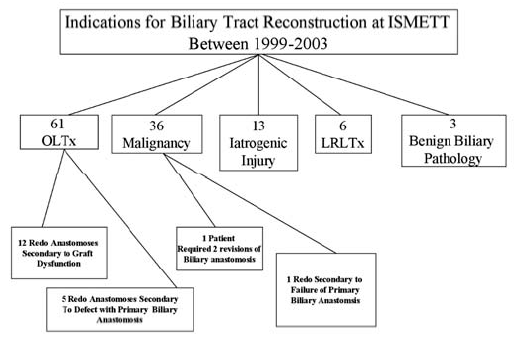
Table 1. Indications for biliary tract reconstruction

Table 2. Types of biliary reconstruction
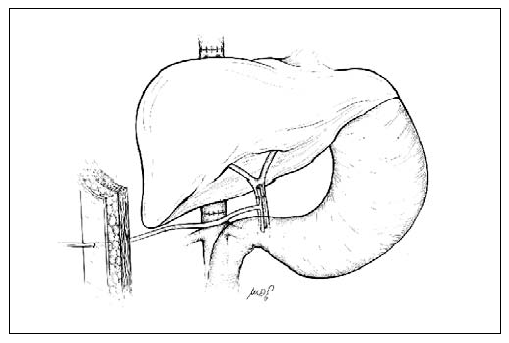
Figure 1a. Duct- to-Duct Anastomosis in OLTX and LRLTX
The classic end-to-end anastomosis performed using 5-0 polidioxanone either interrupted or running sutures according to the size of the ducts. An 8 french t-tube was then placed to form a gutter.

Figure 1b. Standard hepatico-jejunostomy in OLTx and benign or malignant stricture
The bile duct is prepared for anastomosis. A 40cm Roux-en-Y loop of jejunum is fashioned using manual suturing. A small opening is made with the electrocautery on the antimesenteric border of the limb 3-4cm proximal to the sutured stump. The opening in the Roux-en-Y limb can be enlarged using a mosquito clamp as needed to match the size of the biliary duct. The hepatico-jejunostomy is performed with 5-0 polidioxanone in an interrupted or running fashion depending on the size of the duct. Finally, a 3-4cm silastic stent, with several openings made along its length, is stitched to the Roux-en-Y limb.
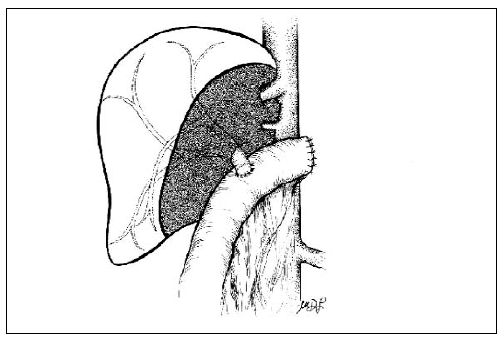
Figure 1c. Intrahepatic duct–jejunostomy for malignancy or LRLTX
The same technique as the standard choledo-jejunostomy is performed in this situation. Surgeons may choose to utilize loops (magnificaton x 2.5) in the event of small intrahepatic ducts.
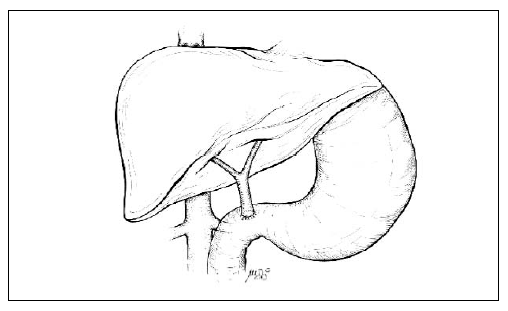
Figure 1d. Hepatico-duodenostomy
Agenerous Kocherization of the duodenum is followed by a tension free end to side anastomosis.
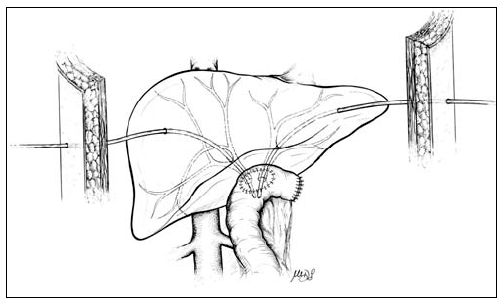
Figure 1e. Porto-enterostomy
When ductal-enteric continuity is compromised, such as is the case with complex biliary tract lesions, porto-enterostomy is performed with preoperative or intraoperative stenting. The Rodney-Smith technique is accomplished with poliprolilene fine sutures that are either interrupted or parashoot running on the usual Roux-en-Y jejunal limb.
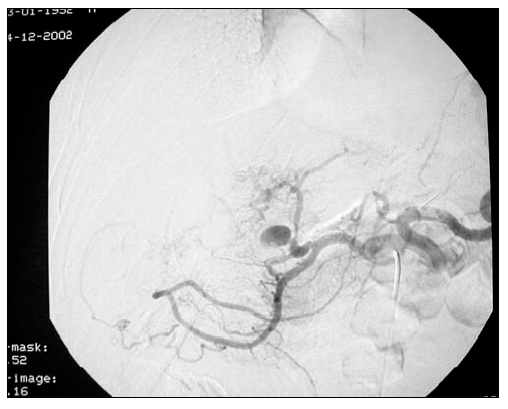
Figure 2. An iatrogenic pseudo-aneurysm of the right branch of the hepatic artery.
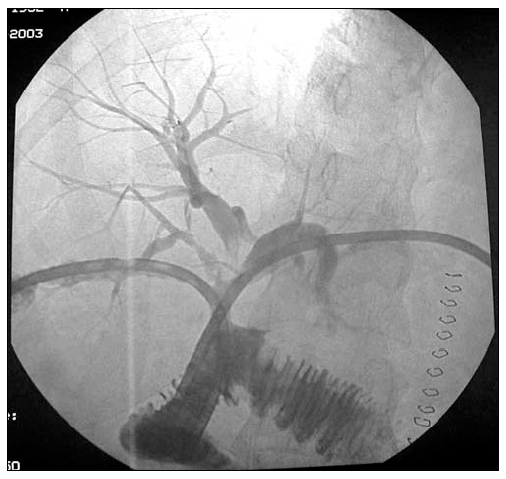
Figure 3. Post-operative cholangiogram showed success of the modified porto-enterostomy.