Volume: 17 Issue: 1 January 2019 - Supplement - 1
FULL TEXT
Objectives: The outcomes of heart transplantation are very favorable, but inflammation still plays a critical role in deterioration of chronic transplants. Periodontal diseases are not limited to supporting the structures of the teeth, but they also cause systemic inflammation. Based on the importance of inflammation in heart transplant recipients and the association between periodontal disease and systemic inflammation, this study explored whether periodontitis may be a modifier of serum high-sensitivity C-reactive protein in heart transplant patients.
Materials and Methods: Our study included 33 patients who had heart transplant procedures at the Baskent University Hospital. Clinical periodontal parameters were recorded to assess the periodontal status. On the same day as clinical measurements, blood samples were collected to measure the serum levels of high-sensitivity C-reactive protein.
Results: Of the 33 heart transplant patients, 9 patients (27.3%) were diagnosed with periodontitis, 4 (12.1%) were periodontally healthy, and 20 (60.6%) had gingivitis. In the group with periodontitis, serum high-sensitivity C-reactive protein levels were significantly higher than the periodontally healthy and gingivitis groups (P = .006). In addition, Spearman correlation analyses showed that serum high-sensitivity C-reactive protein was positively correlated with probing depth (r = 0.358; P = .041), clinical attachment level (r = 0.352; P = .045), and gingival recession (r = 0.422; P = .014).
Conclusions: We found that elevated levels of serum high-sensitivity C-reactive protein in heart transplant patients were associated with periodontitis. Thus, these findings reinforce the need for the inclusion of regular periodontal visits after transplant.
Key words : Cardiac transplant recipients, Inflammation, Periodontal disease
Introduction
Heart transplantation is the definitive therapeutic alternative for patients with end-stage heart disease. Outcomes after heart transplantation are favorable due to the well-established indications and contraindications. Nevertheless, early and late complications may occur that can decrease survival rates.1
C-reactive protein (CRP) is an acute-phase protein that is produced by hepatocytes under the control of inflammatory cytokines and is an established marker for acute and chronic inflammation ongoing in the body.2 It has also been suggested that elevated levels of CRP are associated with allograft failure and angiographic evidence of cardiac allograft vasculopathy in cardiac transplant recipients.3-6
Periodontal diseases are bacteria-induced, chronic inflammatory diseases of the supporting structures of the teeth.7,8 Gingivitis and periodontitis are the 2 most common forms of periodontal disease. Gingivitis is characterized by the presence of clinical signs of inflammation, which is localized to the gingiva. However, periodontitis results in progressive destruction of the supporting tissues, which includes the periodontal ligament and alveolar bone.9 In the past, it was emphasized that periodontal infections are localized to the marginal periodontium, and thus they rarely have systemic implications in healthy individuals. However, in recent years, an association between periodontal inflammation and systemic health has been extensively researched. Indeed, it was shown that patients with severe periodontitis have increased serum levels of CRP, interleukin 1, and interleukin 6 compared with periodontally healthy individuals.10-13 Furthermore treatment of periodontitis resulted in decreases in inflammatory markers.14-16
Based on the importance of inflammation in heart transplant recipients and the relation between periodontal disease and systemic inflammation, this study explored whether periodontitis may be a modifier of serum high-sensitivity C-reactive protein (HsCRP) in heart transplant patients.
Materials and Methods
Study population and study design
This single-center cross-sectional study was conducted from April 2016 to May
2018 to evaluate levels of HsCRP in heart transplant patients with and without
periodontitis. The study protocol was approved by the Baskent University
Institutional Review Board and Ethics Committee (16/02). The study was performed
in accordance with the Helsinki Declaration of 1975, as revised in 2000. The
patients who underwent heart transplant between 2004 and April 2016 at Baskent
University Hospital were asked to participate in the study during routine
outpatient visits at Baskent University Hospital.
Our study included 33 heart transplant patients; before enrollment, patients received a detailed description of the study and provided signed informed consent. For study inclusion, patients had to (1) be clinically stable, (2) be at least 1 year posttransplant, (3) have no history of antibiotic use during the preceding 4 months, and (5) have no periodontal treatment within the previous year.
Periodontal examination
Periodontal examinations were performed by a periodontist who was trained before
initiation of the study. The following clinical parameters were assessed using a
periodontal probe (Nordent Manufacturing Inc., Elk Grove Village, IL, USA): (1)
plaque index,17 (2) gingival index,18 (3) gingival recession, measured from the
cementoenamel junction to the gingival margin, (4) probing depth, measured from
gingival margin to the bottom of the gingival sulcus, (5) and clinical
attachment level (CAL), measured from the cementoenamel junction to the bottom
of the gingival sulcus.
Patients were categorized into a healthy/gingivitis group or a periodontitis group. The periodontitis group consisted of patients who had probing depths > 3 mm, inflammation, and evidence of attachment loss.19 The healthy/gingivitis group consisted of patients who had probing depths of 3 mm or less, with/without clinical signs of inflammation.
Blood samples and laboratory analyses
We obtained 12-hour fasting serum samples from each participant for HsCRP
measurements. Venous blood was collected by venipuncture using a vacutainer tube
(Vacusera 8-mL serum gel and clot activator tube, Disera, Izmir, Turkey).
Samples were allowed to coagulate for 30 minutes at 37°C. Serum was then
separated by centrifugation at 2000g for 10 minutes at 4°C. We measured CRP
values using a HsCRP enzyme-linked immunosorbent assay and a commercially
available kit (Multigent CRP Vario assay, Abbott Laboratories, Abbott Park, IL,
USA).
Statistical analyses
Data analyses were performed with IBM SPSS Statistics version 17.0 software (IBM
Corporation, Armonk, NY, USA). Determination of whether continuous variables
were normally or not normally distributed was determined by the Shapiro-Wilk
test. Descriptive statistics for continuous variables are expressed as means and
SD. Number of cases and percentages were used for categorical data. Mean
differences in age levels between the healthy/gingivitis group and the
periodontitis group were compared by t test; the Fisher exact test was applied
for comparisons of sex distribution. Determination of whether periodontal
measurements and serum levels of HsCRP between groups were statistically
significant was evaluated by the Mann-Whitney U test. Degrees of associations
between serum levels of HsCRP and periodontal measurements were evaluated by
Spearman rank correlation analyses. P < .05 was considered statistically
significant.
Results
Population characteristics and periodontal findings
Sample demographics, periodontal measurements, and serum levels of HsCRP of the
patients are shown in Table 1. Of the total 33 patients, 21 were male (63.6%)
and 12 were female (36.4%), with age ranging from 11 to 59 years (mean age of
33.1 ± 14.67 y). Of total patients, 24 (72.7%) were in the periodontally
healthy/gingivitis group and 9 (27.3%) were in the periodontitis group.
There were significant differences between study groups regarding mean ages. The periodontally healthy/gingivitis group was younger than the periodontitis group (P < .001). Sex distribution was similar in both groups (P > .05). In the periodontitis group, mean probing depth, gingival recession, and CAL were higher than results in the periodontally healthy/gingivitis group (P < .001). Gingival index and plaque index were similar in both the periodontally healthy/gingivitis and the periodontitis groups (P > .05).
Serum high-sensitivity C-reactive protein level and periodontal status
The periodontitis group exhibited higher serum HsCRP levels than the
periodontally healthy/gingivitis group (P = .006; Table 1). Correlation values
between serum levels of HsCRP and clinical parameters are given in Table 2.
Spearman correlation analyses showed that serum HsCRP was positively correlated
with probing depth (r = 0.358; P = .041), CAL (r = 0.352; P = .045), and
gingival recession (r = 0.422; P = .014).
Discussion
Chronic low-grade inflammation plays an important role in the pathogenesis of atherosclerosis.20,21 Several studies have suggested that elevated serum CRP, a sensitive marker of systemic inflammation, is an independent risk for native atherosclerosis in healthy individuals.21-25 Regarding its important role in the initiation and progression of native atherosclerosis, in recent years, the relationships between CRP and allograft survival and transplant coronary artery disease have been explored. Eisenberg and associates showed that increased levels of CRP are associated with allograft failure in heart transplant patients.5 In another study, Labarrere and colleagues investigated whether CRP was associated with the development, increased severity, and enhanced rate of progression of transplant coronary artery disease.6 Their results showed that development and severity of cardiac allograft vasculopathy was significantly higher in patients with increased CRP levels. From these results, they concluded that CRP can be used to identify heart transplant patients at increased risk of coronary artery disease and graft failure. Similarly, Hognestad and associates showed that levels of HsCRP are associated with the development of cardiac allograft vasculopathy.3
Periodontitis is an inflammatory disease of the supporting structures of the teeth in response to bacterial accumulations; if not treated, it will lead to tooth loss. Periodontitis allows entry of oral/periodontal pathogens (or their products) into the bloodstream from the inflamed and ulcerated gingival epithelium. This leads to activation of the host inflammatory response by multiple mechanisms.7 Periodontitis can result in increased serum levels of CRP, interleukin 1, interleukin 6, and hyperfibrinogenemia compared with periodontally healthy patients. In addition, periodontal treatment can reduce systemic inflammation, as evidenced by reduced CRP. Several studies have shown that patients with periodontal disease may have a higher risk for atherosclerosis and coronary heart disease.26-30 In a recent consensus report of the Joint European Federation of Periodontology and American Academy of Periodontology and American Academy of Periodontology Workshop on Periodontitis and Systemic Diseases, it was concluded that there is consistent and strong epidemiologic evidence that periodontitis imparts increased risk for future cardiovascular disease.7 In their work, Noack and associates31 found significantly increased CRP levels in patients with periodontal disease versus healthy patients. Similarly, Fredriksson and associates and Ebersole and associates found higher serum CRP concentrations in periodontitis patients versus healthy patients.11,32 Although these studies assessed CRP levels in patients with periodontitis, to our knowledge, our study is the first to compare HsCRP levels in heart transplant patients with and without periodontitis.
In this first study in heart transplant patients, we showed that periodontitis may be a modifier of systemic CRP in heart transplant recipients. Our results demonstrated that heart transplant recipients with periodontitis exhibited higher serum HsCRP levels than heart transplant recipients without periodontitis. The mean HsCRP level in the periodontally healthy group was 2.71 ± 2.23 mg/L, whereas the mean HsCRP level in the periodontitis group was 10.68 ± 12.48 mg/L. Moreover, we also found significant and positive correlations among probing depth, CAL, and gingival recession. These results are consistent with previous studies that evaluated CRP levels in patients with periodontitis versus periodontally healthy patients.11,31,32
We observed significant differences in probing depth, gingival recession, and CAL between our periodontitis and periodontally healthy/gingivitis groups, whereas gingival index and plaque index results were similar between groups. Obtaining differences in probing depth, gingival recession, and CAL between periodontitis and periodontally healthy/gingivitis group is an expected result because periodontitis is a chronic inflammatory disease of the supporting structures of the teeth, which is characterized by periodontal pocket formation and loss of connective tissue attachment and alveolar bone.33
With regard to gingival index scores, we expected the gingival index scores in the periodontitis group would actually be higher than the periodontally healthy/gingivitis group. One possible reason for the lack of statistically significant differences in gingival index between the groups may be because signs of periodontal disease are reduced by immunosuppressive therapy. This consideration is supported by previous studies in which transplant patients experienced reduced gingival inflammation.34,35
The plaque index scores were also similar between groups. These results demonstrate that most participants had poor oral hygiene. In addition, the periodontally healthy/gingivitis group was younger than the periodontitis group. When we consider both the younger age of the periodontally healthy/gingivitis group and the poor oral hygiene behavior, we suggest that most of these patients are at high likelihood for developing periodontitis at a later age.
In previous studies, elevated CRP levels were shown to be associated with graft survival and development of cardiac allograft vasculopathy. Therefore, there is a possibility that graft survival and development of transplant coronary artery disease may be associated with periodontal disease.3-6 Considering the often life-long immunosuppression required after heart transplant and the systemic effects of periodontitis, dental and periodontal examinations are necessary before heart transplant. In addition, careful examination of periodontal status in heart transplant recipients and appropriate treatment of periodontitis are necessary. However, the results of this study should be interpreted with caution because the cross-sectional design of our study presents limitations. To establish a true cause and effect relationship, further prospective studies that assess the effects of periodontal therapy on HsCRP levels are needed.
References:
- Mangini S, Alves BR, Silvestre OM, et al. Heart transplantation: review. Einstein (Sao Paulo). 2015;13(2):310-318.
CrossRef - PubMed - Pepys MB, Baltz ML. Acute phase proteins with special reference to C-reactive protein and related proteins (pentaxins) and serum amyloid A protein. Adv Immunol. 1983;34:141-212.
CrossRef - PubMed - Hognestad A, Endresen K, Wergeland R, et al. Plasma C-reactive protein as a marker of cardiac allograft vasculopathy in heart transplant recipients. J Am Coll Cardiol. 2003;42(3):477-482.
CrossRef - PubMed - Pethig K, Heublein B, Kutschka I, Haverich A. Systemic inflammatory response in cardiac allograft vasculopathy: high-sensitive C-reactive protein is associated with progressive luminal obstruction. Circulation. 2000;102(19 Suppl 3):III233-236.
CrossRef - PubMed - Eisenberg MS, Chen HJ, Warshofsky MK, et al. Elevated levels of plasma C-reactive protein are associated with decreased graft survival in cardiac transplant recipients. Circulation. 2000;102(17):2100-2104.
CrossRef - PubMed - Labarrere CA, Lee JB, Nelson DR, Al-Hassani M, Miller SJ, Pitts DE. C-reactive protein, arterial endothelial activation, and development of transplant coronary artery disease: a prospective study. Lancet. 2002;360(9344):1462-1467.
CrossRef - PubMed - Tonetti MS, Van Dyke TE, working group 1 of the Joint EFP/AAP Workshop. Periodontitis and atherosclerotic cardiovascular disease: consensus report of the Joint EFP/AAP Workshop on Periodontitis and Systemic Diseases. J Periodontol. 2013;84 Suppl 4S:S24-S29.
CrossRef - PubMed - Nguyen CM, Kim JW, Quan VH, Nguyen BH, Tran SD. Periodontal associations in cardiovascular diseases: The latest evidence and understanding. J Oral Biol Craniofac Res. 2015;5(3):203-206.
CrossRef - PubMed - Lindhe J, Haffajee AD, Socransky SS. Progression of periodontal disease in adult subjects in the absence of periodontal therapy. J Clin Periodontol. 1983;10(4):433-442.
CrossRef - PubMed - Kweider M, Lowe GD, Murray GD, Kinane DF, McGowan DA. Dental disease, fibrinogen and white cell count; links with myocardial infarction? Scott Med J. 1993;38(3):73-74.
CrossRef - PubMed - Ebersole JL, Machen RL, Steffen MJ, Willmann DE. Systemic acute-phase reactants, C-reactive protein and haptoglobin, in adult periodontitis. Clin Exp Immunol. 1997;107(2):347-352.
CrossRef - PubMed - Loos BG, Craandijk J, Hoek FJ, Wertheim-van Dillen PM, van der Velden U. Elevation of systemic markers related to cardiovascular diseases in the peripheral blood of periodontitis patients. J Periodontol. 2000;71(10):1528-1534.
CrossRef - PubMed - Slade GD, Ghezzi EM, Heiss G, Beck JD, Riche E, Offenbacher S. Relationship between periodontal disease and C-reactive protein among adults in the Atherosclerosis Risk in Communities study. Arch Intern Med. 2003;163(10):1172-1179.
CrossRef - PubMed - D'Aiuto F, Parkar M, Andreou G, et al. Periodontitis and systemic inflammation: control of the local infection is associated with a reduction in serum inflammatory markers. J Dent Res. 2004;83(2):156-160.
CrossRef - PubMed - George AK, Janam P. The short-term effects of non-surgical periodontal therapy on the circulating levels of interleukin-6 and C-reactive protein in patients with chronic periodontitis. J Indian Soc Periodontol. 2013;17(1):36-41.
CrossRefPubmed: https://www.ncbi.nlm.nih.gov/pubmed/23633770
- Kumar S, Shah S, Budhiraja S, Desai K, Shah C, Mehta D. The effect of periodontal treatment on C-reactive protein: A clinical study. J Nat Sci Biol Med. 2013;4(2):379-382.
CrossRef - PubMed - Silness J, Loe H. Periodontal Disease in Pregnancy. II. Correlation between oral hygiene and periodontal condition. Acta Odontol Scand. 1964;22:121-135.
CrossRef - PubMed - Loe H, Silness J. Periodontal disease in pregnancy. I. Prevalence and severity. Acta Odontol Scand. 1963;21:533-551.
CrossRef - PubMed - American Academy of Periodontology Task Force Report on the Update to the 1999 Classification of Periodontal Diseases and Conditions. J Periodontol. 2015;86(7):835-838.
CrossRef - PubMed - Lagrand WK, Visser CA, Hermens WT, et al. C-reactive protein as a cardiovascular risk factor: more than an epiphenomenon? Circulation. 1999;100(1):96-102.
CrossRef - PubMed - Koenig W, Sund M, Frohlich M, et al. C-Reactive protein, a sensitive marker of inflammation, predicts future risk of coronary heart disease in initially healthy middle-aged men: results from the MONICA (Monitoring Trends and Determinants in Cardiovascular Disease) Augsburg Cohort Study, 1984 to 1992. Circulation. 1999;99(2):237-242.
CrossRef - PubMed - Blake GJ, Ridker PM. High sensitivity C-reactive protein for predicting cardiovascular disease: an inflammatory hypothesis. Eur Heart J. 2001;22(5):349-352.
CrossRef - PubMed - Ridker PM, Cushman M, Stampfer MJ, Tracy RP, Hennekens CH. Inflammation, aspirin, and the risk of cardiovascular disease in apparently healthy men. N Engl J Med. 1997;336(14):973-979.
CrossRef - PubMed - Ridker PM, Cushman M, Stampfer MJ, Tracy RP, Hennekens CH. Plasma concentration of C-reactive protein and risk of developing peripheral vascular disease. Circulation. 1998;97(5):425-428.
CrossRef - PubMed - de Winter RJ, Bholasingh R, Lijmer JG, et al. Independent prognostic value of C-reactive protein and troponin I in patients with unstable angina or non-Q-wave myocardial infarction. Cardiovasc Res. 1999;42(1):240-245.
CrossRef - PubMed - Meurman JH, Sanz M, Janket SJ. Oral health, atherosclerosis, and cardiovascular disease. Crit Rev Oral Biol Med. 2004;15(6):403-413.
CrossRef - PubMed - Beck JD, Offenbacher S, Williams R, Gibbs P, Garcia R. Periodontitis: a risk factor for coronary heart disease? Ann Periodontol. 1998;3(1):127-141.
CrossRef - PubMed - Khader YS, Albashaireh ZS, Alomari MA. Periodontal diseases and the risk of coronary heart and cerebrovascular diseases: a meta-analysis. J Periodontol. 2004;75(8):1046-1053.
CrossRef - PubMed - Gotsman I, Lotan C, Soskolne WA, et al. Periodontal destruction is associated with coronary artery disease and periodontal infection with acute coronary syndrome. J Periodontol. 2007;78(5):849-858.
CrossRef - PubMed - Vidal F, Figueredo CM, Cordovil I, Fischer RG. Periodontal therapy reduces plasma levels of interleukin-6, C-reactive protein, and fibrinogen in patients with severe periodontitis and refractory arterial hypertension. J Periodontol. 2009;80(5):786-791.
CrossRef - PubMed - Noack B, Genco RJ, Trevisan M, Grossi S, Zambon JJ, De Nardin E. Periodontal infections contribute to elevated systemic C-reactive protein level. J Periodontol. 2001;72(9):1221-1227.
CrossRef - PubMed - Fredriksson MI, Figueredo CM, Gustafsson A, Bergstrom KG, Asman BE. Effect of periodontitis and smoking on blood leukocytes and acute-phase proteins. J Periodontol. 1999;70(11):1355-1360.
CrossRef - PubMed - Pihlstrom BL, Michalowicz BS, Johnson NW. Periodontal diseases. Lancet. 2005;366(9499):1809-1820.
CrossRef - PubMed - Schuller PD, Freedman HL, Lewis DW. Periodontal status of renal transplant patients receiving immunosuppressive therapy. J Periodontol. 1973;44(3):167-170.
CrossRef - PubMed - Shaqman M, Ioannidou E, Burleson J, Hull D, Dongari-Bagtzoglou A. Periodontitis and inflammatory markers in transplant recipients. J Periodontol. 2010;81(5):666-672.
CrossRef - PubMed
Volume : 17
Issue : 1
Pages : 123 - 125
DOI : 10.6002/ect.MESOT2018.O65
From the 1Department of Periodontology, Faculty of Dentistry, the
2Biochemistry
Laboratory, and the 3Department of Cardiovascular Surgery, Faculty of Medicine,
Başkent University, Ankara, Turkey
Acknowledgements: This research was supported by Baskent University Research
Fund (D-DA11/07). The authors declare that they have no conflict of interest
related to this study.
Corresponding author: Yasemin Sezgin, Başkent University, Faculty of Dentistry,
Department of Periodontology, 11. Sokak No:26, Ankara 06540, Turkey
Phone: +90 312 2151336
E-mail: yasemin_tocak@hotmail.com
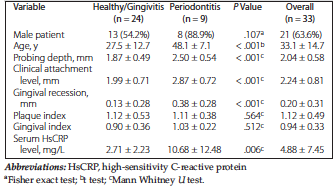
Table 1. Demographics, Periodontal Measurements, and Serum Levels of High-Sensitivity C-Reactive Protein Stratified by Periodontal Status
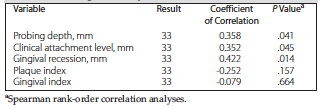
Table 2. Correlation Analyses Between Periodontal Measurements and Serum Levels of High-Sensitivity C-Reactive Protein