Volume: 17 Issue: 1 January 2019 - Supplement - 1
FULL TEXT
Objectives: Renal transplant is the treatment of choice for patients with end-stage renal disease. Ischemia-reperfusion damage is a major cause of early renal dysfunction during the perioperative period. Ischemic hypoxic damage increases local inflammation, leading to secretion of cytokines and chemokines. Anesthetic conditioning is a widely described strategy to attenuate ischemia-reperfusion injury. Here, we compared the effects of desflurane and sevoflurane on serum proinflammatory cytokines and urine chemokines in living-donor kidney transplant recipients.
Materials and Methods: Eighty donor-recipient couples were included in this randomized study. Anesthesia maintenance was provided by desflurane or sevoflurane. Patient demographic characteristics, immunologic data, clinical data, and hemodynamic parameters were recorded. Tumor necrosis factor α, interleukins 2 and 8, chemokines 9 and 10, and serum creatinine levels were studied from pretransplant, posttransplant days 1 and 7, and posttransplant months 1 and 3 sample results. Estimated glomerular filtration rates were calculated. Acute rejection episodes and graft loss within 6 months post-transplant were recorded.
Results: Seventy donor-recipient couples completed the study. There were no significant differences in demographic, immunologic, and clinical data between desflurane and sevoflurane groups (P > .05). Tumor necrosis factor α, interleukin 2, chemokine 9, and chemokine 10 levels were similar preoperatively and on postoperative days 1 and 7 and months 1 and 3 (P > .05). Serum interleukin 8 levels were significantly higher in patients who received sevoflurane on postoperative days 1 (P = .045) and 7 (P = .037). No significant differences were detected in serum creatinine and estimated glomerular filtration rate between groups (P > .05). No graft loss occurred within 6 months posttransplant.
Conclusions: Although sevoflurane seemed to produce higher interleukin 8 levels posttransplant, both desflurane and sevoflurane had similar effects on posttransplant kidney function. We suggest that both agents have protective effects on ischemic-reper-fusion damage in living-donor kidney transplant recipients.
Key words : Desflurane, Renal dysfunction, Renal transplantation, Sevoflurane
Introduction
Renal dysfunction secondary to ischemia-reperfusion injury (IRI) is a major clinical issue in patients undergoing living-related donor renal transplant. Ischemia-reperfusion injury is an inflammatory condition containing multiple systemic and cellular reactions, including up-regulation of several proinflammatory cytokines (for example, tumor necrosis factor alpha [TNF-α], interleukin 2 [IL-2], and interleukin 8 [IL-8]) and chemokine receptor 3-binding chemokines (for example, chemokine 9 [CXCL9; monokine induced by interferon-gamma] and chemokine 10 [CXCL10; interferon-induced protein]). Local inflammation, which is caused by hypoxic damage, leads to the secretion of cytokines, producing injured proximal tubes, and endothelial cells. In addition, chemokines promote local inflammation by inviting cytotoxic neutrophils and cytotoxic T lymphocytes to the kidney after IRI.1 Chemokines are small inducible proinflam-matory cytokines, which are normally expressed at low levels and are rapidly up-regulated at the onset of the immune response. Higher urinary levels of che-mokines robustly predict acute rejection episodes.2,3
Volatiles are an essential part of general anesthesia. In addition to their anesthetic effects, they significantly modulate the immune system in vivo and in vitro.4-6 Researchers have shown that the immune modulator effects of volatile anesthetics are associated with trifluorocarbon molecules in the structures and that renal protection is associated with lipid solubility.7 Volatile anesthetics use various signaling pathways to prevent IRI, involving trans-forming growth factor β generation, sphingosine kinase activation, adenosine generation, and L-11 synthesis independent of the ATP-dependent potassium channel.1,4,8 To date, preconditioning and postconditioning effects on the preservation of organ function in different surgeries (including coronary bypass, lung surgery with single-lung ventilation, and liver transplant) have been shown in many studies.9-12 However, studies comparing the effects of volatile anesthetics on grafted kidney function after living-donor related kidney transplant are scarce. Most studies have been experimental animal investigations, and the effects of anesthetics on IRI have only been evaluated in a few randomized controlled clinical trials.13,14
The objective of the present randomized, clinical study was to compare the preconditioning and postconditioning effects of sevoflurane and desflurane on the living-donor transplanted kidney. Within our study design, serum proinflammatory cytokines, urine chemokines, and kidney function tests (serum creatinine and estimated glomerular filtration rate [eGFR]) were evaluated. We hypothesized that desflurane-based anesthesia would be less potent in supplying renal protection due to its less lipid solubility compared with sevoflurane-based anesthesia. Our primary outcome was renal injury biomarkers (serum TNF-α, IL-2, and IL-8 levels and urine CXCL10 and CXCL9 levels) in the postoperative period. Secondary endpoints were serum creatinine levels and eGFR on postoperative days 1 and 7 and months 1 and 3, acute rejection episodes, and graft loss within 6 months.
Materials and Methods
Study population and study protocol
Eighty donor-recipient couples undergoing living-related donor transplant
surgery classified as I to III according the American Society of
Anesthesiologists were recruited to this prospective, randomized clinical study.
The study was conducted between April 2014 and November 2016 after Ethics
Committee approval of Istanbul Medical Faculty (2013/1073) was granted and
written informed consent was obtained from patients. Before the operation,
immunologic factors (eg, the number of matched HLA-A, HLA-B, and HLA-DR, results
of crossmatch test, and pretrans-plant and posttransplant HLA antibodies) that
could affect renal graft function were analyzed in all patients. Patients with
positive complement-dependent cytotoxicity crossmatch or flow cytometry tests,
those diagnosed with severe heart or respiratory failure, and those with
systemic or urinary tract infection or with evidence of drug toxicity were
excluded from the study.
Patients were randomly allocated to the sevoflurane group or the desflurane group using a computerized single-block randomization program. Recipient and donor couples were administered the same volatile anesthetic. Electrocardiograms, invasive blood pressure, and pulse oximetry of all recipients and donors were monitored in the operating room. General anesthesia was administered intravenously using 0.03 mg/kg of midazolam, 2 mg/kg of propofol, 1 mg/kg of remifentanil, and 0.5 mg/kg of rocuronium. An appropriate size endotracheal tube was inserted, and mechanical ventilation was then initiated at a favorable tidal volume (6-8 mL/kg) and respiratory rate (10-12 breaths/min). We aimed to keep the end-tidal carbon dioxide concentration at 32 to 35 mm Hg and end-tidal volatile anesthetic concentration at 1.2 minimum alveolar concentration throughout the procedure.
The sevoflurane group was given 2% to 3% sevoflurane, and the desflurane group was given 4% to 6% desflurane with a mixture of 50% oxygen and 50% air with 2 L of fresh gas flow. All patients received continuous intravenous infusion of remifentanil (0.1-0.2 mg/kg/min) for balanced anesthesia.
Fluid management in the donors encompassed 6 to 8 mL/kg of crystalloids. Isotonic saline (approximately 5 mL/kg/h) was infused in recipients to maintain central venous pressure at 10 to 15 mm Hg, which enabled the adequate perfusion of the grafted kidney. We aimed to maintain blood pressure levels within 20% of preoperative values. Volume replacement and incremental 5-mg ephedrine were used in case of arterial hypotension. Bradycardia (heart rate of < 50 beats/min) was treated using 0.01 mg/kg atropine. Intravenous 20% mannitol (0.3 mg/kg) was administered before the kidney was retrieved from the donor and during reperfusion to the recipient.
Patients were extubated and transferred to the postanesthesia care unit at the end of the surgery. Tramadol (1.5 mg/kg) and paracetamol (1 g) were intravenously administered to all patients for postoperative pain relief. Patients were transferred to a transplant ward when the discharge criteria were met. All donor nephrectomies and renal transplant procedures were performed by the same surgical team.
Immunosuppressive protocol
Postoperative immunosuppressant therapy was achieved using a combination of
tacrolimus with mycophenolate mofetil/mycophenolate sodium and prednisolone.
Acute cellular rejection episodes were treated with a daily high dose of
intravenous methylprednisolone (500 mg each dose) for 3 days, with antithymocyte
globulin at 2 mg/kg/day for 10 to 14 days used in refractory cases.
Clinical outcomes
We analyzed the demographic characteristic of the patients, the duration of
surgery and anesthesia, cold and warm ischemia time, the amount of intravenous
fluids given, and hospital stay duration. Mean arterial pressure was recorded
every 15 minutes during the operation. Serum TNF-α, IL-2, and IL-8, urine CXCL9
and CXCL10, serum creatinine levels, and eGFR results were evaluated before
transplant and on posttransplant days 1 and 7 and posttransplant months 1 and 3.
We calculated eGFR using the Modification of Diet in Renal Disease study
equation. Preoperative and postoperative immunologic data (number of HLA
mismatches and pretransplant and posttransplant HLA antibody status) were
evaluated. All patients were followed for more than 6 months after kidney
transplant. Acute rejection episodes and graft loss within 6 months
posttransplant were recorded.
Sample determination
Urine specimens were centrifuged at 2600g for 30 minute to remove the sediment
for CXCL9 and CXCL10 levels. Serum specimens were centrifuged at 2600g for 10
minutes to remove sediment for TNF-α, IL-2, and IL-8 levels. Samples were stored
in 1-mL aliquots at -20°C. Enzyme-linked immuno-sorbent assay kits from Abnova
(Taiwan) were used for mea-surements of urine CXCL9 and CXCL10 levels, and
commercial enzyme-linked immunosorbent assay kits from eBioscience (Vienna,
Austria) were used for the measurement of serum TNF-α, IL-2, and IL-8 levels.
Statistical analyses
Data analysis was performed using Statistical Package for the Social Sciences
software version 21 (SPSS, Chicago, IL, USA). The creatinine level was 1.5 ± 0.5
mg/dL on postoperative day 7 with desflurane in a pilot study. We calculated
that a minimum of 32 patients would be required for each group to obtain a 0.30
difference with an SD of 0.5 with α and β errors of 0.05 and 0.2, respectively.
We included 80 patients in the study in case of dropouts. Continuous data were
tested for normality using the Kolmogorov-Smirnov test. Data are shown as median
(minimum to maximum) or mean and standard deviation with interquartile range. We
used t tests in cases of normal distribution and Mann-Whitney U tests to analyze
groups with nonnormal distribution. For categorical data, chi-square or Fisher
exact tests were used. P < .05 was considered statistically significant.
Results
Eighty donor-recipient couples who underwent kidney transplant were recruited for the present study. Three patients in the desflurane group were excluded due to errors in blood sampling, and 2 patients were excluded due to violation in immunosuppressive protocol. Five patients in the sevoflurane group were excluded because of errors in blood sampling. Seventy donor-recipient couples completed the study (Figure 1). There were no significant differences in demographic, clinical, and immunologic data between the 2 groups (P > .05). Demographic and clinical characteristics of patients are shown in Table 1.
All recipients had negative flow cytometry cross-matches at transplant. We observed no statistical dif-ferences in HLA mismatches (P = .516), pretran-splant anti-HLA antibodies (P = .743), and posttransplant anti-HLA antibodies (P = .999) between groups. Table 2 shows the immunologic characteristics of the patients. No significant differences were observed in mean arterial pressure during the preoperative, intraoperative, and early postoperative periods (P > .05) (Figure 2).
Kidney allograft function until postoperative month 3 is shown in Figure 3. No significant differences were detected in serum creatinine levels and eGFR between the sevoflurane and desflurane groups (P > .05).
Serum TNF-α, IL-2, and IL-8 levels were assessed for each group, with summary of results shown in Figure 4 for the sevoflurane and desflurane groups. We found that TNF-α and IL-2 levels were similar preoperatively and on postoperative day 1, day 7, month 1, and month 3 in both groups (P > .05). However, serum IL-8 levels were significantly higher in the sevoflurane versus the desflurane group on postoperative days 1 and 7 (P = .045 and P = .037) (Figure 4). Urine CXCL9 and CXCL10 levels in both treatment groups are summarized in Figure 4. No differences were observed in CXCL9 and CXCL10 levels between groups preoperatively and on postoperative days 1 and 7 and months 1 and 3 (P > .05) (Figure 5).
We observed no significant differences between the 2 groups in terms of acute rejection episodes within 6 months of transplant (P = .307). There was no graft loss within 6 months of transplant (Table 2).
Discussion
In the present study, we observed no differences in grafted kidney function of donors and recipients anesthetized with sevoflurane or desflurane. Serum levels of the proinflammatory cytokine IL-8 were significantly higher early posttransplant in the sevoflurane group than in the desflurane group.
Minimizing IRI in kidneys during donor neph-rectomy and transplant procedures has vital importance in transplant surgery. More than 50% of donor nephrectomies are exposed to short periods of tissue hypoxia, with graft dysfunction detected in 10% of cases, which can result in dialysis requirement in the first week, acute rejection episodes, and poor prognosis over the long term.15 Tissue hypoxia due to IRI increases reactive oxygen species production and dysfunction of the antioxidant system, causing necrosis in renal tubular cells. In addition, the secretion of proinflammatory cytokines (TNF-α, IL-2, and IL-8) and chemokines in these tissues can result in higher inflammation and increased tissue damage.1,16 In addition to conventional tests (such as measurement of serum creatinine levels and eGFR), increased serum and urine levels of proinflammatory cytokines and chemokines can provide valuable information in identifying early kidney damage.
Induction of proinflammatory chemokines and cytokines after reperfusion has been increasingly implicated in renal injury. Recent studies have shown that higher urine levels of CXCL9 and CXCL10 are associated with acute rejection and decreased eGFR posttransplant.3,17-19
Volatile anesthetics have been known to reduce IRI, and the protective effects of halogenized anesthetics on IRI have been demonstrated in many studies.20-23 Volatile anesthetics were first and mostly used in cardiopulmonary bypass surgery due to these effects.9,10 Julier and associates demonstrated that the preconditioning effects of sevoflurane protected the myocardium in bypass surgery and had renal protective effects due to its ability to significantly decrease secretion of the brain natriuretic peptide.9 Mangus and associates reported that isoflurane, sevoflurane, and desflurane had protective effects against IRI in the early period after liver transplant.11
Lee and associates demonstrated that volatile anesthetics, including isoflurane, had antinecrotic characteristics in renal tubular cells owing to the reduced inflammatory response.4 Guye and colleagues found that kidney tubular cell damage created in rabbits was decreased with the preconditioning effect of desflurane, as shown histopathologically.24 Although many in vivo and in vitro studies have compared the renal effects of volatile anesthetics, studies investigating the effects on kidney function posttransplant are limited.
Lee and associates also investigated the pre- and postconditioning effects of sevoflurane and des-flurane in the living-donor transplanted kidney. They found that, in those who received desflurane, eGFR values were significantly higher posttransplant day 1 and hospital stay duration was shorter versus those who received sevoflurane. However, the superiority of one agent versus another could not be demon-strated for 1-year graft survival.14 Similar to the study of Lee and colleagues, our results showed that these 2 agents had similar effects on long-term kidney function.
According to our knowledge, our study was the first to compare the effects of desflurane and sevoflurane on serum TNF-α, IL-2, and IL-8 and urine CXCL10 and CXCL9 in living-donor kidney transplant recipients. Although there were no differences regarding kidney functions, it was striking to detect high levels of IL-8 on postoperative days 1 and 7 in patients who were administered sevoflurane. Our original hypothesis was that sevoflurane would be inferior in suppressing proinflammatory cytokines owing to its high lipid solubility compared with desflurane. Lee and associates, in their comparison of the in vivo effects of 3 different inhalation agents (sevoflurane, isoflurane, and desflurane), found that desflurane had the lowest protective effect due to its low lipid solubility.4
In addition to lipid solubility, we suggest that different mechanisms of action may have a role in modulation of the inflammatory response. Therefore, more clinical studies are required to identify the most suitable agent in kidney transplant patients.
Nieuwenhuijs-Moeke and associates investigated the effects of inhalation (sevoflurane) and intravenous (propofol) anesthesia in kidney transplant. The urine damage biomarkers KIM-1, NAG, and H-FABP and blood cytokine levels (IL-1β, IL-4, IL-5, IL-9, IL-18, TNF-α, transforming growth factor β, IL-6, IL-8, and IL-10) were studied. No differences were detected regarding cytokine levels between the groups; however, KIM-1 and NAG levels were higher early posttransplant with sevoflurane than with propofol. However, no differences were detected regarding long-term graft function between inhalation and intravenous anesthesia.13 Lee and colleagues also found no differences in postoperative eGFR, serum creatinine, and neutrophil gelatinase-associated lipocalin levels between desflurane and propofol in the second stage of their study in living related-donor transplant surgery.14 These 2 studies showed that an intravenous anesthetic (propofol) had no advantage versus sevoflurane or desflurane in transplant surgery.
Conclusions
Although sevoflurane seems to produce higher IL-8 levels posttransplant in renal transplant recipients, both desflurane and sevoflurane have similar effects on posttransplant kidney function. We suggest that both agents have protective effects in IRI in the living-donor transplanted kidney. Further studies on the effects of both sevoflurane and desflurane in deceased-donor kidney transplant (where ischemic damage is higher) should be considered.
References:
- Fukazawa K, Lee HT. Volatile anesthetics and AKI: risks, mechanisms, and a potential therapeutic window. J Am Soc Nephrol. 2014;25(5):884-892.
CrossRef - PubMed - Gandolfini I, Harris C, Abecassis M, et al. Rapid biolayer interferometry measurements of urinary cxcl9 to detect cellular infiltrates noninvasively after kidney transplantation. Kidney Int Rep. 2017;2(6):1186-1193.
CrossRef - PubMed - Safa K, Magee CN, Azzi J. A critical review of biomarkers in kidney transplantation. Curr Opin Nephrol Hypertens. 2017;26(6):509-515.
CrossRef - PubMed - Lee HT, Ota-Setlik A, Fu Y, Nasr SH, Emala CW. Differential protective effects of volatile anesthetics against renal ischemia-reperfusion injury in vivo. Anesthesiology. 2004;101(6):1313-1324.
CrossRef - PubMed - Kim M, Kim M, Kim N, D'Agati VD, Emala CW, Sr., Lee HT. Isoflurane mediates protection from renal ischemia-reperfusion injury via sphingosine kinase and sphingosine-1-phosphate-dependent pathways. Am J Physiol Renal Physiol. 2007;293(6):F1827-1835.
CrossRef - PubMed - Lee HT, Kim M, Jan M, Emala CW. Anti-inflammatory and antinecrotic effects of the volatile anesthetic sevoflurane in kidney proximal tubule cells. Am J Physiol Renal Physiol. 2006;291(1):F67-78.
CrossRef - PubMed - Urner M, Limbach LK, Herrmann IK, et al. Fluorinated groups mediate the immunomodulatory effects of volatile anesthetics in acute cell injury. Am J Respir Cell Mol Biol. 2011;45(3):617-624.
CrossRef - PubMed - Lee HT, Kim M, Song JH, Chen SW, Gubitosa G, Emala CW. Sevoflurane-mediated TGF-beta1 signaling in renal proximal tubule cells. Am J Physiol Renal Physiol. 2008;294(2):F371-378.
CrossRef - PubMed - Julier K, da Silva R, Garcia C, et al. Preconditioning by sevoflurane decreases biochemical markers for myocardial and renal dysfunction in coronary artery bypass graft surgery: a double-blinded, placebo-controlled, multicenter study. Anesthesiology. 2003;98(6):1315-1327.
CrossRef - PubMed - An J, Bosnjak ZJ, Jiang MT. Myocardial protection by isoflurane preconditioning preserves Ca2+ cycling proteins independent of sarcolemmal and mitochondrial KATP channels. Anesth Analg. 2007;105(5):1207-1213, table of contents.
CrossRef - PubMed - Mangus RS, Kinsella SB, Farar DT, Fridell JA, Woolf LT, Kubal CA. Impact of volatile anesthetic agents on early clinical outcomes in liver transplantation. Transplant Proc. 2018;50(5):1372-1377.
CrossRef - PubMed - Erturk E, Topaloglu S, Dohman D, et al. The comparison of the effects of sevoflurane inhalation anesthesia and intravenous propofol anesthesia on oxidative stress in one lung ventilation. Biomed Res Int. 2014;2014:360936.
CrossRef - PubMed - Nieuwenhuijs-Moeke GJ, Nieuwenhuijs VB, Seelen MAJ, et al. Propofol-based anaesthesia versus sevoflurane-based anaesthesia for living donor kidney transplantation: results of the VAPOR-1 randomized controlled trial. Br J Anaesth. 2017;118(5):720-732.
CrossRef - PubMed - Lee JH, Joo DJ, Kim JM, Park JH, Kim YS, Koo BN. Preconditioning effects of the anesthetic administered to the donor on grafted kidney function in living donor kidney transplantation recipients. Minerva Anestesiol. 2013;79(5):504-514.
PubMed - Khajuria A, Tay C, Shi J, Zhao H, Ma D. Anesthetics attenuate ischemia-reperfusion induced renal injury: effects and mechanisms. Acta Anaesthesiol Taiwan. 2014;52(4):176-184.
CrossRef - PubMed - Jassem W, Heaton ND. The role of mitochondria in ischemia/reperfusion injury in organ transplantation. Kidney Int. 2004;66(2):514-517.
CrossRef - PubMed - Hricik DE, Nickerson P, Formica RN, et al. Multicenter validation of urinary CXCL9 as a risk-stratifying biomarker for kidney transplant injury. Am J Transplant. 2013;13(10):2634-2644.
CrossRef - PubMed - Jackson JA, Kim EJ, Begley B, et al. Urinary chemokines CXCL9 and CXCL10 are noninvasive markers of renal allograft rejection and BK viral infection. Am J Transplant. 2011;11(10):2228-2234.
CrossRef - PubMed - Ho J, Rush DN, Karpinski M, et al. Validation of urinary CXCL10 as a marker of borderline, subclinical, and clinical tubulitis. Transplantation. 2011;92(8):878-882.
CrossRef - PubMed - Motayagheni N, Phan S, Eshraghi C, Nozari A, Atala A. A review of anesthetic effects on renal function: potential organ protection. Am J Nephrol. 2017;46(5):380-389.
CrossRef - PubMed - Liang Y, Li Z, Mo N, et al. Isoflurane preconditioning ameliorates renal ischemia-reperfusion injury through antiinflammatory and antiapoptotic actions in rats. Biol Pharm Bull. 2014;37(10):1599-1605.
CrossRef - PubMed - Lee HT, Chen SW, Doetschman TC, Deng C, D'Agati VD, Kim M. Sevoflurane protects against renal ischemia and reperfusion injury in mice via the transforming growth factor-beta1 pathway. Am J Physiol Renal Physiol. 2008;295(1):F128-136.
CrossRef - PubMed - Obal D, Rascher K, Favoccia C, Dettwiler S, Schlack W. Post-conditioning by a short administration of desflurane reduced renal reperfusion injury after differing of ischaemia times in rats. Br J Anaesth. 2006;97(6):783-791.
CrossRef - PubMed - Guye ML, Mc Gregor B, Weil G, Arnal F, Piriou V. Ischaemic and pharmacologic preconditioning: desflurane reduces renal reperfusion injury in rabbits. Ann Fr Anesth Reanim. 2010;29(7-8):518-523.
CrossRef - PubMed

Volume : 17
Issue : 1
Pages : 68 - 74
DOI : 10.6002/ect.MESOT2018.O10
From the 1Department of Anesthesiology, the 2Department of Medical Biology, the
3Department of Urology, and the 4Department of Nephrology, Istanbul University,
Istanbul Faculty of Medicine, Istanbul, Turkey
Acknowledgements: The authors declare that they have no competing interests. The
study was supported by the Scientific Research Projects Coordination Unit (BAP)
of Istanbul University (project number 47549). *Hayriye Senturk Ciftci and
Meltem Savran Karadeniz contributed equally to this work.
Corresponding author: Meltem Savran Karadeniz, Istanbul University, Faculty of
Medicine, Department of Anesthesiology, Capa/Fatih, Istanbul, Turkey
Phone: +90 533 484 55 63
E-mail: mskaradeniz@gmail.com
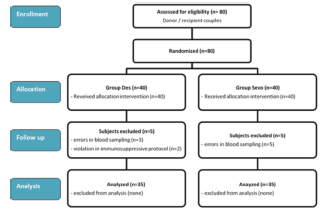
Figure 1. Flow Chart Showing Patient Selection
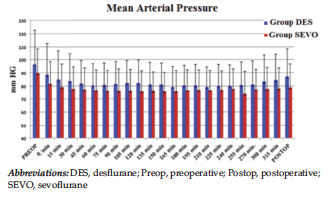
Figure 2. Mean Arterial Pressure in Desflurane and Sevoflurane Groups Throughout the Perioperative Period
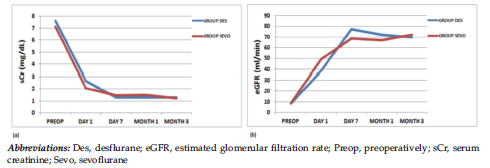
Figure 3. Serum Creatinine and Estimated Glomerular Filtration Rate in Desflurane and Sevoflurane Groups Preoperatively and Postoperatively
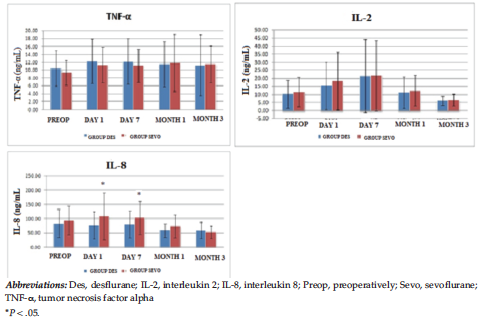
Figure 4. Cytokine Levels in Desflurane and Sevoflurane Groups Preoperatively and Postoperatively
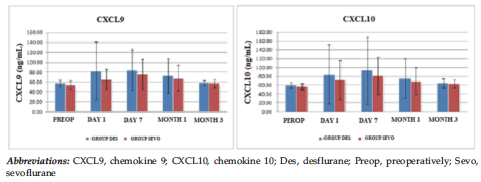
Figure 5. Chemokine Levels in Desflurane and Sevoflurane Groups Preoperatively and Postoperatively
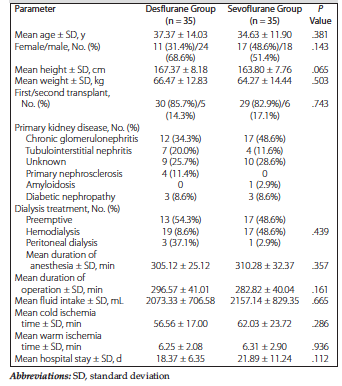
Table 1. Clinical and Demographic Characteristics of the Renal Transplant Recipients
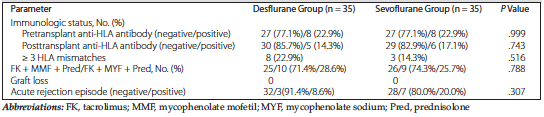
Table 2. Immunologic Data of Renal Transplant Recipients