Volume: 8 Issue: 2 June 2010
FULL TEXT
Massive Pulmonary and Intracardiac Embolism During Liver Transplantation
Despite prolonged coagulation times and thrombocytopenia associated with end-stage liver disease, formation of thrombi in the circulation seems to occur more frequently during liver transplant than during any other type of major surgery. Here, we report a case of massive pulmonary and intracardiac embolism that resulted in cardiac arrest and intraoperative death. This was diagnosed by transesophageal echocardiography and occurred shortly after induction of anesthesia and initiation of continuous veno-venous hemofiltration without the concomitant use of antifibrinolytic drugs. We discuss the physiologic changes associated with cirrhosis and liver transplant, and review the literature.
Key words : Thromboembolism, Liver transplant, Death, Cirrhosis
Case Report
A 72-year-old African American woman with a history of cryptogenic cirrhosis was admitted 4 weeks before an attempted liver transplant for treatment of ascites and spontaneous bacterial peritonitis (E. coli). Ten days before the operation, she was started on hemodialysis owing to hepatorenal syndrome. She had a history of breast cancer, treated 10 years earlier, hypertension, and diabetes. No previous history of deep vein thrombosis, smoking, transjugular intrahepatic portosystemic shunt, or hypercoagulability was present.
Her physical examination was notable for a body mass index of 31.6, generalized jaundice, ascites, and mild pedal edema. She was a Child-Pugh class C; her model end-stage liver disease score was 40, with no hepatocellular carcinoma (negative CT scan and alpha-fetoprotein 7.3 ng/mL). No heparin for deep vein thrombosis prophylaxis had been given owing to increased prothrombin time. The results of a transthoracic echocardiography done 2 days before the operation was normal, except for mild tricuspid regurgitation. A Duplex scan of the lower extremities ruled out deep vein thrombosis, and a 12-lead electrocardiogram was normal except for nonspecific T-wave changes. A radiograph of the chest showed small pleural effusions bilaterally. Her American Society of Anesthesiologists score was 4E.
Preoperative laboratory examination revealed a white blood count 6.9 × 10⁹L (neutrophils 65.4%; lymphocytes 15.6%; monocytes 17.2%; eosinophils 1.7%; basophils 0.3%), hemoglobin 92 g/L (9.2 g/dL); hematocrit 0.027 (27.2%); glucose 7.21 mmol/L (130 mg/dL); Hgb A1C 0.047 (4.7%); creatinine 486.2 µmol/L (6.2 mg/dL); aspartate aminotransferase 53 U/L; alanine aminotransferase 26 U/L; alkaline phosphatase 26 U/L; total bilirubin 106.022 µmol/L (6.2 mg/dL); direct bilirubin 39.332 µmol/L, (2.3 mg/dL); albumin 43 g/L (4.3 g/dL); ammonia 57 µmol/L; and lactic acid 1.8 mmol/L. Hepatitis panel was negative; urine, blood, and ascitic fluid cultures were negative. Her international normalized ratio was 3.48, her prothrombin time was 21.8 seconds (normal range, 12-5 seconds), she had a partial thromboplastin time of 38.7 seconds (normal range, 9.8-12 seconds), her thrombin time was 23.4 seconds (normal range, 25-32 seconds), her fibrinogen level was 4.64 µmol/L (158 mg/dL) (normal range, 5.88-11.76 µmol/L, or 200-400 mg/dL), and she had a platelet count of 54 × 109/L. She was not tested for Factor V Leiden, protein C and S, or antithrombin III deficiencies. Just before surgery, her arterial blood gas analysis was pH, 7.5; pCO2, 28 mm Hg; PO2, 192 mm Hg; O2Sa, 100%; BE, -2.
The patient was hemodynamically stable during induction of anesthesia. General anesthesia was induced and maintained with midazolam, fentanyl, vecuronium, and etomidate. Transesophageal echocardiogram during induction of anesthesia did not show clots. Her mean pulmonary arterial pressure was normal (21 mm Hg). A radial arterial catheter and a central venous catheter were put in place. No thromboelastography was used during this case because it is not available in our institution.
Within 30 minutes after induction of anesthesia and initiation of continuous veno-venous hemofiltration, the hemofiltration tubing clotted, and the blood pressure suddenly decreased from 140 over 80 mm Hg, to 80 over 40 mm Hg, whereas pulmonary arterial pressures increased from 50/20 mm Hg to 65/31 mm Hg. Her central venous pressure increased from 15 to 31 mm Hg, and her end-tidal carbon dioxide decreased to 18 mm Hg (normal range, 35-37 mm Hg). The patient was bradycardic and hypotensive, and was treated with fluid bolus and dopamine. Hemodynamic instability continued despite treatment, and it was associated with clinical signs of pulmonary embolism as evidenced by dramatic increases in pulmonary artery and central venous pressure.
Troponin I and creatine kinase myocardial band drawn at this time were in the normal rage. Minutes later, the patient’s blood pressure dropped further (mean arterial pressure lower than 20 mm Hg) and cardiopulmonary resuscitation was started. Resuscitation with fluids, epinephrine, and atropine was begun without improvement. A transesophageal probe was placed by a cardiologist, and the echocardiography revealed massive, large, mobile echodensities consistent with thrombi in all 4 chambers of the heart, in the pulmonary artery, and aorta (Figure 1). A cardiovascular surgeon was immediately consulted and confirmed the echocardiographic findings. He recommended no surgical treatment, given the high mortality rate associated with cardiac surgery to remove the clots in this setting, and because of the long cardiopulmonary resuscitation. As a last resort, she was treated with 10 000 units of heparin intravenously. After 30 minutes of cardiopulmonary resuscitation, the patient was declared dead. The liver graft, which was still in the back table, was offered to the organ procurement organization, and was successfully allocated to other patient in another institution within 1 hour. At autopsy, to our surprise, no thrombi could be seen in either systemic or pulmonary circulations (Figures 2 and 3).
Discussion
For a long time, there has been dogma that cirrhosis is associated with bleeding tendency. Recent literature has challenged this dogma, showing that the coagulation system of cirrhotic patients is dysfunctional, and also associated with hypercoagulability (1-5). The incidence of deep vein thrombosis or pulmonary embolism in cirrhotic patients was 0.5%, despite 21% of them being in some form of deep vein thrombosis prophylaxis (3). Cirrhotic patients are also prone to develop microthrombi. A necropsy study showed that 50% to 60% of patients with a variety of different liver diseases had microthrombi and classic thrombi in 1 or more organs (6). Patients with portal hypertension also are at increased risk of developing pulmonary hypertension, and this may be related to recurrent microthrombi (7). In end-stage liver disease, the low number of platelets and reduced synthesis of procoagulant factors are compensated for by a deficiency of hepatic clearance of activated procoagulants, and reduced hepatic synthesis of anticoagulant proteins (protein S and C, antithrombin III, heparin cofactor II, and α2-macroglobulin), low levels of plasminogen, and elevated levels of von Willebrand factor and factor VIII (1, 4, 5). Hypercoagulability also is associated with poor blood flow and vasculopathy owing to chronic inflammation. In cirrhotic patients, the ability of the coagulation system to maintain homeostasis during stressful situations is greatly compromised (4, 5).
Liver transplant greatly interferes with the delicate balance between coagulation, anticoagulation, and fibrinolysis, leading to an increased risk of bleeding as well as thrombotic complications. Besides the inherent hypercoagulability of end-stage liver disease, thromboembolism is more-common during liver transplant owing to several other factors: excessive activation of the coagulation system secondary to injury to a large capillary bed during hepatectomy, venous stasis during clamping of the portal vein and inferior vena cava, ischemic injury to the intestines, release of coagulation activators from the graft, and massive blood transfusion or administration of blood products (8). Additional risk factors commonly associated with liver transplant patients include associated infections, hepatocellular carcinoma, veno-venous bypass, angiocatheters (central venous catheter, pulmonary artery catheter, transjugular intrahepatic portosystemic shunt), and use of antifibrinolytic drugs (8, 9). It is debatable whether the use of antifibrinolytic drugs (eg, aprotinin and tranexamic acid) in liver transplant increases the incidence of thromboemboli complications. A recent meta-analysis, however, showed no increased risk with the use of antifibrinolytics (10).
Our patient had additional risk factors: She had a history of sepsis 15 days before the operation, cryoprecipitate, and platelet transfusions 3 days before the thromboembolic event, and an extracorporeal tube circuit before and during the procedure. It has been known for a long time that the coagulation cascade and platelets can be activated by the plastic tubing system (11-13). However, to date, the occurrence of massive intravascular and/or intracardiac thrombus formation shortly after induction of anesthesia and initiation of continuous venovenous hemofiltration in a cirrhotic patient has not been reported. We do not know if continuous venovenous hemofiltration was the triggering factor of the thrombosis, or only an associated factor.
The overall incidence of massive embolism associated with liver transplant ranges from 1.5% to 6.2% (9). Less than 80 cases have been reported so far in the English literature. However, Suriani and associates suggested that subclinical thromboembolism on liver graft reperfusion is common. They could demonstrate echodense masses > 5 mm in the right atrium within 1 minute after graft reperfusion in 59% of patients undergoing liver transplant (14).
Although the estimated incidence of significant pulmonary embolism or intracardiac thrombosis in liver transplant recipients is low, these complications are potentially fatal, and therefore of great clinical relevance (8, 9, 15). Thromboembolic events can occur in any phase of the transplant (37% during the reperfusion phase of the procedure, versus 30% during preanhepatic, versus 33% during the anhepatic phase) (15).
Warnaar reviewed all reported cases (n=74) until 2006, and showed that the most-frequently encountered signs were systemic hypotension associated with increased pulmonary artery pressure (n=17, 23%), or persistent hemodynamic instability not responding to supportive therapy, and leading to a complete circulatory collapse (n=44, 60%). Interestingly, the author also showed that mortality was significantly higher in patients with an isolated pulmonary embolism, compared to patients with a combination of pulmonary embolism and intracardiac thromboembolism (91% and 50%, respectively; P < .001) (9).
Because it is a rare complication, there are no randomized studies and no general consensus for treatment of intraoperative intracardiac, and pulmonary embolism (9). However, there is an increasing body of evidence that thrombolytic therapy, despite the increased risk of major hemorrhage, reduces mortality in patients with massive pulmonary embolism (9, 16). It has been demonstrated that thrombolytic therapy with recombinant tissue plasminogen activator (rTPA) results in superior survival (77%) over embolectomy (53%), invasive radiologic embolectomy (50%), or heparin (38%) (16). There have been reports of patients who have been successfully treated with heparin and inotropic support (8, 17). If the event is massive and the patient is critically ill, surgical embolectomy is preferred over thrombolytic therapy (18) because of the high risk of bleeding from thrombolytic therapy. In Warnaar’s review, mortality was lower in patients who underwent an urgent thrombectomy and/or thrombolysis, compared with patients who received only supportive therapy, but this did not reach statistical significance (53% vs 71%; P = .152) (9).
It has been proposed for liver transplant the routine use of thromboelastography, transesophageal echocardiogram, and pulmonary artery catheter to measure pulmonary artery pressure, cardiac output, and left ventricular ejection fraction. Prophylactic antifibrinolytics should be avoided. Use of transesophageal echocardiography allows the anesthesiologist to be especially vigilant in watching for early thrombus formation in the heart or on a pulmonary artery catheter (19).
In the review from Warnaar, analyzing 74 cases, the diagnosis of pulmonary and/or intracardiac thromboembolism was made by intraoperative transesophageal echocardiography in 53%; autopsy in 18%; signs and clinical course only in 10%; and in 12%, the diagnostic method could not be retrieved (9). Although the clinical picture and echocardiographic visualization of the thromboemboli by the cardiologist and cardiovascular surgeon, and the lack of evidence of a primary cardiac event, the fact that the thrombi could not be seen during the autopsy was very intriguing. We initially attributed it to the fact that the early formed thrombi could have been lysed by the intravenous heparin bolus given during resuscitation. But after reviewing the literature, a more logical explanation for this event was found.
Sankey and associates showed that massive platelet thromboembolism is a likely cause of death in patients dying unexpectedly after recent liver transplant (within 10 days). In a series of 6 cases, they could not identify macroscopic thromboemboli in the large vessels of the lungs. However, they could identify microthrombi (platelet aggregates) in the alveolar capillaries using immunostaining for thrombus and platelet constituents (monoclonal antibodies against platelet glycoprotein IIIa, factor XIIIA, and fibrinogen). This author also stated the lack of visible thrombus at the necropsy may cause unwary pathologists to dismiss the possibility of thrombosis (20).
Conclusion
Patients with end-stage liver disease have coagulopathy, hypercoagulation, and hyperfibrinolysis. The outcome after a massive thromboembolism during liver transplant is dismal, regardless of the treatment. A high index of suspicion in high-risk patients, and close monitoring to prevent intracardiac/pulmonary thromboembolism, is the best approach. Low flow or clotting of the venovenous bypass or hemofiltration system should alert the physician to the possibility of systemic activation of the coagulation system and eminent thromboembolism. Early, or routine use of transesophageal echocardiography and thromboelastography during liver transplant, helps early diagnosis of the pulmonary embolism and may avoid catastrophic consequences. The thromboemboli may not be seen macroscopically at autopsy and may require immunostaining of thrombus products to be identified.
References:
- Lisman T, Leebeek FW. Hemostatic alterations in liver disease: A review on pathophysiology, clinical consequences, and treatment. Dig Surg. 2007;24:250-258.
- Porte RJ. Coagulation and fibrinolysis in orthotopic liver transplantation: current views and insights. Semin Thromb Hemost. 1993;19:191-196.
- Northup PG, McMahon MM, Ruhl AP, et al. Coagulopathy does not fully protect hospitalized cirrhotic patients from peripheral venous thromboembolism. Am J Gastroenterol. 2006:15:1524-1528.
- Northup PG, Sundaram V, Fallon MB, et al. Coagulation in Liver Disease Group. Hypercoagulation and thrombophilia in liver disease. J Thromb Haemost. 2008;6(1):2-9.
- Warnaar N, Lisman T, Porte RJ. The two tales of coagulation in liver transplantation. Curr Opin Organ Transplant. 2008;13(3):298-303.
- Oka K, Tanaka K. Intravascular coagulation in autopsy cases with liver diseases. Thromb Haemostas. 1979;42:564-570.
- Edwards BS, Weir EK, Edwards WD, Ludwig J, Dykoski RK, Edwards JE. Coexistent pulmonary and portal hypertension: morphologic and clinical features. J Am Coll Cardiol. 1987;10:1233-1238.
-
Gologorsky E, De Wolf AM, Scott V, Aggarwal S, Dishart M,
Kang Y. Intracardiac thrombus formation and pulmonary thromboembolism immediately after graft reperfusion in 7 patients undergoing liver transplantation. Liver Transpl. 2001;7(9):783-789. - Warnaar N, Molenaar IQ, Colquhoun SD, et al. Intraoperative pulmonary embolism and intracardiac thrombosis complicating liver transplantation: a systematic review. J Thromb Haemost. 2008;6(2):297-302.
- Molenaar IQ, Warnaar N, Groen H, Tenvergert EM, Slooff MJ, Porte RJ. Efficacy and safety of antifibrinolytic drugs in liver transplantation: a systematic review and meta-analysis. Am J Transplant. 2007;7:185-194
- Hong J, Larsson A, Ekdahl KN, Elgue G, Larsson R, Nilsson B. Contact between a polymer and whole blood: sequence of events leading to thrombin generation. J Lab Clin Med. 2001;138(2):139-145.
- Mason RG, Zucker WH, Shinoda BA. Some interactions of blood with tubular biomaterials. Biomater Med Devices Artif Organs. 1975;3(1):57-95.
- Brash JL, Brophy JM, Feuerstein IA. Adhesion of platelets to artificial surfaces: effect of red cells. J Biomed Mater Res. 1976;10(3):429-443.
- Suriani RJ, Cutrone A, Cohen E, Konstadt SN, Gabrielseon GV, Miller C. Pulmonary thromboembolism during liver transplantation: Is venovenous bypass protective [abstract]? Liver Transpl Surg 1995;1:416A.
- Lerner AB, Sundar E, Mahmood F, Sarge T, Hanto DW, Panzica PJ. Four cases of cardiopulmonary thromboembolism during liver transplantation without the use of antifibrinolytic drugs. Anesth Analg. 2005;101(6):1608-1612.
- Jackson D, Botea A, Gubenko Y, Delphin E, Bennett H. Successful intraoperative use of recombinant tissue plasminogen activator during liver transplantation complicated by massive intracardiac/pulmonary thrombosis. Anesth Analg. 2006;102(3):724-728.
- Planinsic RM, Nicolau-Raducu R, Eghtesad B. Diagnosis and treatment in of intracardiac thrombosis during orthotopic liver transplantation. Anesth Analg 2004;99:353-356.
- Sopher M, Braunfeld M, Shackleton C, Busuttil RW, Sangwan S, Csete M. Fatal pulmonary embolism during liver transplantation. Anesthesiology. 1997;87(2):429-432.
- Planinsic RM, Hilmi IA, Sakai T. Prevention of intracardiac/pulmonary thrombosis during liver transplantation. Anesth Analg. 2006;103(5):1329.
- Sankey EA, Crow J, Mallett SV, et al. Pulmonary platelet aggregates: possible cause of sudden peroperative death in adults undergoing liver transplantation. J Clin Pathol. 1993;46(3):222-227.

Volume : 8
Issue : 2
Pages : 184 - 188
From the Departments of 1Surgery, Division of Hepatobiliary Surgery and
Transplantation; 2Medicine, Division of Hepatology; and 3Anesthesiology, New
York Medical College, New York, USA
Acknowledgement: The author gratefully acknowledges Dr. Gimenez from the
Department of Pathology for the autopsy pictures.
Address reprint requests to: Paulo Ney Aguiar Martins, MD, PhD, New York Medical
College-Westchester Medical Center, Transplant Center-BHC-A Wing, Lower level,
95 Grassland Road, Valhalla, New York 10595
Phone: +1 914-493-5930
Fax: +1 914-493-1097
E-mail:
Paulo_Martins@nymc.edu
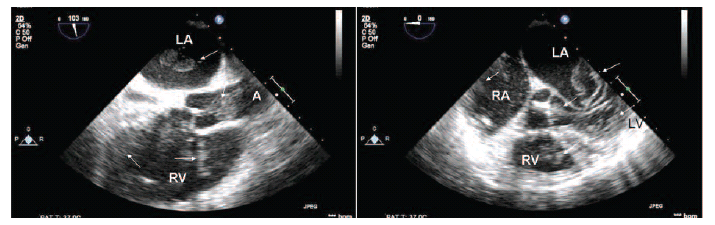
Figure 1. Still images of the intraoperative transesophageal echocardiogram showing echogenic masses (thrombi) in the left atrium, aorta, and right ventricle. A (aorta), LV (left ventricle), RA (right atrium), LA (left atrium), RV (right ventricle). Arrows are pointing to the thrombi.
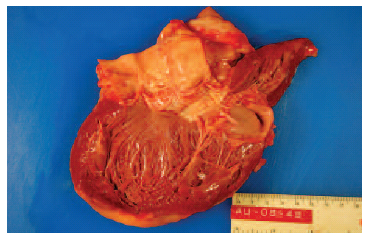
Figure 2. Heart at autopsy. No
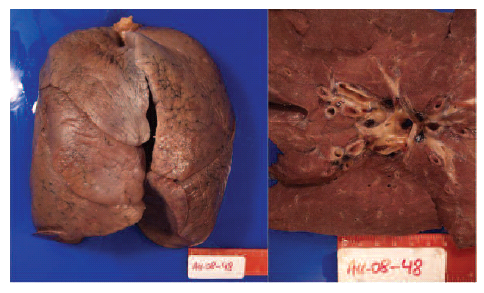
Figure 3. A) Both lungs at autopsy. B) Detail of the vasculature at the pulmonary hilum. During autopsy, thrombi could not be visualized in the macro and micro vasculature of the lung. H&E staining not included.