Volume: 21 Issue: 6 June 2023
FULL TEXT
Long-Term Safety, Efficacy, Indications, and Criteria of Arteriovenous Fistula Ligation Following Kidney Transplant: A Patient-Driven Approach
Abstract
Objectives: In patients with end-stage renal disease, arteriovenous fistulas are the standard of care to ensure long-term vascular access. Recent studies suggest some long-term posttransplant cardiac benefits and quality of life improvements in kidney transplant recipients due to arteriovenous fistula ligation. However, there are no guidelines regarding arteriovenous fistula management after transplant. Our study objective was to evaluate the long-term safety of arteriovenous fistula ligation and the frequency of returning to hemodialysis after
ligation.
Materials and Methods: Retrospective chart review from February 2014 to December 2020 identified
578 adult patients who underwent successful kidney transplant at our center. Of these patients, 47 underwent subsequent arteriovenous fistula ligation. Both medically driven and patient-driven cases were assessed and approved by a transplant nephrology team with regard to allograft function and ligation suitability.
Results: Our results showed that, of the 47 renal transplant patients, 70.2% chose to undergo arteriovenous fistula ligation due to aneurysmal formation, 44.7% due to pain, and 14.9% due to high-output heart failure. In total, 68.1% of arteriovenous fistula ligations performed were primarily patient driven. There was an average follow-up of 2.9 years after ligation, with 1 unrelated reoperation and no returns to dialysis for all patients who underwent arteriovenous fistula ligation.
Conclusions: In our study, the long-term risks of surgical complications and allograft impairment after ligation were negligible. As a result of our current findings and known positive cardiovascular benefit, patient-driven arteriovenous fistula ligation after kidney transplant should be routinely considered in patients with stable allograft function.
Key words : Hemodialysis, Patient-centered, Vascular access
Introduction
Arteriovenous (AV) fistulas are considered the gold standard for safe, long-term vascular access in patients with hemodialysis-dependent end-stage renal disease. However, AV fistulas are not without complications, and the benefits of fistula ligation after successful kidney transplant may outweigh the risks of preserving it.1
Some studies have shown that the presence of high-flow AV fistulas can cause cardiopulmonary strain2 and may even lead to left ventricular hypertrophy, high-output heart failure, and aortic stiffness due to chronic high-volume flow.3,4 A randomized controlled trial by Rao and colleagues found that AV fistula ligation following kidney transplant resulted in improved cardiac chamber dimensions and decreased N-terminal prohormone of brain natriuretic peptide levels, both of which are markers closely associated with left ventricular dysfunction and directly correlate to a clinical diagnosis of heart failure.5 Other studies demonstrated that AV fistula closure not only improved structural and functional cardiac parameters but also improved kidney graft function and increased renal perfusion.6
Beyond the medical indications for AV fistula ligation, such as cardiopulmonary strain, steal syndrome, or risk of rupture, most patients advocated for their AV fistulas to be ligated to improve their quality of life. These patient-centered benefits include cosmetic advantages, reduced pain, and general improvement in their daily activities.7 Despite these recognized benefits of AV fistula ligation, a large international survey recently revealed that there is no consensus on AV fistula management after transplant.8 Likewise, there is no guidance on this topic from major transplant, vascular or nephrology societies.
As a result, our study aimed to build on the early work in this field by looking retrospectively at long-term safety, suitability, criteria, and rationale for ligation of AV fistulas after transplant at our center. We hope that our experience will serve as an integral part to develop a more structured and thoughtful framework for the management of AV fistulas in kidney transplant recipients for both transplant and vascular surgery communities alike.
Materials and Methods
A retrospective chart review was performed at a single academic tertiary care hospital from February 2014 to December 2020. We identified 578 patients (aged 18 years or older) who underwent successful kidney transplant from either a living or deceased donor. Of these kidney transplant recipients, 47 (8.1%) underwent subsequent posttransplant AV fistula ligation at our center. Additionally, 38 (80.9%) of the 47 patients also underwent extensive AV fistula vein stripping/aneurysm resection at the time of ligation. Patients were followed for a minimum of 21 months after AV fistula ligation, and data were collected retrospectively, including any notable surgical outcomes, reoperation, readmission, persistent pain, edema, or wound complications, as well as any sentinel return to dialysis events.
In this study, we identified the rationale for AV fistula ligation, with some cases being primarily medically driven (steal syndrome, heart failure, imminent rupture) and others being primary patient driven (cosmetic, discomfort, swelling, and pseudo aneurysms or true aneurysms). Prior to ligation, all cases were evaluated and cleared by a transplant surgeon and a transplant nephrologist. The factors considered to determine suitability for AV fistula ligation were obtained from the clinical records. These included transplant nephrology recommen-dations, history of and risk for rejection, donor-specific antibodies, stable creatinine values, AV fistula characteristics, potential future access needs, and patient considerations/quality of life (Table 1).
Patient demographics were collected, including patient age, sex, race/ethnicity, tobacco usage, and body mass index (BMI, body weight in kilograms divided by height in meters squared). As a metric of renal function, creatinine values were documented from the electronic medical record spanning 3 time points (day of ligation, 1 year after ligation, and the latest measured value with an average of 2.9 years after ligation) and investigated. Reason for ligation (including aneurysm, pain, high-output heart failure, edema, cosmetic reasons, and steal syndrome) and comorbidities (including posttransplant complications, namely, any rejection episode or BK virus infection) were obtained from the surgical consultation documentation. Standard deviations and minimum, maximum, and mean values were calculated for creatinine values, BMI, and age at ligation. To better describe our cohort, the percentage of the patient population in each category was calculated for reasons for ligation, sex, race/ethnicity, tobacco usage, BK virus status, and comorbidities.
In our cohort, 94 (16.3%) transplants were from living donors and 484 (83.7%) were from deceased donors. Living donors included only related donors (father, mother, sister, brother, daughter, son). All living donors were extensively evaluated and separately approved by an independent donor advocate, social worker, and medical nephrology and surgery teams. This study was approved by the institutional investigational review board at our academic medical center, and all patients consented to participate in a deidentified manner.
Results
Of the 47 renal transplant recipients who underwent posttransplant AV fistula ligation, the surgical indications for ligation were considered primarily patient driven in 68.1% (n = 32) of the cohort. The other 31.9% (n = 15) were medically driven. The reasons for ligation included 70.2% (n = 33) for aneurysm formation, 44.7% (n = 21) for pain, 14.9% (n = 7) for high-output heart failure, 10.6% (n = 5) for persistent ipsilateral edema, and 2.1% (n = 1) for steal syndrome ((Table 2), (Figure 1)).
Our follow-up period averaged 2.9 years after ligation, with a minimum of 1.8 years and a maximum of 5.48 years (Table 3) (follow-up period was 2 years, and 4 patients were excluded due to unrelated death; they were removed from this calculation). During that period, we identified 3 cases of ongoing or new onset neuropathy/pain and 1 reoperation due to an unrelated traumatic arm injury. There were no readmissions for postoperative complications and most notably, no return to dialysis or need of dialysis access use for transplant rejection treatment. In our cohort, 7 patients died (reasons for patient death included COVID-19, poorly controlled diabetes mellitus, heart disease, and age-related reasons) with a functioning kidney transplant during the follow-up period. For BK virus, 8 (17%) patients were positive and 39 (83%) were negative after kidney transplant (Table 3).
A single-factor analysis of variance was run for the creatinine values at 3 time points for all 47 patients and averaged. The mean values were 1.43, 1.48, and 1.47 mg/dL, respectively. There was no significant difference noted between the 3 time points (P = .90), and the standard deviation was 0.64 (Figure 2).
The average age of our cohort at the time of ligation was 51.9 years old, with an age range of 24.4 to 77.9 years and a standard deviation of 11.54. Our cohort consisted of 19 women and 28 men, 26 of whom were African American, 9 were White, 2 were Asian, and 10 identified their ethnicity as Hispanic or Latino (Figure 3). Only 3 (6.4%) of the 47 patients were active tobacco users at the time of ligation, whereas 13 (27.7%) were former users and 31 (65.9%) never used tobacco. For BMI, the mean for our cohort was 28.83 with a range of 18.79 to 40.92 and a standard deviation of 5.13. Finally, we collected information on comorbidities of patients in our cohort, the most common being hypertension (45 patients), heart-related comorbidities (15 patients), type 2 diabetes mellitus (17 patients), hyperlipidemia (9 patients), hyperparathyroidism (9 patients), cancer (6 patients), and liver-related comorbidities (6 patients) (Table 4).
Discussion
Traditionally, the accepted rationale for preserving a functional posttransplant AV fistula is the potential need for future return to hemodialysis. It has been shown that the expected length of kidney graft survival is 8 to 12 years for deceased donor kidney transplants and 12 to 20 years for living donor kidney transplants.9 While impressive, these numbers still understate the likelihood of returning to hemodialysis, as death with a functioning graft is the leading cause of graft loss in these calculations. Thus, because most kidney transplant recipients never require their hemodialysis access site again, especially in older populations,8 we wanted to reconsider the norm of posttransplant AV fistula preservation.
During the study period, our transplant center performed at or slightly above national averages for risk adjusted patient and graft survival.10 Given these data and the anticipated success of the vast majority of kidney transplants, we felt compelled to consider a practice change with regard to posttransplant AV fistula management in kidney recipients that may ultimately help guide other vascular, transplant, and nephrology communities for assessment of similar patients.11 A recent posttransplant survey of kidney transplant recipients revealed that less than 1 in 4 patients had ever considered AV fistula ligation, with less than 10% broaching the subject with a physician.12
This is the first study to analyze the long-term outcomes of AV fistula ligation, such as surgical complications and return to dialysis, on a representative patient population. With deliberate guidance from transplant surgery and transplant nephrology teams on multiple factors, including allograft function, fistula characteristics, and several patient parameters, we found excellent patient outcomes for AV fistula ligation. Specifically, we followed patients for several years after ligation and had no patients return to hemodialysis, no related readmissions for all ligated patients, and 1 reoperation several years after ligation. Additionally, there was no significant difference in creatinine values between the 3 time points, showing creatinine stability over time following fistula ligation. Yet, despite these successful outcomes, only 8.1% of our kidney transplant recipients at our center underwent AV fistula ligation. With these data and the potential cardiopulmonary benefits of ligation,5 we suspect AV fistula ligation may be an underutilized aspect of posttransplant care that could benefit more patients on a regular basis.
Another key finding in this study was that most fistulas were ligated to improve patient quality of life. Furthermore, this indication was likely underreported due to clinician uncertainty of financial coverage for patient-driven procedures, and other medical rationale was highlighted to try to mitigate this issue. Other studies of this population have found that aesthetic concerns are a leading factor in considering AV fistula ligation after transplant.12 In our cohort, 80.9% of ligated patients underwent vein stripping/aneurysm resection as a way to eliminate patient cosmetic concerns regarding their AV fistulas. This procedure was well tolerated with minimal to no surgical complications.
There is an abundance of literature that confirms health-related quality of life improvement after kidney transplant compared with those with late-stage chronic kidney disease including hemodialysis.13,14 Therefore, it is important to recognize that patient autonomy and determination does not end with kidney transplant but continues with all subsequent health-related decisions thereafter. These patient-driven measures for improved quality of life should be independent drivers for ligation consideration, even without the presence of a definitive medical indication, given the extremely low surgical risk of the procedure.15
A counterpoint to this move to ligate AV fistulas after transplant is that some patients have reported that the fistula provides a sense of security in the event of transplant failure. As with other fistula-related concerns such as swelling, cosmesis, and job restrictions, patient security with their vascular access is also an important quality of life consideration in some cases.
Finally, in the absence of specific guidelines, the criteria for AV fistula ligation highlighted in our work can be used as a starting point for patients and clinicians in this posttransplant environment. These factors, combined with physician expertise, allow for a more personalized and patient-driven approach to AV fistula management in this setting. In the future, with emerging artificial intelligence technologies, these variables can be implemented in a stratification tool for identifying posttransplant ligation candidates. One validated prognostication system in the transplant realm, the integrative Box scoring system (iBox), uses donor and recipient information to predict allograft survival.16 This software or similar technology could eventually help safely guide the selection of patients for AV fistula ligation after transplant. Another area of future research is the use of noninvasive diagnostics to properly select the posttransplant patients with a cardiopulmonary profile that is most likely to benefit from ligation of a high-flow AV fistula. Specifically, our future work will focus on interpretation of the cardiovascular changes after AV fistula ligation via echocardiogram in order to further elucidate the potential benefit of ligation.
This study has some limitations, such as being a retrospective study with a single-center cohort of patients. In the future, larger, multicenter collabo-rations would provide support for these findings and the importance of a patient-centered approach. Nevertheless, the long follow-up period and the strong evidence presented here allow for the reasonable assertion that AV fistula ligation after transplant is safe and merits formal consideration for most patients following kidney transplant.
Conclusions
In our study, both the immediate and long-term risk of surgical complications and allograft dysfunction were extremely low following AV fistula ligation. We attribute this to a multidisciplinary, systematic, and rigorous review of numerous identified factors by transplant nephrology and transplant surgery teams. We believe this approach can continue to effectively lead to appropriate selection of posttransplant ligation candidates.
Although many of our ligation candidates were medically driven, the potential for cardiovascular protective benefit is known, and our analysis demonstrated that a larger portion of patients sought ligation to improve appearance and quality of life. The patients with medical indications for ligation also reported improvement to daily function after ligation, showing that these patient-centered outcomes are important drivers in AV fistula management after transplant.
Elective, patient-driven, hemodialysis access ligation after kidney transplant for both medical benefit and quality of life improvement is safe and should be increasingly considered as a standard of care for the stable kidney transplant recipient. The development of more formal algorithms or models for ligation remains a fertile area for future investigation.
References:
- Lam W, Betal D, Morsy M, Chemla ES. Enormous brachio-cephalic arteriovenous fistula aneurysm after renal transplantation: case report and review of the literature. Nephrol Dial Transplant. 2009;24(11):3542-3544. doi:10.1093/ndt/gfp337
CrossRef - PubMed - Samarendra P, Ramkumar M, Sharma V, Kumari S. Cardiorenal syndrome in renal transplant recipients: it’s the fistula at fault: a case series. Clin Transplant. 2018;32(11):e13417. doi:10.1111/ctr.13417
CrossRef - PubMed - Einollahi B, Sadeghi Ghahrodi M. Hemodialysis arteriovenous fistula after transplant: to keep or not to keep? Iran J Kidney Dis. 2012;6(3):159-161.
CrossRef - PubMed - Unger P, Velez-Roa S, Wissing KM, Hoang AD, van de Borne P. Regression of left ventricular hypertrophy after arteriovenous fistula closure in renal transplant recipients: a long-term follow-up. Am J Transplant. 2004;4(12):2038-2044. doi:10.1046/j.1600-6143.2004.00608.x
CrossRef - PubMed - Rao NN, Stokes MB, Rajwani A, et al. Effects of arteriovenous fistula ligation on cardiac structure and function in kidney transplant recipients. Circulation. 2019;139(25):2809-2818. doi:10.1161/CIRCULATIONAHA.118.038505
CrossRef - PubMed - Zheng H, Bu S, Song Y, Wang M, Wu J, Chen J. To ligate or not to ligate: a meta-analysis of cardiac effects and allograft function following arteriovenous fistula closure in renal transplant recipients. Ann Vasc Surg. 2020;63:287-292. doi:10.1016/j.avsg.2019.06.040
CrossRef - PubMed - Voorzaat BM, van Schaik J, Siebelink HM, Tordoir JH, Rotmans JI. The pros and cons of preserving a functioning arteriovenous fistula after kidney transplantation. J Vasc Access. 2016;17 Suppl 1:S16-22. doi:10.5301/jva.5000525
CrossRef - PubMed - Voorzaat BM, Janmaat CJ, Wilschut ED, Van Der Bogt KE, Dekker FW, Rotmans JI. No consensus on physicians’ preferences on vascular access management after kidney transplantation: results of a multi-national survey. J Vasc Access. 2019;20(1):52-59. doi:10.1177/1129729818776905
CrossRef - PubMed - Donate Life America. Kidney Donation. 2021. https://www.donatelife.net/types-of-donation/kidney-donation/
CrossRef - PubMed - Scientific Registry of Transplant Recipients. University of North Carolina Hospitals. 2022. https://www.srtr.org/transplant-centers/university-of-north-carolina-hospitals-ncmh/?organ=kidney
CrossRef - PubMed - Unger P, Wissing KM. Arteriovenous fistula after renal transplantation: utility, futility or threat? Nephrol Dial Transplant. 2006;21(2):254-257. doi:10.1093/ndt/gfi276
CrossRef - PubMed - Bardowska K, Letachowicz K, Kaminska D, et al. The attitude of kidney transplant recipients towards elective arteriovenous fistula ligation. PLoS One. 2020;15(7):e0234931. doi:10.1371/journal.pone.0234931
CrossRef - PubMed - Letachowicz K, Bardowska K, Krolicki T, et al. The impact of location and patency of the arteriovenous fistula on quality of life of kidney transplant recipients. Ren Fail. 2021;43(1):113-122. doi:10.1080/0886022X.2020.1865171
CrossRef - PubMed - Rocha FLD, Echevarria-Guanilo ME, Silva D, et al. Relationship between quality of life, self-esteem and depression in people after kidney transplantation. Rev Bras Enferm. 2020;73(1):e20180245. doi:10.1590/0034-7167-2018-0245
CrossRef - PubMed - Wang Y, Hemmelder MH, Bos WJW, et al. Mapping health-related quality of life after kidney transplantation by group comparisons: a systematic review. Nephrol Dial Transplant. 2021;36(12):2327-2339. doi:10.1093/ndt/gfab232
CrossRef - PubMed - Loupy A, Aubert O, Orandi BJ, et al. Prediction system for risk of allograft loss in patients receiving kidney transplants: international derivation and validation study. BMJ. 2019;366:l4923. doi:10.1136/bmj.l4923
CrossRef - PubMed

Volume : 21
Issue : 6
Pages : 487 - 492
DOI : 10.6002/ect.2023.0024
From the School of Medicine, University of North Carolina at Chapel Hill, Department of Surgery, Abdominal Transplant, Chapel Hill, North Carolina, USA
Acknowledgements: The authors have not received any funding or grants in support of the presented research or for the preparation of this work and have no declarations of potential conflicts of interest.
Author contributions: AHT designed the study and edited the manuscript. AHD performed the data analysis and drafted and edited the manuscript. JMV assisted in data collection and edited the manuscript. NTS assisted in data collection.
Corresponding author: Alexander H. Toledo, Kidney Transplant Program, 4022 Burnett Womack Building, Campus, Box 7211, Chapel Hill, NC 27699-7211
Phone: +1 919 966 8008
E-mail:alexander_toledo@med.unc.edu
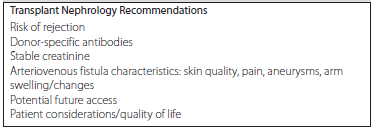
Table 1.Criteria for Determination of Optimal Candidates for Arteriovenous Fistula Ligation After Kidney Transplant
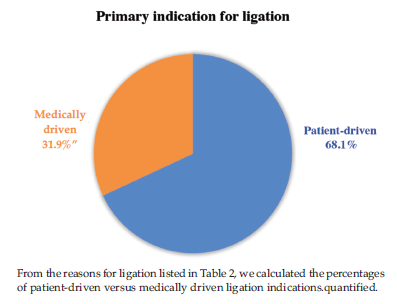
Figure 1.Primary Indication for Ligation
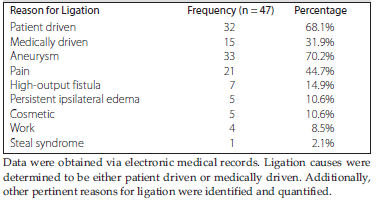
Table 2.Reasons for Ligation
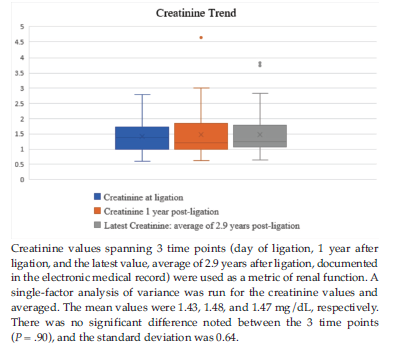
Figure 2.Creatinine Trends
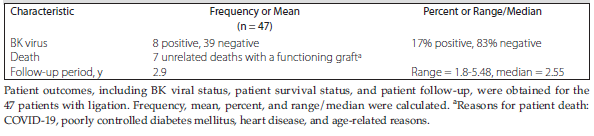
Table 3.Patient Outcomes
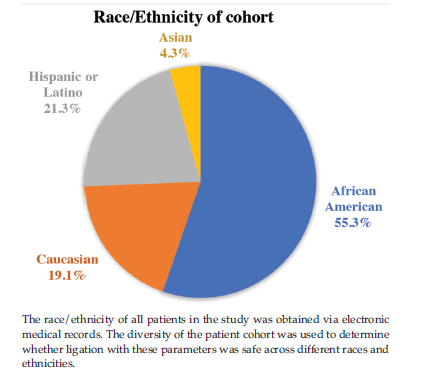
Figure 3.Race/Ethnicity of Cohort
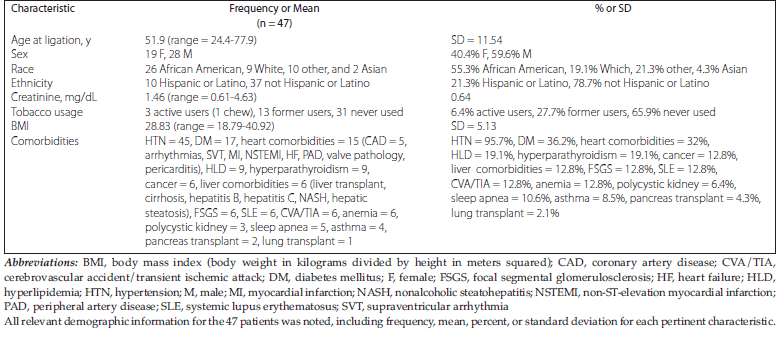
Table 4.Cohort Demographics