Volume: 16 Issue: 4 August 2018
FULL TEXT
Objectives: Fractures are associated with high morbidity and are a
major concern for kidney transplant recipients. No comparative analysis has yet
been conducted between countries in the contemporary era to inform future
international prevention trials.
Materials and Methods: Data were obtained from the Hospital Episode Statistics
and the Statewide Planning and Research Cooperative databases on all adult
kidney transplants performed in England and New York State from 2003 to 2013,
respectively, and on posttransplant fracture-related hospitalization from 2003
to 2014.
Results: Our analysis included 18 493 English and 11 602 New York State kidney transplant recipients. Overall, 637 English recipients (3.4%) and 398 New York State recipients (3.4%) sustained a fracture, giving an unadjusted event rate of 7.0 and 5.9 per 1000 years, respectively (P = .948). Of these, 147 English (0.8%) and 101 New York State recipients (0.9%) sustained a hip fracture, giving an unadjusted event rate of 1.6 and 1.5 per 1000 years, respectively (P = .480). There were no differences in the cumulative incidence of all fractures or hip fractures. One-year mortality rates after any fracture (9% and 11%) or after a hip fracture (15% and 17%) were not different between cohorts.
Conclusions: Contemporaneous English and New York State kidney transplant recipients have similar fracture rates and mortality rates postfracture.
Key words : Bone disease, Epidemiology, Mortality, Renal transplant
Introduction
Bone disease is a major fear for kidney transplant recipients, ranking high on a list of patient concerns.1 Kidney transplant recipients have a higher fracture risk than the general population.2-10 This increased risk has been attributed to changes in bone mineral metabolism as a consequence of impaired renal function and the prolonged use of high-dose glucocorticoids. However, most studies were done before 2000,11 have had only short-term follow-up, and demonstrate large interstudy variability in fracture rates.11
Hip fractures are common, costly, require hospitalization, and are associated with poor outcomes.12,13 In the general population, mortality rates after hip fracture have changed little over the past 30 years despite surgical and medical advances.14-16 Hip fracture rates vary widely across countries and are higher in the United States than in Canada; with both of these countries reporting higher fracture rates than in England.13,17-19 Ethnicity is also associated with hip fractures; people of black ethnicity consistently sustain lower fracture rates than white individuals.18
Recent studies from England and Ontario Province, Canada in contemporary cohorts have shown that hip fracture rates in kidney transplant recipients are lower than have been historically reported.20,21 These studies suggest that any future trial on fracture prevention would need to be international because of the low overall numbers involved.
A better understanding of fracture incidence in kidney transplant recipients and comparisons between countries remain important for estimating sample size requirements for potential future fracture prevention trials. Gaining a better understanding can also determine whether systematic differences exist in the population demographics and health care systems and whether the background rate of fracture in the general population may be contributing to fracture rates and postfracture outcomes, including mortality. To our knowledge, no comparative analysis of fracture rates has yet been conducted between countries in the contemporary era. We therefore conducted this study to provide estimates of incidence rates of all fractures and hip fractures requiring hospitalization in adult kidney transplant recipients from England and New York State (NYS) in the United States. We also examined 1-year mortality rates postfracture and causes of death.
Materials and Methods
Study population
We performed a retrospective cohort study of all kidney-alone transplants
performed in adults (> 18 years old at time of transplant) in England and NYS
between January 2003 and December 2013. Patients were followed until December
2014, allowing all patients the potential to have at least 1 year of follow-up.
We collected patient demographics that included age, sex, ethnicity, and medical
comorbidities at the time of transplant.
Data sources
For patients transplanted in England, data were obtained from Hospital Episodes
Statistics, an administrative database containing all admissions to National
Health Service hospitals in England. Data were extracted utilizing codes on
procedural classifications (Office of Population Censuses and Surveys
Classification of Interventions and Procedures, 4th revision) and medical
classifications (World Health Organization International Classification of
Diseases, 10th revision [ICD-10]).20 Mortality (including cause of death) was
determined by linkage to the Office of National Statistics.20
For patients transplanted in NYS, data were extracted from the Statewide Planning and Research Cooperative, a comprehensive all-payer adminis-trative database with information on all admissions to nonfederal hospitals in NYS. Data were extracted utilizing codes on medical classifications (World Health Organization International Classification of Diseases, 9th revision [ICD-9]) and procedural classifications (ICD-9 Procedure Codes).16 Mortality was determined with the use of linkages to the NYS Department of Vital Statistics and the New York City Department of Vital Statistics.16
Both the Hospital Episodes Statistics and Statewide Planning and Research Cooperative databases have previously been used to study the incidence of fractures.16,20,22,23 Only pseudoanonymized data were available for analysis. As such, this study did not require institutional review board approval.
Outcomes
Kidney transplant recipients who were readmitted to hospitals in England with a
fracture ICD-10 code (S02, S12, S22, S32, S42, S52, S62, S72, S82, S92, T02,
T07, T10, T12) and in NYS with a fracture ICD-9 code (800-829) were flagged. Hip
fractures were defined as ICD-10 codes S72.0-S72.2 and ICD-9 code 820. Data on
fractures occurring before transplant were also collected and analyzed as a
potential risk factor for posttransplant fracture. Mortality data within 1 year
of a fracture were also collected.
Statistical analyses
Differences between groups were compared using chi-square tests for categorical
variables and Mann-Whitney tests for continuous variables. We defined 1-year,
3-year, 5-year, and 10-year cumulative incidence of fracture as the proportion
of kidney transplant recipients who sustained a fracture within the respective
follow-up period; no fracture could occur in follow-up if the recipient died
before fracture. We calculated the 1-year, 3-year, 5-year, and 10-year incidence
rates of fracture (defined as the rate per 1000 patient-years of follow-up,
censoring at the time of death or fracture in follow-up). Results are presented
for the entire cohorts and by sex (male versus female) and age (< 50 versus ≥ 50
years) at the time of transplant. The age cut-off was chosen for several
reasons: namely, the median age of participants was 50 years and the average age
of menopause is approximately 50 years,24,25 with fracture risk increasing after
menopause26 and with previous research data finding that kidney transplant
recipients older than 50 years have increased fracture risk.10 For
our analyses, we also aimed to directly compare, as much as possible, our data
versus a recent study performed on a contemporaneous cohort of kidney transplant
recipients from Ontario, Canada.21
Time-to-fracture outcomes were analyzed with the Cox proportional hazards model and the log-rank test. All variables used in the analyses had < 5% of the values missing and were therefore treated as missing at random with case-wise deletion. Results are presented as hazard ratios (HR) with 95% confidence intervals (95% CI). Mortality rates in the year after a fracture were analyzed using logistic regression analysis. Variables included in the models were age, sex, ethnicity, history of fracture before transplant, and available medical comorbidities, including history of myocardial infarction, peripheral vascular disease, cerebrovascular disease, congestive cardiac failure, pulmonary disease, cancer, liver disease, and diabetes mellitus. Results are presented as odds ratio (OR) with 95% CI. Analyses were performed using Stata statistical software (V14, StataCorp LP, College Station, TX, USA). P < 0.05 was considered statistically significant.
Results
We studied 18 493 adults from England and 11 602 adults from NYS who received a kidney transplant from January 2003 to December 2013. Recipients were followed until December 2014, giving a total of 90 655 patient-years (median 5 years; range, 0-12 years) follow-up for English recipients and 67 743 patient-years (median 6 years; range, 0-12 years) follow-up for NYS recipients. The baseline characteristics of both cohorts are described in Table 1. Recipients from NYS were older, with median age of 51 years (interquartile range, 41-61 years) versus 48 years (interquartile range, 38-58 years; P < 0.001), more likely to be of black ethnicity (23% vs 7%; P < .001), and more likely to have diabetes mellitus (38% vs 15%; P < .001). Recipients from NYS also had increased pretransplant cardiovascular morbidity versus English recipients, with a higher incidence of myocardial infarction, heart failure, peripheral vascular disease, and cerebrovascular disease (P < .001 for all). English recipients were more likely to have been diagnosed with pulmonary disease than NYS recipients (12% vs 0.6%; P < .001) and more likely to have sustained a fracture before transplant (3.1% vs 2.5%; P = .002).
All-fracture risk
During the follow-up period, 637 English kidney transplant recipients (3.4%)
sustained any fracture, with 34 recipients (0.2%) sustaining 2 fractures, 9
recipients (0.1%) sustaining 3, and 8 recipients (0.04%) sustaining 4 or more
fractures. In the NYS cohort, 398 kidney transplant recipients (3.4%) sustained
any fracture, with 76 recipients (0.7%) subsequently sustaining 2 fractures, 10
recipients (0.1%) sustaining 3, and 8 recipients (0.1%) sustaining 4 or more
fractures. There were no differences in the proportions of recipients in both
cohorts sustaining any fracture or more than 1 fracture. The unadjusted event
rate for any fracture was 7.0 per 1000 patient-years for the English cohort and
5.9 per 1000 patient-years for the NYS cohort (P = .948). Overall, there were no
differences between the groups in the proportion of recipients admitted with
lower limb, upper limb, trunk, or skull fractures.
The 1-year, 3-year, 5-year, and 10-year cumulative incidence and incidence rate of any fracture are presented in Table 2, with results according to age and gender in Table 3. For both English and NYS recipients, women over 50 years old had the highest rates of fracture at all time points. There were no differences between the English and NYS cohorts in the cumulative incidence or incidence rates at any time point when taken as a whole (Table 2; Figure 1) or in any of the subgroups (Table 3).
Parameters associated with sustaining any fracture for both English and NYS recipients are presented in Table 4. Increasing age, female sex, white ethnicity, pretransplant diabetes mellitus, and having sustained a fracture pretransplant were associated with sustaining a fracture posttransplant in both cohorts. When all recipients were combined, being a NYS kidney transplant recipient was not associated with an increased fracture risk (HR 1.03, 95% CI, 0.89-1.18; P = .699) versus being an English recipient. This joint analysis made no material difference to the relation between the other parameters and fracture risk (Table 5).
Hip fracture risk
During the study period, 147 English (0.8%) and 101 NYS kidney transplant
recipients (0.9%) sustained a hip fracture (P = .480), giving crude
all-fracture incidence rates of 1.6 per 1000 patient-years and 1.5 per 1000
patient-years. The 1-year, 3-year, 5-year, and 10-year cumulative incidence and
incidence rates of hip fracture are presented in Table 6 and according to age
and sex in Table 7. For both the English and NYS cohorts, women over 50 years of
age had the highest rates of fracture at all time points. There were no
differences between the English and NYS cohorts in the cumulative incidence or
incidence rates at any time point when taken as a whole (Table 6; Figure 1) or
in any of the subgroups (Table 7). The 10-year cumulative incidence rate for
women over 50 years was 3.26% (95% CI, 1.70-6.2) for English recipients and
2.62% (95% CI, 1.37-4.97) for NYS recipients, with no difference between the
cohorts (P = .210).
Variables associated with sustaining a hip fracture in both the English and NYS cohorts are presented in Table 8. Factors associated with hip fracture were similar to those associated with sustaining any fracture, except that black ethnicity was not associated with a lower rate of fracture in English recipients and having sustained a fracture pretransplant was not associated with a greater risk of hip fracture in NYS recipients. When both cohorts were combined, being a NYS kidney transplant recipient was not associated with an increased hip fracture risk (HR 0.90, 95% CI, 0.67-1.20; P = .473: Table 9) versus an English patient. In this combined analysis, black ethnicity was associated with a reduced hip fracture risk (HR 0.42, 95% CI, 0.25-0.71; P = .001) and having sustained a fracture before transplant was associated with an increased hip fracture risk (HR 2.48, 95% CI, 1.49-4.14; P < .001).
One-year mortality postfracture
Within 1 year of sustaining any fracture, 55 English (9%) and 43 NYS recipients
(11%) had died (P = .246). Within 1 year of sustaining a hip fracture, 22
English (15%) and 17 NYS recipients (17%) had died (P = .692). In both
univariable and multivariable analyses, being an English or a NYS kidney
transplant recipient was not associated with an increased 1-year mortality after
any fracture (OR 1.11, 95% CI, 0.69-1.79; P = .655; Table 10) or after
hip fracture (OR 0.92, 95% CI, 0.47-1.82; P = .819; Table 11).
Causes of death were only available for the English kidney transplant recipients; of the 55 deceased recipients, no cause of death was reported more than 5 times, which prevented us from showing the data for reasons of privacy.
Discussion
In our analyses of fracture rates requiring hospitalization and hip fracture rates in kidney transplant recipients with different baseline demographics from 2 different health care systems (England and NYS), results were not different at 1, 3, 5, and 10 years after transplant. Furthermore, 1-year mortality after any fracture or after hip fracture was the same across both cohorts. These findings have important implications for future studies aimed at reducing the rate of fractures in kidney transplant recipients and at reducing the high mortality associated with fractures.
Our finding that fracture rates requiring hospitalization, and especially hip fracture rates, are the same in England versus in NYS is perhaps unexpected given the differences in demographics between the 2 populations. Recipients from NYS were older and a larger number of recipients had diabetes mellitus versus that shown in the English cohort. These demographics are consistent with the known differences in the end-stage renal disease populations in England versus the United States.27,28 However, whereas black ethnicity is known to be associated with a significantly lower rate of fractures compared with white ethnicity,18,20 older age29-32 and having diabetes mellitus20,33 are associated with increased risk. Thus it appears that these risk factors potentially cancelled each other out across the overall population.
In a recent report from Canada on fracture rates in kidney transplant recipients from Ontario over a time period similar to ours, fracture rates were also similar.21 The study reported a 3-year cumulative hip fracture rate of 0.4% (95% CI, 0.3-0.7), which is identical to the rates that we found in both the English and NYS recipients of 0.4% with similar confidence intervals (95% CI, 0.3-0.6) for both. Furthermore, the Ontario study reported a 10-year cumulative incidence rate for hip fractures of 1.7% (95% CI, 1.2-2.3). Although the rates that we reported for England and NYS were slightly lower at 1.4% (95% CI, 1.0-2.0) and 1.4% (95% CI, 0.9-2.0), respectively, the confidence intervals are wide, given the much lower numbers of patients with this length of follow-up, and the overlap is considerable.
Thus, it appears that the rates of hip fractures in kidney transplant recipients are virtually identical in the 3 distinct populations from England, NYS, and Ontario. This is perhaps unanticipated given that hip fracture rates vary greatly in the general population across countries. The US population has been shown to have significantly higher rates than the Canadian population, which in turn has shown a higher rate than that reported in England.13,17-19 These differences are considerable; a recent study reported that Canadian women had a 30% lower rate of hip fractures than US women.19 Our finding of virtually identical hip fracture rates in kidney transplant recipients from England and NYS, which are effectively the same as those seen in Ontario, suggests a commonality of risk factors in these groups that do not necessarily reflect the underlying prevalence of risk factors in their respective general populations.
Our study is also consistent with the recently published report on kidney transplant recipients from Ontario21 in that only women aged over 50 years were a high-risk group for fracture as defined by a hip fracture rate greater than 3% at 10 years.26,34 This patient group should be considered a priority for measures designed to prevent fractures post-transplant or indeed as the preferred high-risk group for a future study of fracture prevention. However, it should be noted that in both our study and the Canadian study the total at-risk population was low (n = 696 and n = 354, respectively).
Several studies have documented a high mortality rate after hip fractures in the general population.35-39 In our previous study, we reported a mortality of 16% within 1 year of a hip fracture in an English kidney transplant recipient population,20 which was higher than the previously reported rates in the United States.4,40 This appeared to be consistent with reports that mortality in the general population was also lower in the United States than in England.41 Differences in health care systems between the 2 countries, including the timing of interventions and length of hospital stay, had been postulated to affect survival.42 In our present study, however, we found that mortality rates after any fracture requiring hospitalization and after a hip fracture in both the English and NYS recipients were similar, with no differences detected.
Although rates of acute myocardial infarction are high after hip fractures,43 the cause of mortality and associated comorbid conditions vary widely with no clear pattern in the general population.44 In this study, we were only able to examine the causes of death in the English population (NYS data on cause of death were not available). However, like reports from the general population, we were unable to identify either associated comorbidities or a particular cause or group of causes for death, suggesting that, other than preventing the fracture in the first place, a wide approach is required to lower mortality.
Our study has a number of strengths and limitations. We were able to include all patients who received transplants in England and NYS. Loss to follow-up would only have happened if the recipient left the country or state. As is often done, we used administrative data to ascertain comorbidities despite the fact that there are problems with underreporting of diagnosis codes for many conditions, and this may vary systematically across health care systems.45-47 We reported higher rates of cardiovascular comorbidities in NYS kidney transplant recipients than in their English counterparts. A significant proportion of this could perhaps be explained by the much higher incidence of diabetes mellitus in the NYS cohort (entirely consistent with what is known about the US dialysis population) and their higher median age. It may also be caused by a systematic bias in reporting, which may also be the most likely explanation for the higher reported rates of chronic pulmonary disease that we found in the English cohort. Nevertheless, the presence of these comorbidities does not appear to be associated with fracture incidence rates in either population when studied separately or in com-bination. Like many other studies in this field, we did not have creatinine values to determine the degree to which the transplant recipients had chronic kidney disease. We only had access to recipients who received transplants in NYS. Whether our results from NYS could be generalizable to other statewide populations in the United States is unknown. Overall, we are reassured of the robustness of our data given the high concordance of fracture incidence rates and associated mortality that we found between the English and NYS recipient populations. In addition, our 3-year and 10-year cumulative incidence of hip fractures for both the English and NYS recipients are similar to a recent report from Ontario, Canada, providing further substantiation to our data.21
In conclusion, our results show comparable rates for fractures requiring hospitalization and for hip fractures in English and NYS kidney transplant recipients. We also observed a high mortality rate in both populations 1 year after a fracture requiring hospitalization and especially after a hip fracture. No single cause or group of causes for the excess mortality or associated comorbid conditions was identified, suggesting that a wide range of measures would be required to reduce this mortality, other than preventing fractures in the first place.
References:
- Howell M, Tong A, Wong G, Craig JC, Howard K. Important outcomes for kidney transplant recipients: a nominal group and qualitative study. Am J Kidney Dis. 2012;60(2):186-196.
CrossRef - PubMed - Kalker AJ, Pirsch JD, Heisey D, et al. Foot problems in the diabetic transplant recipient. Clin Transplant. 1996;10(6 Pt 1):503-510.
PubMed - Ramsey-Goldman R, Dunn JE, Dunlop DD, et al. Increased risk of fracture in patients receiving solid organ transplants. J Bone Miner Res. 1999;14(3):456-463.
CrossRef - PubMed - Abbott KC, Oglesby RJ, Hypolite IO, et al. Hospitalizations for fractures after renal transplantation in the United States. Ann Epidemiol. 2001;11(7):450-457.
CrossRef - PubMed - Ball AM, Gillen DL, Sherrard D, et al. Risk of hip fracture among dialysis and renal transplant recipients. JAMA. 2002;288(23):3014-3018.
CrossRef - PubMed - Vautour LM, Melton LJ, 3rd, Clarke BL, Achenbach SJ, Oberg AL, McCarthy JT. Long-term fracture risk following renal transplantation: a population-based study. Osteoporos Int. 2004;15(2):160-167.
CrossRef - PubMed - Conley E, Muth B, Samaniego M, et al. Bisphosphonates and bone fractures in long-term kidney transplant recipients. Transplantation. 2008;86(2):231-237.
CrossRef - PubMed - Nikkel LE, Hollenbeak CS, Fox EJ, Uemura T, Ghahramani N. Risk of fractures after renal transplantation in the United States. Transplantation. 2009;87(12):1846-1851.
CrossRef - PubMed - Rizzari MD, Suszynski TM, Gillingham KJ, et al. Ten-year outcome after rapid discontinuation of prednisone in adult primary kidney transplantation. Clin J Am Soc Nephrol. 2012;7(3):494-503.
CrossRef - PubMed - Nikkel LE, Mohan S, Zhang A, et al. Reduced fracture risk with early corticosteroid withdrawal after kidney transplant. Am J Transplant. 2012;12(3):649-659.
CrossRef - PubMed - Naylor KL, Li AH, Lam NN, Hodsman AB, Jamal SA, Garg AX. Fracture risk in kidney transplant recipients: a systematic review. Transplantation. 2013;95(12):1461-1470.
CrossRef - PubMed - Nikitovic M, Wodchis WP, Krahn MD, Cadarette SM. Direct health-care costs attributed to hip fractures among seniors: a matched cohort study. Osteoporos Int. 2013;24(2):659-669.
CrossRef - PubMed - Dhanwal DK, Cooper C, Dennison EM. Geographic variation in osteoporotic hip fracture incidence: the growing importance of Asian influences in coming decades. J Osteoporos. 2010;2010:757102.
CrossRef - PubMed - Sernbo I, Johnell O. Consequences of a hip fracture: a prospective study over 1 year. Osteoporos Int. 1993;3(3):148-153.
CrossRef - PubMed - Brauer CA, Coca-Perraillon M, Cutler DM, Rosen AB. Incidence and mortality of hip fractures in the United States. JAMA. 2009;302(14):1573-1579.
CrossRef - PubMed - Nikkel LE, Kates SL, Schreck M, Maceroli M, Mahmood B, Elfar JC. Length of hospital stay after hip fracture and risk of early mortality after discharge in New York state: retrospective cohort study. BMJ. 2015;351:h6246.
CrossRef - PubMed - Kanis JA, Johnell O, De Laet C, Jonsson B, Oden A, Ogelsby AK. International variations in hip fracture probabilities: implications for risk assessment. J Bone Miner Res. 2002;17(7):1237-1244.
CrossRef - PubMed - Litwic A, Edwards M, Cooper C, Dennison E. Geographic differences in fractures among women. Womens Health (Lond). 2012;8(6):673-684.
CrossRef - PubMed - Leslie WD, O'Donnell S, Lagace C, et al. Population-based Canadian hip fracture rates with international comparisons. Osteoporos Int. 2010;21(8):1317-1322.
CrossRef - PubMed - Ferro CJ, Arnold J, Bagnall D, Ray D, Sharif A. Fracture risk and mortality post-kidney transplantation. Clin Transplant. 2015;29(11):1004-1012.
CrossRef - PubMed - Naylor KL, Jamal SA, Zou G, et al. Fracture Incidence in Adult Kidney Transplant Recipients. Transplantation. 2016;100(1):167-175.
CrossRef - PubMed - Neuburger J, Harding KA, Bradley RJ, Cromwell DA, Gregson CL. Variation in access to community rehabilitation services and length of stay in hospital following a hip fracture: a cross-sectional study. BMJ Open. 2014;4(9):e005469.
CrossRef - PubMed - Khatib O, Onyekwelu I, Zuckerman JD. The incidence of proximal humeral fractures in New York State from 1990 through 2010 with an emphasis on operative management in patients aged 65 years or older. J Shoulder Elbow Surg. 2014;23(9):1356-1362.
CrossRef - PubMed - Lisabeth LD, Beiser AS, Brown DL, Murabito JM, Kelly-Hayes M, Wolf PA. Age at natural menopause and risk of ischemic stroke: the Framingham heart study. Stroke. 2009;40(4):1044-1049.
CrossRef - PubMed - Ossewaarde ME, Bots ML, Verbeek AL, et al. Age at menopause, cause-specific mortality and total life expectancy. Epidemiology. 2005;16(4):556-562.
CrossRef - PubMed - Cosman F, de Beur SJ, LeBoff MS, et al. Clinician’s guide to prevention and treatment of osteoporosis. Osteoporos Int. 2014;25(10):2359-2381.
CrossRef - PubMed - U.S. Renal Data System. USRDS 2012 Annual Data Report: Atlas of End-Stage Renal Disease in the United States. Bethesda, MD: National Institutes of Health, National Institute of Diabetes and Digestive and Kidney Diseases; 2012.
- Steenkamp R, Shaw C, Feest T. UK Renal Registry 15th annual report: Chapter 5 survival and causes of death of UK adult patients on renal replacement therapy in 2011: national and centre-specific analyses. Nephron Clin Pract. 2013;123 Suppl 1:93-123.
CrossRef - PubMed - Hippisley-Cox J, Coupland C. Predicting risk of osteoporotic fracture in men and women in England and Wales: prospective derivation and validation of QFractureScores. BMJ. 2009;339:b4229.
CrossRef - PubMed - Collins GS, Mallett S, Altman DG. Predicting risk of osteoporotic and hip fracture in the United Kingdom: prospective independent and external validation of QFractureScores. BMJ. 2011;342:d3651.
CrossRef - PubMed - Singer BR, McLauchlan GJ, Robinson CM, Christie J. Epidemiology of fractures in 15,000 adults: the influence of age and gender. J Bone Joint Surg Br. 1998;80(2):243-248.
CrossRef - PubMed - Johansen A, Evans RJ, Stone MD, Richmond PW, Lo SV, Woodhouse KW. Fracture incidence in England and Wales: a study based on the population of Cardiff. Injury. 1997;28(9-10):655-660.
CrossRef - PubMed - van Staa TP, Dennison EM, Leufkens HG, Cooper C. Epidemiology of fractures in England and Wales. Bone. 2001;29(6):517-522.
CrossRef - PubMed - Grossman JM, Gordon R, Ranganath VK, et al. American College of Rheumatology 2010 recommendations for the prevention and treatment of glucocorticoid-induced osteoporosis. Arthritis Care Res (Hoboken). 2010;62(11):1515-1526.
CrossRef - PubMed - Leibson CL, Tosteson AN, Gabriel SE, Ransom JE, Melton LJ. Mortality, disability, and nursing home use for persons with and without hip fracture: a population-based study. J Am Geriatr Soc. 2002;50(10):1644-1650.
CrossRef - PubMed - Phy MP, Vanness DJ, Melton LJ, 3rd, et al. Effects of a hospitalist model on elderly patients with hip fracture. Arch Intern Med. 2005;165(7):796-801.
CrossRef - PubMed - Vestergaard P, Rejnmark L, Mosekilde L. Increased mortality in patients with a hip fracture-effect of pre-morbid conditions and post-fracture complications. Osteoporos Int. 2007;18(12):1583-1593.
CrossRef - PubMed - Polsky D, Jha AK, Lave J, et al. Short- and long-term mortality after an acute illness for elderly whites and blacks. Health Serv Res. 2008;43(4):1388-1402.
CrossRef - PubMed - Ho CA, Li CY, Hsieh KS, Chen HF. Factors determining the 1-year survival after operated hip fracture: a hospital-based analysis. J Orthop Sci. 2010;15(1):30-37.
CrossRef - PubMed - Nair SS, Lenihan CR, Montez-Rath ME, Lowenberg DW, Chertow GM, Winkelmayer WC. Temporal trends in the incidence, treatment and outcomes of hip fracture after first kidney transplantation in the United States. Am J Transplant. 2014;14(4):943-951.
CrossRef - PubMed - Moran CG. Thirty-day mortality following hip arthroplasty. J Bone Joint Surg Am. 2005;87(3):680; author reply 680.
CrossRef - PubMed - Moran CG, Wenn RT, Sikand M, Taylor AM. Early mortality after hip fracture: is delay before surgery important? J Bone Joint Surg Am. 2005;87(3):483-489.
CrossRef - PubMed - Huddleston JM, Gullerud RE, Smither F, et al. Myocardial infarction after hip fracture repair: a population-based study. J Am Geriatr Soc. 2012;60(11):2020-2026.
CrossRef - PubMed - Melton LJ, 3rd, Atkinson EJ, St Sauver JL, et al. Predictors of excess mortality after fracture: a population-based cohort study. J Bone Miner Res. 2014;29(7):1681-1690.
CrossRef - PubMed - Lix LM, Yogendran MS, Leslie WD, et al. Using multiple data features improved the validity of osteoporosis case ascertainment from administrative databases. J Clin Epidemiol. 2008;61(12):1250-1260.
CrossRef - PubMed - Bohl DD, Russo GS, Basques BA, et al. Variations in data collection methods between national databases affect study results: a comparison of the nationwide inpatient sample and national surgical quality improvement program databases for lumbar spine fusion procedures. J Bone Joint Surg Am. 2014;96(23):e193.
CrossRef - PubMed - Levin PE. Apples, oranges, and national databases: commentary on an article by Daniel D. Bohl, MPH, et al.: "Variations in data collection methods between national databases affect study results: a comparison of the nationwide inpatient sample and national surgical quality improvement program databases for lumbar spine fusion procedures". J Bone Joint Surg Am. 2014;96(23):e198.
CrossRef - PubMed

Volume : 16
Issue : 4
Pages : 410 - 418
DOI : 10.6002/ect.2017.0016
From the 1Department of Nephrology, University Hospitals
Birmingham NHS Foundation Trust and Department of Renal Medicine, University of
Birmingham; the 2Department of Informatics, University Hospitals
Birmingham NHS Foundation Trust; and 3Primary Care Clinical Sciences,
Institute of Applied Health Research, University of Birmingham, Birmingham,
United Kingdom
Acknowledgements: The authors have no sources of funding for this study
and have no conflicts of interest to declare.
Corresponding author: Charles J. Ferro, Department of Nephrology, Queen
Elizabeth Hospital, Birmingham, B15 2WB, UK
Phone: +44 121 3715859
E-mail:
charles.ferro@uhb.nhs.uk
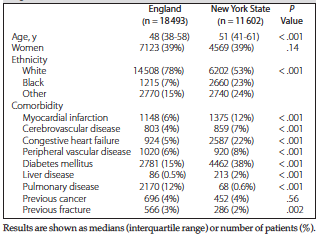
Table 1. Baseline Characteristics of Kidney Transplant Recipients From England and New York State

Table 2. 1-Year, 3-Year, 5-Year, and 10-Year Cumulative Incidence and Incidence Rates of All Fractures Requiring Hospitalization in England and New York State

Table 3. 1-Year, 3-Year, 5-Year, and 10-Year Cumulative Incidence and Incidence Rates of All Fractures Requiring Hospitalization
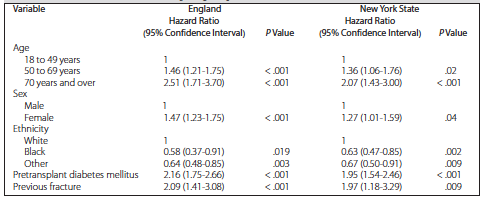
Table 4. Adjusted Associations Between Kidney Transplant Recipient Demographics and Comorbidities With the Cumulative Incidence of All Fractures Requiring Hospitalization
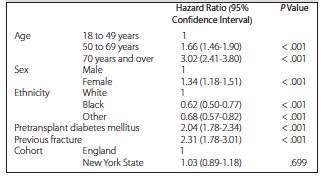
Table 5. Adjusted Associations Between Kidney Transplant Recipient Demographics and Comorbidities With the Cumulative Incidence of All Fractures Requiring Hospitalization (English and New York State Kidney Transplant Recipients Combined)

Table 6. 1-Year, 3-Year, 5-Year, and 10-Year Cumulative Incidence and Incidence Rates of Hip Fractures
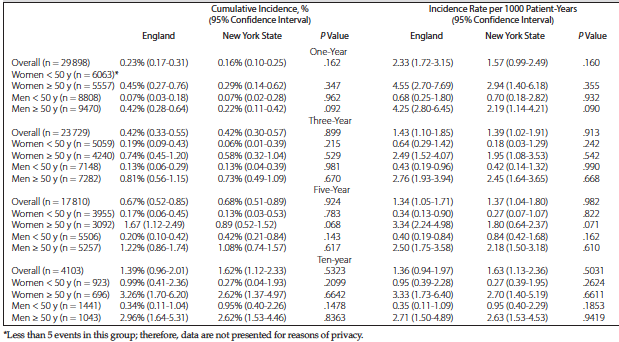
Table 7. 1-Year, 3-Year, 5-Year, and 10-Year Cumulative Incidence and Incidence Rates of Hip Fractures Requiring Hospitalization
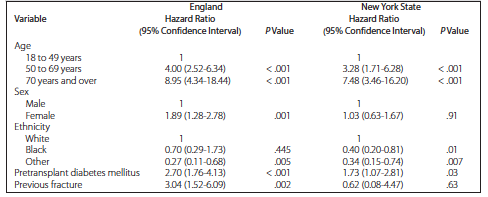
Table 8. Adjusted Associations Between Kidney Transplant Recipient Demographics and Comorbidities With the Cumulative Incidence of Hip Fractures
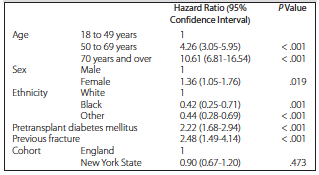
Table 9. Adjusted Associations Between Kidney Transplant Recipient Demographics and Comorbidities With the Cumulative Incidence of Hip Fractures (English and New York State Kidney Transplant Recipients Combined)
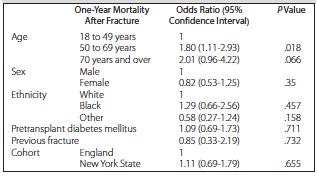
Table 10. Adjusted Associations Between Kidney Transplant Recipient Demographics and Comorbidities with 1-Year Mortality After Any Fracture Requiring Hospitalization (English and New York State Kidney Transplant Recipients Combined)
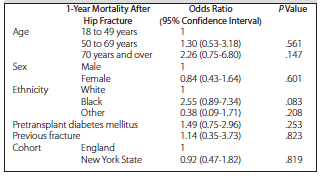
Table 11. Adjusted Associations Between Kidney Transplant Recipient Demographics and Comorbidities with 1-Year Mortality After Any Fracture Requiring Hospitalization (English and New York State Kidney Transplant Recipients Combined)
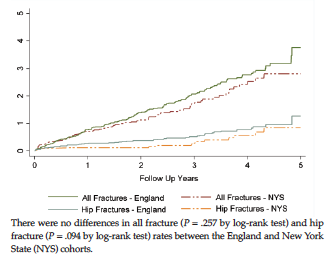
Figure 1. Cumulative Incidence of All Fractures Requiring Hospitalization and Hip Fractures in Adult Kidney Transplant Recipients in England and New York State