Volume: 12 Issue: 5 October 2014
FULL TEXT
Objectives: To investigate the predictive value of urinary neutrophil gelatinase-associated lipocalin in the occurrence of delayed graft function after kidney transplant.
Materials and Methods: In this prospective cohort study of 67 consecutive patients who received a living-related (40 patients [61%]) or deceased-donor kidney transplant (27 patients [39%]), urinary neutrophil gelatinase-associated lipocalin was determined in the first 100 mL perfusate of the donor kidney and in urine at 6 hours after transplant. Patients were followed (11 ± 7 mo) for changes in estimated glomerular filtration rate and delayed graft function.
Results: The mean urinary neutrophil gelatinase-associated lipocalin level at 6 hours after transplant was significantly higher after deceased-donor (781 ± 452 ng/mL) than living-donor transplant (229 ± 223 ng/mL; P ≤ 0.001). The decrease in estimated glomerular filtration rate from 6 to 12 months after transplant was positively correlated with the urinary neutrophil gelatinase-associated lipocalin levels in the perfusate in living-donor transplant. A significant correlation was noted between the occurrence of delayed graft function and the urinary neutrophil gelatinase-associated lipocalin level at 6 hours after living-donor transplant. In the deceased-donor group, the occurrence of delayed graft function was correlated with urinary neutrophil gelatinase-associated lipocalin levels in the perfusate. In deceased-donor kidney transplant, the mean urinary neutrophil gelatinase-associated lipocalin level in the perfusion fluid was significantly greater from donors who had terminal serum creatinine > 150 μmol/L, and urinary neutrophil gelatinase-associated lipocalin level at 6 hours after transplant was significantly greater in transplants with longer cold ischemia time and donors who had hypertension.
Conclusions: Urinary neutrophil gelatinase-associated lipocalin levels in the donor kidney perfusate and 6 hours after transplant may be a useful predictor of delayed graft function and decreased graft function from 6 to 12 months after transplant.
Key words : Acute kidney injury, Creatinine, End-stage renal disease, Glomerular filtration rate
Introduction
Serum creatinine is the most commonly used test to detect renal failure or injury. However, serum creatinine does not have adequate sensitivity for kidney function because it increases late after kidney injury or damage. Furthermore, creatinine level may not reflect the degree of renal damage and may be affected by other factors such as body weight, race, age, sex, total body water volume, drugs, muscle metabolism, and protein intake.1-3 This drawback is unfortunate because acute kidney injury may occur in 7% to 10% hospitalized patients.4
Other biomarkers have been evaluated for early detection of acute kidney injury such as neutrophil gelatinase-associated lipocalin (NGAL), an ion transporting agent that was identified using functional genomics and proteomics technology.5,6 The NGAL is a 25-kDa protein that is produced in the distal nephron in low concentrations, and the synthesis of NGAL is up-regulated in response to kidney injury. As a marker of kidney damage, NGAL may be more useful than markers that rely on function such as serum creatinine and estimated glomerular filtration rate (eGFR). The protein NGAL also is a marker of kidney disease progression. Serum concentration of NGAL rises before creatinine level and is useful to monitor chronic kidney disease.7 The NGAL is useful in detecting acute kidney injury in patients who are critically ill, receive intravenous contrast media for coronary angiography, are admitted to the emergency department, or have cardiac surgery.8-12
Deceased-donor kidney transplant frequently is associated with delayed graft function (25%).13 The rate of improvement in kidney function during the days after transplant is multifactorial and may depend on whether the donated kidney is optimal or marginal.14 However, there is no test available to predict which allograft will have slow recovery of kidney function or delayed graft function.
The concentration of NGAL in urine samples collected on the day of transplant may identify deceased-donor kidney recipients who subsequently may develop delayed graft function and dialysis requirement, which typically may occur at 2 to 4 days after transplant. The receiver operating characteristic curve for prediction of delayed graft function based on urinary NGAL (uNGAL) concentration at day 0 showed an area under the curve of 0.9, suggesting that uNGAL may be an excellent predictive biomarker.15 In addition, uNGAL concentrations are significantly increased in recipients who have biopsy-proven tubulitis or other tubular pathology after kidney transplant, and uNGAL may be a useful noninvasive screening tool for the detection of tubulointerstitial disease early after kidney transplant.16
The purpose of the present study was to evaluate uNGAL in the donor kidney perfusion fluid before transplant and in urine samples at 6 hours after transplant to determine whether uNGAL may be predictive of acute kidney injury such as delayed graft function and renal outcome at 6 and 12 months after transplant.
Materials and Methods
Patients
In this prospective cohort study, all 67 consecutive patients who received a
living-related or deceased-donor kidney transplant at King Abdulaziz Medical
City, Riyadh, between July 2011 and September 2012 were evaluated. Written
informed consent was obtained from all participants. The study was approved by
the local institutional review board.
Data were collected including demographic data about recipients and donors, cause of chronic kidney disease, clinical variables in deceased donors (cause of death, comorbid conditions, and terminal serum creatinine), degree of human leukocyte antigen mismatch, preexisting panel reactive antibodies, cold ischemia time, and the occurrence of biopsy-proven rejection and delayed graft function. The serum creatinine levels and eGFR were recorded at 3, 6, and 12 months after transplant. Samples were collected from early perfusion fluid of donor kidneys (t1 sample: the first 100 mL perfusate), and a urine sample was obtained at 6 hours after the end of the operation (t2 sample). Levels of uNGAL were determined with a commercially available assay that used a noncompetitive sandwich format with chemiluminescent signal detection (ARCHITECT NGAL Assay, Abbott, Abbott Park, IL, USA).17
Statistical analyses
Data collected were entered into database software (Access, Microsoft, Redmond,
WA, USA) and analyzed with statistical software (SAS, version 9.2, SAS
Institute, Cary, NC, USA). Descriptive statistics were reported as mean ±
standard deviation (continuous variables) or number (%) (categorical variables).
Continuous variables were evaluated with t test. Multivariate analysis
was used to evaluate the effect of potentially confounding variables on the
predictive effect of uNGAL. Statistical significance was defined by P ≤
.05.
Results
Most recipients were male patients who had living-related kidney transplant and who did not have diabetic nephropathy or positive panel reactive antibody (Table 1). The deceased donors most frequently died because of stroke and most frequently did not have hypertension or diabetes (Table 1). Most recipients received basiliximab and anti-thymocyte globulin as induction immunosuppressive therapy, and most recipients did not have delayed graft function or biopsy-proven rejection (Table 1). The mean cold ischemia time was 6 ± 6 hours, and the mean uNGAL level was significantly greater at 6 hours after transplant than the uNGAL level in the perfusate (Table 2). Mean follow-up was 11 ± 7 months after transplant, and eGFR was similar at 6 and 12 months after transplant (Table 2).
Multivariate analysis showed significant correlations between the change in eGFR from 6 to 12 months and uNGAL in the perfusion fluid for living-donor transplant (Table 3). In addition, there were significant correlations between delayed graft function and uNGAL at 6 hours after living-donor transplant and between delayed graft function and uNGAL in the perfusion fluid for deceased-donor transplant (Table 3). The mean uNGAL level in the perfusion fluid and at 6 hours after transplant was significantly higher in patients who developed than did not develop delayed graft function (Table 4). The mean uNGAL levels at 6 hours after transplant (but not in the perfusion fluid) was significantly greater for deceased-donor than living-related kidney transplant (Table 5).
In deceased-donor kidney transplant, the mean uNGAL levels at both collection times were similar in transplants with positive or negative panel reactive antibody status but greater in transplants from donors who had than did not have diabetes mellitus (Table 6). In deceased-donor kidney transplant, the mean uNGAL level in the perfusion fluid was significantly greater from donors who had terminal serum creatinine > 150 μmol/L, and uNGAL level at 6 hours after transplant was significantly greater in transplants with longer cold ischemia time and donors who had hypertension (Table 6).
There was no correlation observed between the uNGAL levels in the perfusion fluid and the absolute or percent decrease in serum creatinine from baseline (before transplant) to 5 days or 3 months after transplant. However there was significant negative correlation between the absolute and percent decrease in serum creatinine at 3 months after transplant and the uNGAL levels at 6 hours after transplant (t2 sample) (Table 7).
Discussion
Delayed graft function occurs in 20% to 33% deceased-donor kidney transplants. In our study, delayed graft function occurred in 23% deceased-donor and in 13% living-donor transplants.18
Several reports suggested that NGAL level may predict delayed graft function, and NGAL staining intensity in graft biopsies obtained 1 hour after anastomosis significantly correlates with the development of delayed graft function.15 In addition, uNGAL assayed on the day of transplant is highly significantly correlated with the subsequent development of delayed graft function.19 Other studies also have shown the usefulness of uNGAL in predicting acute kidney injury after kidney transplant.20,21 When uNGAL levels were correlated with graft biopsy findings, there were significantly increased uNGAL levels in the presence of tubulitis (including subclinical tubulitis) and other tubular pathologies.22
In both living-donor and deceased-donor transplants, we observed a significant correlation between delayed graft function and uNGAL levels. The uNGAL level of the perfusate was significantly higher in patients who developed than did not develop delayed graft function (Table 4). The uNGAL level at 6 hours after transplant was 3.4-fold greater after deceased-donor than living-donor transplant (Table 5). We observed no correlation between uNGAL levels in the t1 sample and the absolute or percent decrease in serum creatinine from baseline to 5 days or 3 months after transplant. However, there was a significant negative correlation between the absolute or percent decrease in serum creatinine and uNGAL at 6 hours after transplant (t2 sample) (Table 7).
Levels of uNGAL in the perfusion fluid (t1) were predictive of reduction in eGFR at 12 months after living-donor but not deceased-donor transplant (Table 3). Higher uNGAL levels were observed with longer cold ischemia time (> 5 h; t2 levels), higher deceased-donor terminal serum creatinine (> 150 μmol/L; t1 levels), and diabetic (t1 and t2 levels) or hypertensive donors (t2 levels) (Table 6).
The normal uNGAL level in patients undergoing coronary is 11 ± 16 ng/mL.23 In the present study, the mean 6-hour postoperative uNGAL levels were 20-fold greater for living-donor (229 ± 223 ng/mL) and 70-fold greater for deceased-donor kidney transplants (781 ± 452 ng/mL) (Table 5). In another recent study in which uNGAL was measured at 6 hours after deceased-donor kidney transplant, the uNGAL level was 640 ng/mL (339.4-2845 ng/mL) in patients who developed delayed graft function and 217 ng/mL (58.1-632.2 ng/mL) in patients who did not develop delayed graft function, and it was concluded that uNGAL may be an accurate predictor of delayed graft function, consistent with the present findings.24
In summary, we confirmed that uNGAL concentrations measured during the first day after kidney transplant may be useful in predicting the development of delayed graft function. In addition, uNGAL measured in the donor kidney perfusate also may help predict the development of delayed graft function and decreased short-term graft function.
References:
- Star RA. Treatment of acute renal failure. Kidney Int.
1998;54(6):1817-1831.
CrossRef - PubMed - Tomlanovich S, Golbetz H, Perlroth M, Stinson E, Myers BD. Limitations
of creatinine in quantifying the severity of cyclosporine-induced chronic
nephropathy. Am J Kidney Dis. 1986;8(5):332-337.
PubMed - Baboolal K, Jones GA, Janezic A, Griffiths DR, Jurewicz WA. Molecular
and structural consequences of early renal allograft injury. Kidney Int.
2002;61(2):686-696.
CrossRef - PubMed - Chertow GM, Burdick E, Honour M, Bonventre JV, Bates DW. Acute kidney
injury, mortality, length of stay, and costs in hospitalized patients. J Am
Soc Nephrol. 2005;16(11):3365-3370.
CrossRef - PubMed - Wu I, Parikh CR. Screening for kidney diseases: older measures versus
novel biomarkers. Clin J Am Soc Nephrol. 2008;3(6):1895-1901.
CrossRef - PubMed - Ronco C. N-GAL: diagnosing acute kidney injury as soon as possible. Crit
Care. 2007;11(6):173.
CrossRef - PubMed - Bachorzewska-Gajewska H, Malyszko J, Sitniewska E, et al. Could
neutrophil-gelatinase-associated lipocalin and cystatin C predict the
development of contrast-induced nephropathy after percutaneous coronary
interventions in patients with stable angina and normal serum creatinine
values? Kidney Blood Press Res. 2007;30(6):408-415.
CrossRef - PubMed - Dent CL, Ma Q, Dastrala S, et al. Plasma neutrophil
gelatinase-associated lipocalin predicts acute kidney injury, morbidity and
mortality after pediatric cardiac surgery: a prospective uncontrolled cohort
study. Crit Care. 2007;11(6):R127.
CrossRef - PubMed - Nickolas TL, O'Rourke MJ, Yang J, et al. Sensitivity and specificity of
a single emergency department measurement of urinary neutrophil
gelatinase-associated lipocalin for diagnosing acute kidney injury. Ann
Intern Med. 2008;148(11):810-819.
CrossRef - PubMed - Zappitelli M, Washburn KK, Arikan AA, et al. Urine neutrophil
gelatinase-associated lipocalin is an early marker of acute kidney injury in
critically ill children: a prospective cohort study. Crit Care.
2007;11(4):R84.
CrossRef - PubMed - Ostermann M, Chang RW. Acute kidney injury in the intensive care unit
according to RIFLE. Crit Care Med. 2007; 35(8):1837-1843.
CrossRef - PubMed - Lacquaniti A, Buemi F, Lupica R, et al. Can neutrophil
gelatinase-associated lipocalin help depict early contrast material-induced
nephropathy? Radiology. 2013;267(1):86-93.
CrossRef - PubMed - Szwarc I, Garrigue V, Delmas S, Deleuze S, Chong G, Mourad G. Delayed
graft function: a frequent but still unsolved problem in renal
transplantation [in French]. Nephrol Ther. 2005;1(6):325-334.
CrossRef - PubMed - Schnuelle P, Gottmann W, Köppel H, et al. Comparison of early renal
function parameters for the prediction of 5-year graft survival after kidney
transplantation. Nephrol Dial Transplant. 2007;22(1):235-245.
CrossRef - PubMed - Mishra J, Ma Q, Kelly C, et al. Kidney NGAL is a novel early marker of
acute injury following transplantation. Pediatr Nephrol. 2006;21(6):856-863.
CrossRef - PubMed - Schaub S, Mayr M, Hönger G, et al. Detection of subclinical tubular
injury after renal transplantation: comparison of urine protein analysis
with allograft histopathology. Transplantation. 2007;84(1):104-112.
CrossRef - PubMed - Grenier FC, Ali S, Syed H, et al. Evaluation of the ARCHITECT urine NGAL
assay: assay performance, specimen handling requirements and biological
variability. Clin Biochem. 2010;43(6):615-620.
CrossRef - PubMed - Halloran PF, Hunsicker LG. Delayed graft function: state of the art,
November 10-11, 2000. Summit meeting, Scottsdale, Arizona, USA. Am J
Transplant. 2001;1(2):115-120.
CrossRef PubMed - Parikh CR, Jani A, Mishra J, et al. Urine NGAL and IL-18 are predictive
biomarkers for delayed graft function following kidney transplantation. Am J
Transpl. 2006;6(7):1639-1645.
CrossRef - PubMed - Rostami Z, Nikpoor M, Einollahi B. Urinary neutrophil gelatinase
associated lipocalin (NGAL) for early diagnosis of acute kidney injury in
renal transplant recipients. Nephrourol Mon. 2013;5(2):745-752.
CrossRef - PubMed - Rostami Z, Einollahi B, Ghadiani MH. Does living donor hyperoxia have an
impact on kidney graft function after transplantation? Nephrourol Mon.
2013;5(3): 835-839.
CrossRef - PubMed - Schaub S, Mayr M, Hönger G, et al. Detection of subclinical tubular
injury after renal transplantation: comparison of urine protein analysis
with allograft histopathology. Transplantation. 2007;84(1):104-112.
CrossRef - PubMed - Bachorzewska-Gajewska H, Malyszko J, Sitniewska E, Malyszko JS,
Dobrzycki S. Neutrophil gelatinase-associated lipocalin (NGAL) correlations
with cystatin C, serum creatinine and eGFR in patients with normal serum
creatinine undergoing coronary angiography. Nephrol Dial Transplant.
2007;22(1):295-296.
CrossRef - PubMed - Hall IE, Yarlagadda SG, Coca SG, et al. IL-18 and urinary NGAL predict
dialysis and graft recovery after kidney transplantation. J Am Soc Nephrol.
2010;21(1):189-197.
CrossRef - PubMed

Volume : 12
Issue : 5
Pages : 396 - 400
DOI : 10.6002/ect.2013.0300
From the 1Nephrology and Renal Transplantation Division,
Department of Medicine, King Abdulaziz Medical City, Riyadh; 2Department
of Internal Medicine, American University of Beirut Medical Center, Beirut,
Lebanon; 3Division of Hepatology, Department of Hepatobiliary
Sciences, King Abdulaziz Medical City, Riyadh; 4College of Medicine,
King Saud Bin Abdulaziz University for Health Sciences, Pathology & Laboratory
Medicine, King Abdulaziz Medical City, Riyadh; 5Department of
Intensive Care, King Abdulaziz Medical City, Riyadh; 6Department of
Medicine, King Saud Bin Abdulaziz University for Health Sciences, Riyadh, Saudi
Arabia
Acknowledgements: This study was supported by a grant from the King
Abdullah International Medical Research Center. The authors have no conflicts of
interest to declare.
Corresponding author: Professor Abdulla Al Sayyari, Department of
Medicine, King Saud Bin Abdulaziz University for Health Sciences, PO Box 22490,
Riyadh 11426, Saudi Arabia
Phone: +966 1 252 0088
Fax: +966 1 252 0088 Ext 11449
E-mail: aaalsayyari@gmail.com
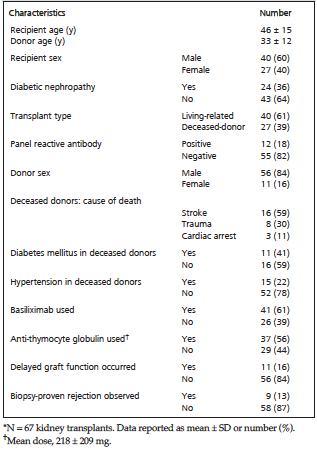
Table 1. Demographic and Clinical Characteristics of Donors and Recipients of Living-Related or Deceased-Donor Kidney Transplant*
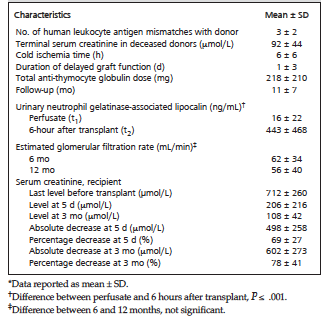
Table 2. Transplant Characteristics of Living-Related or Deceased-Donor Kidney Transplants*
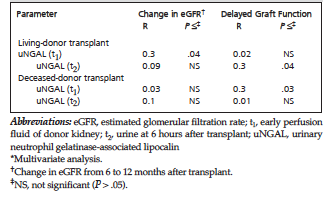
Table 3. Relation Between Kidney Graft Function and Urinary Neutrophil Gelatinase-Associated Lipocalin*
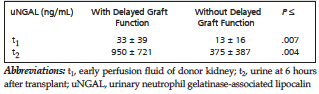
Table 4. Relation Between Urinary Neutrophil Gelatinase-Associated Lipocalin and Delayed Kidney Graft Function
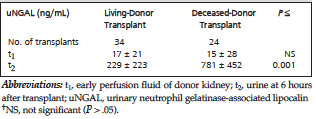
Table 5. Relation Between Urinary Neutrophil Gelatinase-Associated Lipocalin and Kidney Transplant Type
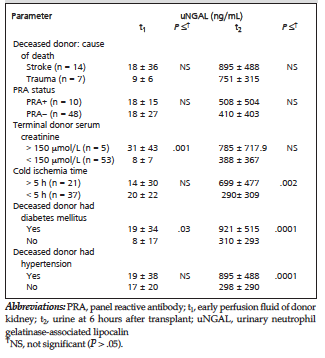
Table 6. Relation Between Urinary Neutrophil Gelatinase-Associated Lipocalin and Clinical Parameters in Deceased-Donor Kidney Transplant
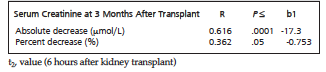
Table 7. Relation Between the Decrease in Serum Creatinine After Transplant and Postoperative Urinary Neutrophil Gelatinase-Associated Lipocalin*